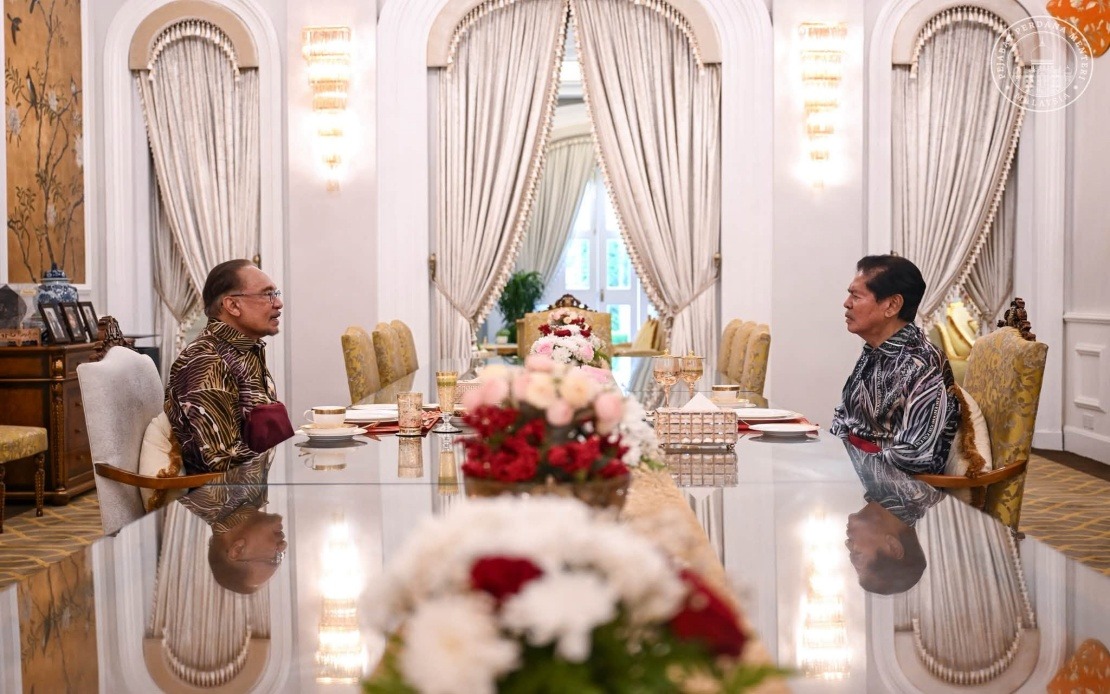
Prime Minister Datuk Seri Anwar Ibrahim brought his two-day working visit to Penang to a close yesterday with a formal tea reception at Seri Mutiara, the official residence of Governor Tun Ramli Ngah Talib. The private gathering served as the capstone to an intensive schedule that had taken the Prime Minister across multiple development initiatives and national programmes throughout the state.
Through a Facebook statement, Anwar characterised the meeting as reinforcing the collaborative relationship between the national government and Penang's state administration. He highlighted that both levels of government remain aligned in their objectives around economic revitalisation and enhancing living standards for residents, underscoring the importance of sustained coordination between Putrajaya and George Town on major policy issues.
Governor Ramli reciprocated the sentiment in his own social media remarks, noting that hosting the Prime Minister represented a valuable occasion to discuss pressing matters affecting Penang's trajectory and the broader Malaysian landscape. His comments suggested that the tea reception went beyond ceremonial pleasantries, instead functioning as a substantive dialogue on governance challenges and opportunities facing the state and nation.
A particularly humanising moment emerged during the reception when the Governor's grandson, Aldrey Alfi, seized the opportunity to engage the Prime Minister in conversation. Ramli's public acknowledgment of how warmly Anwar received the young boy's enquiries added a personal dimension to what might otherwise have remained a formal state occasion, reflecting the approachable demeanour both figures wished to project.
Anwar's Penang sojourn represented far more than a single day of ceremonial engagements. The two-day itinerary encompassed several flagship national initiatives designed to stimulate economic participation and civic engagement. His attendance at the Permatang Pauh Entrepreneur Revival Programme underscored the government's focus on small and medium enterprise development, a sector particularly significant in Penang's manufacturing and services economy.
The Prime Minister's participation in the 15th Malaysia Scout Jamboree signalled continued government investment in youth development and nation-building through structured outdoor education. Scouting movements have historically served Malaysian policymakers as important channels for inculcating civic values and leadership qualities among younger generations, making such events strategically valuable platforms for political engagement.
Additionally, Anwar's involvement with the MADANI Sahabat 2026 National Day Countdown Programme reflects the government's broader narrative around inclusive governance and community participation in national celebrations. The MADANI framework, which prioritises prosperity, compassion, and sustainability, has become central to the current administration's messaging around economic and social priorities.
Penang holds particular significance within Malaysia's political and economic architecture. As a manufacturing hub and educational centre with a cosmopolitan population, the state serves as a bellwether for federal policy reception and implementation effectiveness. High-level prime ministerial visits to the state carry outsized symbolic weight, signalling to both regional stakeholders and the broader public the government's commitment to balanced development across Malaysia's diverse regions.
The emphasis on strengthening federal-state cooperation carries practical implications for resource allocation, infrastructure investment, and policy harmonisation. When senior national figures engage substantively with state governments on development frameworks, it typically facilitates faster implementation of jointly conceived initiatives and reduces bureaucratic friction between different tiers of administration. For Penang specifically, improved coordination with Putrajaya on economic diversification and industrial policy can yield tangible benefits for local employment and investment.
The tea reception format itself merits consideration. In Malaysian political culture, such gatherings often serve as informal settings where substantive conversations occur alongside ceremonial requirements. The presence of family members and the reportedly relaxed atmosphere suggest that discussions ranged beyond prepared remarks and media-facing statements, potentially addressing specific state concerns or federal support mechanisms relevant to Penang's development agenda.
Looking forward, the momentum from this visit may influence how federal and state governments coordinate on several emerging priorities. Penang faces ongoing challenges around sustainable urban growth, skill development for evolving industries, and maintaining its competitive edge as an investment destination amid regional competition from other Southeast Asian manufacturing centres. Federal support on these fronts requires precisely the kind of sustained dialogue that high-level visits and ongoing intergovernmental engagement facilitate.
The visit also carries implications for how the government manages relationships across states governed by different political coalitions. Effective governance demands that national leaders engage constructively regardless of partisan considerations, and such visits demonstrate commitment to that principle. For Malaysian federalism to function effectively, channels of communication and cooperation between Putrajaya and all state administrations must remain robust and constructive.

