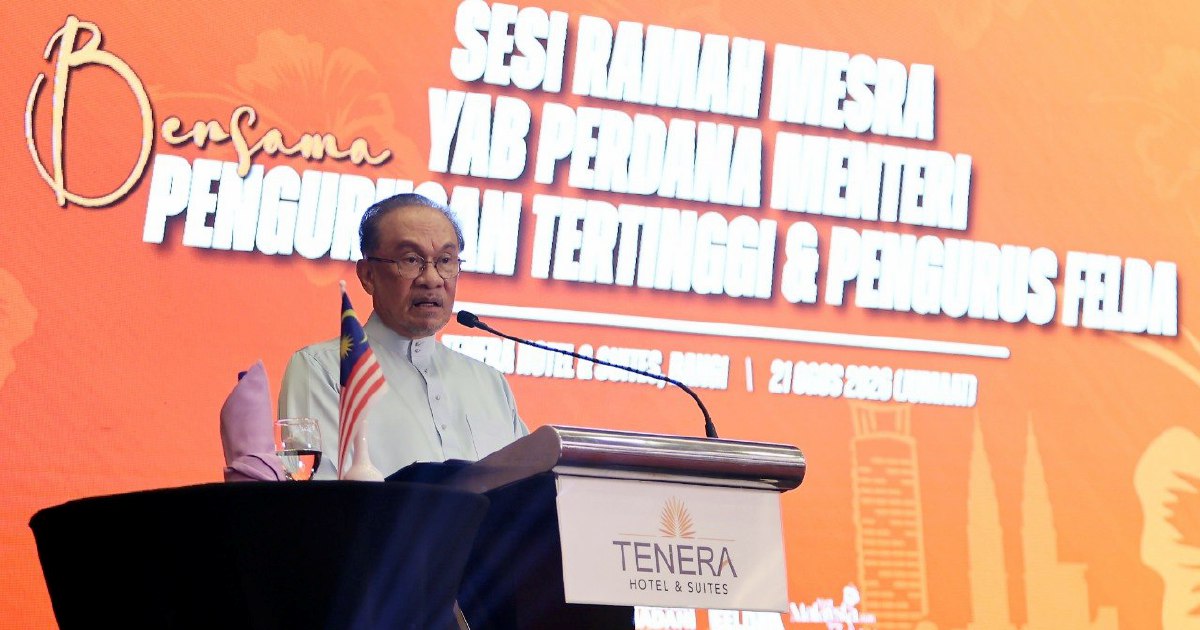
Prime Minister Datuk Seri Anwar Ibrahim confirmed today that a specially constituted task force tasked with examining longstanding issues at the Federal Land Development Authority has begun its formal investigations. Speaking in Bangi, Anwar indicated that the findings from this inquiry would be made public once the examination process reaches completion, signalling the government's commitment to transparency in addressing concerns surrounding the statutory authority.
The establishment of this task force represents a significant step in addressing what have been persistent questions about governance and management at Felda, one of Malaysia's most important land settlement and development institutions. The authority, which operates across substantial tracts of agricultural land nationwide, has periodically faced scrutiny regarding operational efficiency, financial management, and the welfare of its settler communities. The formal initiation of this investigation suggests the government is moving beyond preliminary discussions toward substantive action.
Felda's role in Malaysian agriculture and rural development remains substantial, managing vast plantations primarily focused on palm oil production. The organisation employs tens of thousands of workers and generates significant revenue for smallholder settlers and the state. However, questions about sustainability, market competitiveness, and internal governance structures have surfaced over recent years, particularly as global scrutiny of palm oil production intensifies and commodity prices fluctuate.
The timing of this task force reflects broader government priorities under Anwar's administration to strengthen institutional accountability across Malaysia's public sector. Several statutory bodies and government-linked companies have undergone similar scrutiny in recent years, part of a wider effort to enhance governance standards and restore public confidence in state institutions. For Felda specifically, this investigation may address concerns that have accumulated regarding land management practices, financial transparency, and the treatment of settler communities.
The scope of the task force's investigation remains to be fully detailed, though such inquiries typically examine financial records, contractual arrangements, land administration procedures, and compliance with relevant regulations. The team likely comprises experts from relevant government agencies, possibly including the Ministry of Primary Industries, financial auditors, and governance specialists. Their mandate appears broad enough to encompass systemic issues rather than isolated incidents.
For Malaysian agricultural stakeholders and investors, clarity regarding Felda's governance standards carries practical implications. The authority controls land resources critical to the national economy and impacts countless rural communities dependent on its operations. International investors increasingly scrutinise governance when evaluating investments in Malaysian agriculture, particularly given global concerns about sustainability and responsible land management. A transparent investigation into Felda's practices could ultimately strengthen confidence in the sector.
The task force's expected timeline for completing its work remains unclear from Anwar's statement, though such investigations typically require several months depending on their depth and the volume of documentation requiring review. Stakeholders including settler organisations, agricultural industry representatives, and environmental groups have expressed interest in understanding how Felda operates and whether improvements are necessary. The public release of findings will be closely watched across these constituencies.
This development also contextualises Felda within Malaysia's broader governance reform agenda. Recent years have witnessed increased emphasis on investigating government institutions and statutory authorities, with multiple inquiries into various organisations completed or underway. This signals that regardless of political affiliations, scrutiny of how state resources and institutions are managed has become more systematic and less subject to political discretion.
For rural communities whose livelihoods depend on Felda schemes, the task force's findings could determine whether operational changes are implemented. Settler complaints have occasionally surfaced regarding land disputes, revenue distribution, and responsiveness to community concerns. An independent investigation might identify whether systemic improvements could better serve these populations and enhance productivity across Felda-managed areas.
The announcement also demonstrates Anwar's administration positioning itself as reform-minded regarding public sector governance. By publicly confirming the task force's commencement and committing to transparent disclosure of findings, the government signals that accountability is a priority. However, the actual impact will ultimately depend on what the investigation discovers and whether recommendations are acted upon substantially rather than shelved.
Regionally, Malaysia's approach to reviewing state-controlled land authorities may have relevance for neighbouring Southeast Asian nations managing similar institutions. Transparent governance in agriculture and land management is increasingly important as countries balance economic development with environmental sustainability and community welfare. Malaysia's experience with the Felda investigation could offer lessons for peers managing comparable challenges.
Looking ahead, the task force's work represents a critical juncture for Felda. Depending on what investigators uncover, the findings could lead to significant operational reforms, leadership changes, or refinements to how the authority serves its settler communities and contributes to national agricultural development. Anwar's public commitment to releasing findings suggests the government intends this process to genuinely inform policy rather than become a performative exercise.

