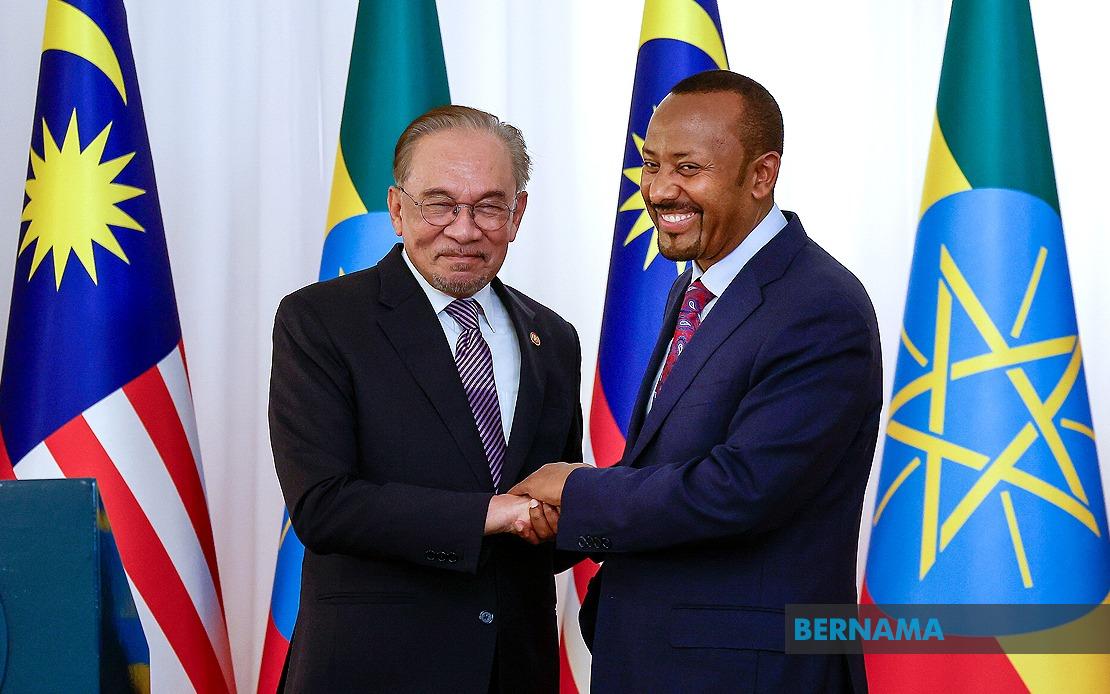
Prime Minister Datuk Seri Anwar Ibrahim has offered his congratulations to Ethiopian Prime Minister Abiy Ahmed Ali and the Prosperity Party following their triumph in Ethiopia's general election, signalling Malaysia's continued interest in strengthening diplomatic relations with the East African nation. The gesture, made through a Facebook statement, reflects the priority Anwar has placed on engaging with African partners as part of Malaysia's broader foreign policy objectives in a region increasingly important to global affairs.
Anwar's message carried particular weight given his historic visit to Addis Ababa last year, which he characterised as a watershed moment in Malaysian-Ethiopian relations. That journey marked the first time a Malaysian prime minister had travelled to the Ethiopian capital, an undertaking that underscored Kuala Lumpur's strategic pivot towards Africa at a time when many regional powers are intensifying their continental engagement. The visit represented more than ceremonial diplomacy; it laid groundwork for substantive cooperation across multiple sectors and demonstrated Malaysia's recognition that Africa's growing economic and political significance demands direct engagement from Southeast Asian nations.
During his Addis Ababa visit, Anwar encountered what he described as a warm reception and held substantive discussions with Abiy that revealed considerable alignment in their respective worldviews. These conversations proved sufficiently productive that Anwar felt moved to characterise the two leaders' perspectives as remarkably similar, particularly regarding how both view emerging international dynamics and the collective interests of Global South nations. This convergence of outlook is significant, as it suggests the foundation for productive cooperation extends beyond the ceremonial aspects of bilateral relations into substantive areas of shared concern.
Central to Anwar's characterisation of the relationship is the notion that countries of the Global South—a category encompassing Malaysia, Ethiopia, and many other developing nations—stand to gain measurably through coordinated action and equal-footed partnerships. This framing reflects a broader trend in Malaysian foreign policy whereby Anwar has sought to position his administration as a champion of South-South cooperation, attempting to build coalitions among developing economies to amplify their collective voice in international affairs. In this context, Ethiopia holds particular strategic value as the home of the African Union, making it a natural focal point for Malaysian efforts to deepen engagement with the continent.
The prime minister's acknowledgement of Ethiopia's importance to Malaysia's African strategy reveals the deliberate nature of his government's continental outreach. Rather than viewing Africa primarily through the lens of trade or resource extraction, Anwar's approach emphasises mutual growth and political partnership. Malaysia's position as a middle-power within ASEAN and the broader developing world makes it a natural intermediary between Asian and African concerns, a role Anwar appears determined to develop further.
Abiy Ahmed's electoral victory carries its own significance for Malaysia's engagement strategy. The Prosperity Party's success provides continuity in Ethiopian leadership under a reformist administration that has undertaken significant domestic transformation since coming to power in 2018. For Malaysia, stability and progressive governance in Ethiopia enhance the prospects for sustained bilateral cooperation and make long-term planning in the relationship more feasible. The victory also suggests that Abiy's development-oriented approach retains sufficient public support to remain an animating force in Ethiopian politics.
Anwar's statement explicitly referenced the momentum generated during his 2024 visit, emphasising that numerous initiatives were set in motion and that he anticipates continuing this forward trajectory with Abiy at the helm. This language suggests a pipeline of cooperative projects spanning areas such as trade, investment, capacity-building, and possibly defence and security partnerships. The specificity of his commitment to carrying initiatives forward implies that vague diplomatic pleasantries have given way to concrete planning, though the statement deliberately refrains from detailing particular projects, likely to maintain negotiating flexibility as implementation proceeds.
The timing of Anwar's congratulations also merits consideration. By offering prompt recognition of Abiy's electoral success, Malaysia signals its alignment with a leader whose vision for Ethiopia's future appears consonant with broader Malaysian strategic interests. This early gesture of support may facilitate easier passage for Malaysian diplomatic and commercial initiatives in Ethiopia, establishing goodwill at a moment when Abiy is consolidating his mandate and potentially receptive to new partnerships that validate his international standing.
For Malaysian readers, the significance of this exchange extends beyond bilateral relations. Ethiopia's position as the seat of the African Union and a major regional power means that Malaysia's deepening engagement with Addis Ababa carries implications for how Malaysia positions itself within broader Global South coalitions and competing visions for international order. As China, India, Turkey, and Gulf states simultaneously expand their African presence, Malaysia's cultivation of relationships in Ethiopia represents both an opportunity to amplify its voice in African affairs and a recognition that influence requires sustained engagement rather than episodic diplomatic visits.
The narrative of partnership between Malaysia and Ethiopia, as articulated by Anwar, suggests an increasingly sophisticated approach to Malaysian foreign policy that moves beyond the historically dominant focus on ASEAN and bilateral relations with major powers. Instead, it reflects a growing conviction that middle powers like Malaysia can achieve disproportionate influence by building coalitions among like-minded developing nations. Ethiopia, with its continental centrality and reformist trajectory, represents an ideal partner for this emerging Malaysian strategy.

