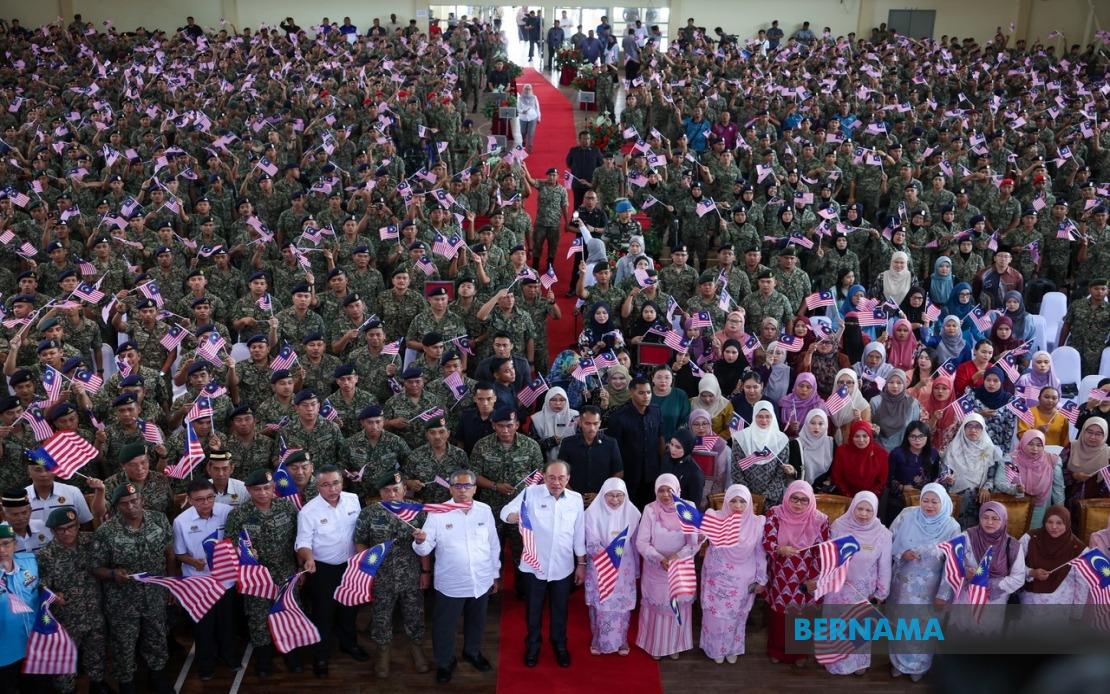
Prime Minister Datuk Seri Anwar Ibrahim has pushed back against persistent criticism that his government is abandoning the Bumiputera agenda, using the creation of new Malay reserve land in Kuala Lumpur as his primary example of continued commitment to indigenous Malay-Muslim interests. Speaking in Tampin, the Premier underscored that his administration has moved decisively to reverse decades of declining Malay land ownership in the capital following his appointment in 2022.
The centerpiece of Anwar's defence concerns the reclamation of the 480-acre Bandar Malaysia site, which the government retrieved in 2023 after determining that existing regulations governing the land's use had been breached. The tract had previously been controlled by foreign interests and a private company, arrangements the Prime Minister characterised as detrimental to Bumiputera ownership. This intervention represents a significant reversal of the long-standing pattern in the capital, where Malay reserve land has steadily contracted since Malaysia's independence in 1957 without meaningful replenishment.
Within the reclaimed Bandar Malaysia parcel, the government designated 50 acres specifically as Malay reserve land—a move Anwar framed as particularly symbolic given that this portion comprises some of Kuala Lumpur's most valuable real estate. By placing such premium property under Malay reserve status, the administration has signalled a willingness to deploy high-value assets for community benefit rather than allowing such land to slip into non-Bumiputera hands or private development that excludes indigenous participation. The reserve lands fall under the stewardship of Petronas and Khazanah Nasional, both entities the Premier identified as Malay-controlled institutions capable of managing the assets in accordance with community interests.
The government's handling of this initiative reveals careful coalition management within Malaysia's ruling alliance. Anwar specifically highlighted that the DAP, a predominantly Chinese-led coalition partner, raised no objections when the proposal came before the Cabinet. According to the Prime Minister, DAP Secretary-General Anthony Loke merely requested clarification on the government's rationale before endorsing the measure. This absence of formal opposition from a partner party traditionally associated with secular, multi-ethnic governance suggests that even non-Bumiputera-focused factions within the coalition recognise the legitimacy of addressing the shrinking Malay landholding base in the federal capital.
The Bandar Malaysia initiative addresses a genuine demographic reality that has long concerned Bumiputera stakeholder groups. The uninterrupted decline in Malay reserve land within Kuala Lumpur—a trend spanning more than six decades since independence—reflects both deliberate privatisation policies and market forces that have gradually eroded indigenous ownership concentrations in Malaysia's wealthiest urban centre. By reclaiming the site and designating a substantial portion as reserve land, Anwar's government has attempted to reverse this tide, if only symbolically, by introducing new Bumiputera-designated holdings into the capital's property ecosystem for the first time in the nation's post-independence history.
For Malaysian policymakers and observers tracking Bumiputera policy trajectories, this move carries broader implications about the MADANI administration's positioning on affirmative action and indigenous economic empowerment. The decision to invest political capital and executive authority in land reclamation demonstrates that the government views Bumiputera protection as sufficiently central to its legitimacy that it will override previous arrangements and confront international and domestic private interests to advance it. This signals continuity with constitutional protections for indigenous Malays enshrined in Article 153, even as the administration pursues broader economic liberalisation and engagement with foreign investors elsewhere.
The episode also illuminates the delicate balancing act required within Malaysia's multiethnic coalition government. The MADANI administration must simultaneously reassure Bumiputera constituencies that their constitutional protections remain sacrosanct while also maintaining the confidence of non-Bumiputera coalition partners and international observers concerned about regulatory consistency and property rights. By securing DAP acquiescence to the Bandar Malaysia designation through explanation rather than coercion, Anwar demonstrated a preference for consensus-building over top-down imposition—an approach that may prove valuable in future policy disputes involving affirmative action, land ownership, or economic privilege.
From a regional perspective, Malaysia's handling of indigenous rights and affirmative action frameworks remains closely watched by other Southeast Asian economies grappling with similar questions about balancing indigenous empowerment with economic development and foreign investment attraction. The Bandar Malaysia case suggests that the Malaysian government remains committed to maintaining its distinctive constitutional model of Bumiputera protection, particularly in high-profile urban contexts where such policies carry maximum visibility and symbolic weight. This resolve may reassure indigenous constituencies that support for these protections transcends partisan boundaries and political cycles.
The timing of Anwar's remarks appears designed to counter what the administration views as unfair characterisation of its Bumiputera record. By highlighting concrete action on land designation rather than merely rhetorical support, the Prime Minister positioned his government as actively restoring Malay land ownership rather than passively allowing further erosion. This emphasis on tangible property acquisition and reserve status designation provides the administration with a defensible narrative against critics who argue that modernising and liberalising impulses have diluted traditional Bumiputera safeguards.
Moving forward, the Bandar Malaysia reserve land experiment may establish a precedent for how the government addresses Bumiputera concerns in other contexts, particularly regarding urban property and development-driven land acquisition. Should the designated reserve land appreciate substantially or generate meaningful returns for Malay stakeholders, it could provide evidence that Bumiputera protections remain effective tools for wealth accumulation within priority communities. Conversely, should the reserve land fail to deliver tangible benefits or prove difficult to monetise, critics may argue that the gesture remained largely symbolic and failed to address deeper structural barriers to indigenous economic advancement in Malaysia's modern, globalised economy.

