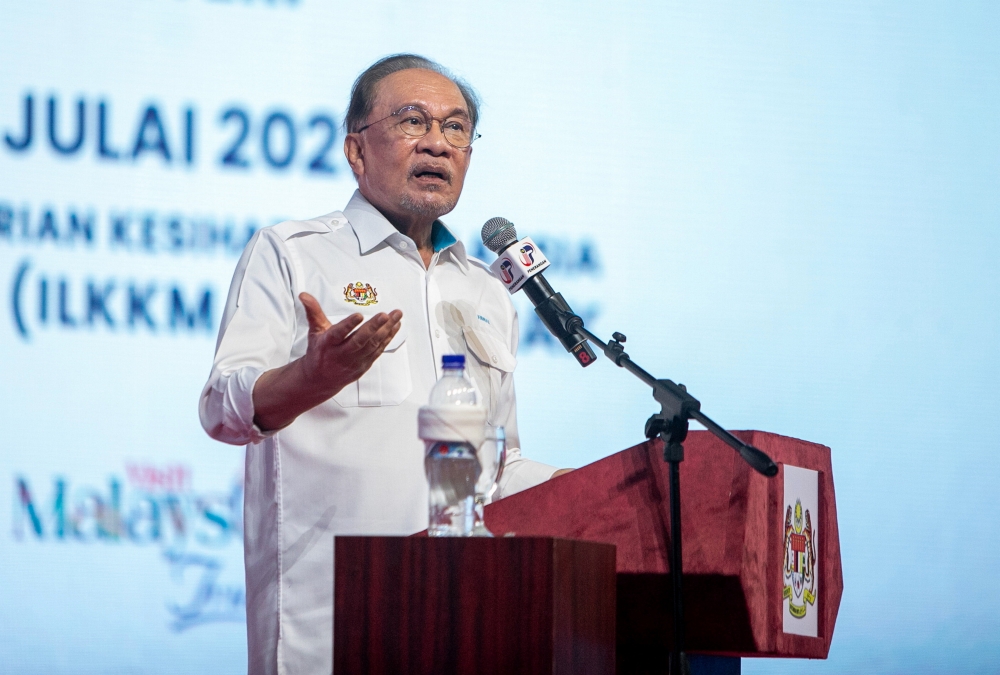
Prime Minister Datuk Seri Anwar Ibrahim has mounted a vigorous defence of the government's approach to managing fuel prices, framing the policy as a deliberate balancing act between household protection and long-term economic stability. Speaking in Kajang on July 20, the premier rejected suggestions that Malaysia should dramatically expand subsidies, instead emphasising the fiscal constraints that shape policy decisions across the region's third-largest economy.
Anwar's comments reflect growing pressure from multiple quarters—opposition politicians, civil society groups, and some segments of the general public—demanding deeper government intervention in fuel costs. The Prime Minister's response cuts to a fundamental tension within developing economies: the desire to shield citizens from commodity price volatility must be weighed against the mathematics of government budgets. By raising the rhetorical question "Who will pay for it?", Anwar shifted the conversation away from ideological positions and toward practical accounting, a strategy that resonates with audiences concerned about economic mismanagement.
Malaysia's fuel subsidy regime has a complex history. The government maintains targeted support mechanisms rather than blanket price controls, attempting to provide relief where it matters most without creating massive fiscal drains. This approach contrasts with some neighbouring countries that have experimented with or abandoned universal fuel subsidies after discovering they consumed disproportionate shares of government spending. The current system reflects lessons learned from previous episodes when poorly designed subsidies distorted markets and incentivised smuggling to neighbouring Thailand and Singapore, where prices remained substantially higher.
The Prime Minister's emphasis on fiscal sustainability speaks to Malaysia's debt trajectory and borrowing capacity. At a time when interest rates globally have risen and investors scrutinise sovereign balance sheets more carefully, expanding expenditure without corresponding revenue sources becomes increasingly difficult. Anwar's framing suggests the government views subsidy expansion as a debt trap—each year of higher spending compounds future obligations, limiting flexibility for infrastructure investment, healthcare, and education. For younger Malaysians, this argument has particular force: today's unsustainable borrowing becomes tomorrow's constraint on opportunities.
Anwar's defence also implicitly acknowledges regional economic dynamics. Asean neighbours grapple with similar challenges. Indonesia, despite vast oil reserves, faces persistent questions about its subsidy burden. Thailand and Vietnam have experienced social friction when attempting subsidy reforms. The Malaysian government appears to be charting a middle course, offering protection through measured mechanisms while avoiding the structural rigidities that emerge from entrenched universal subsidies. This positioning carries political risk—neither extreme subsidisation nor complete subsidy removal satisfies all constituencies—but reflects pragmatism rather than ideological inflexibility.
The sustainability argument extends beyond immediate budget mathematics. Persistently high subsidies can distort consumption patterns, encouraging fuel waste and delaying investments in efficiency improvements and renewable energy transitions. By maintaining prices closer to market levels—while providing targeted support for affected groups—the government creates incentives for the fuel economy improvements necessary as the region transitions toward decarbonisation. This aligns Malaysia's fuel policy with longer-term climate commitments and energy security objectives, even if the connection remains implicit in political rhetoric.
Criticism of the government's approach tends to emphasise the burden on lower-income Malaysians facing transportation and energy costs. Anwar's response does not dismiss these concerns but reframes them as requiring better-targeted solutions rather than across-the-board price reductions that benefit high-income households equally. Whether Malaysia's existing targeting mechanisms—through cash transfers, public transport subsidies, and sector-specific support—adequately reach vulnerable populations remains a legitimate point of contention. The effectiveness of these programmes depends partly on administrative capacity and transparency, areas where past Malaysian governments have sometimes underperformed.
The political economy of fuel pricing has historically destabilised Malaysian governments. Previous administrations faced substantial backlash when adjusting prices, with subsidy cuts sometimes preceding electoral defeats or social unrest. Anwar's careful rhetorical positioning suggests the current government recognises this history and seeks to build broader acceptance for its approach through explanation rather than simply announcing adjustments. By engaging directly with the "who pays" question, the Prime Minister invites citizens into the thinking process rather than presenting policy as handed down from on high.
Regional energy markets add urgency to Malaysia's policy deliberations. Crude oil prices fluctuate based on geopolitical tensions, production decisions by major exporters, and global demand patterns largely beyond Malaysian control. A policy framework predicated on maintaining fixed fuel prices regardless of international market movements eventually creates unsustainable fiscal pressures, precisely the scenario Anwar warns against. Conversely, allowing prices to float completely exposes lower-income households to shocks. Finding the equilibrium between these poles demands both technical expertise and political judgment.
Looking forward, Malaysia's fuel policy will likely remain contested terrain. Anwar's recent comments establish intellectual ground for resisting unlimited subsidy expansion while leaving room for recalibration if circumstances demand. The implicit argument—that protecting citizens requires sustainable financing, not just rhetorical commitment—represents an important contribution to policy maturity across Southeast Asia, where populist pressures often override fiscal discipline. Whether Malaysian voters ultimately accept this framing will significantly shape the government's room for manoeuvre on economic policy more broadly.

