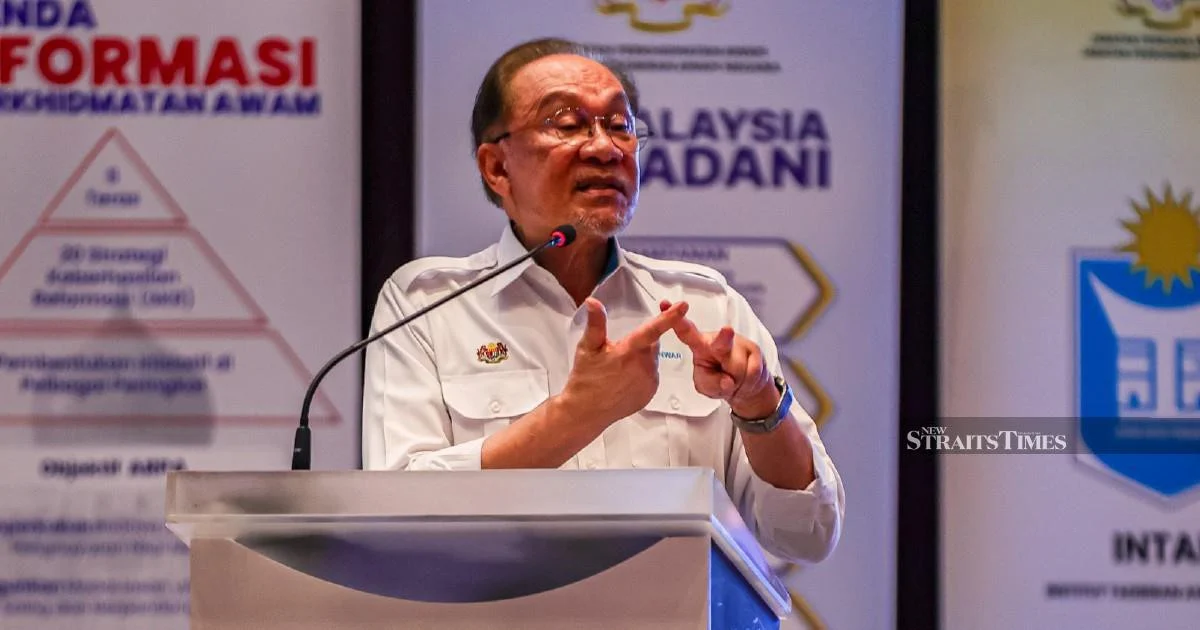
Prime Minister Datuk Seri Anwar Ibrahim moved to quell brewing political tensions on Friday by clarifying that Amanah president Datuk Seri Mohamad Sabu had not intended to ridicule any political party during remarks made at a Pakatan Harapan candidate announcement ceremony in Tangkak. Speaking from Alor Gajah, Anwar sought to restore calm following the controversy surrounding the Amanah leader's speech, signalling the coalition's desire to maintain internal cohesion as the nation approaches critical electoral contests.
The intervention from Malaysia's top elected official underscores the delicate balancing act required within the PH alliance, where multiple parties with distinct political traditions and supporter bases must navigate shared campaign messaging without alienating their respective grassroots organisations. Amanah, as an Islamic-oriented party with roots in the former PAS establishment, occupies a particular position within the broader reformist coalition, and any perceived slights toward coalition partners carry risk of deepening existing fault lines. Anwar's proactive statement aimed to prevent minor controversies from festering into larger grievances that could undermine PH's unified front.
The timing of the Tangkak event reflects the coalition's intensive campaign preparation, with candidate announcements serving as crucial opportunities to energise supporters and define electoral narratives in target constituencies. Such gatherings typically involve rhetorical flourishes designed to motivate party faithful and distinguish coalition messaging from opposition platforms. However, the apparent misinterpretation or contentious characterisation of Mohamad Sabu's language demonstrates how campaign rhetoric can quickly become fodder for political opponents seeking to sow discord within PH ranks.
Matrices of coalition management have grown increasingly complex since PH's 2020 internal restructuring. The alliance comprises ideologically diverse elements—from the social-democratic Democratic Action Party to the urban-progressive PKR and the Islamist-leaning Amanah—each bringing distinct constituencies and policy emphases. Statements from senior figures carrying inadvertent double meanings can inadvertently trigger sensitivity among coalition members protective of their political brand and electoral positioning. Anwar's role as both coalition leader and prime minister requires him to operate as an arbiter of internal disputes, lending credibility to all constituent parties.
The Tangkak constituency announcement held particular significance given the region's electoral competitiveness and demographic composition. Johor has emerged as a crucial battleground where PH competes intensely for parliamentary seats against both the Perikatan Nasional coalition and established Barisan Nasional structures. Campaign events in such constituencies carry magnified strategic importance, making speeches and public statements subject to intense scrutiny from rival camps and media observers seeking to identify cracks within government-aligned alliances.
Amanah's positioning within PH deserves particular consideration for Malaysian readers assessing coalition dynamics. The party emerged as a splinter from PAS, retaining Islamic credentials while maintaining secular governance principles compatible with broader PH ideology. This hybrid positioning makes Amanah simultaneously attractive to voters seeking Islamic representation within a non-Islamist framework and vulnerable to criticism from both PAS (its political rival) and secular PH components regarding insufficient clarity of identity. Any perception of Amanah leadership mocking or disparaging partners invites accusations of insincerity or duplicity from multiple directions.
Anwar's public statement functioned partly as damage control and partly as preventative intervention—a reminder to all PH components that maintaining coalition discipline requires self-restraint and charitable interpretations of colleagues' remarks during the intense campaign environment. The prime minister's intervention signals that PH leadership takes intra-coalition harmony seriously enough to address controversies directly rather than allowing them to metastasise through media speculation and rival party amplification. This approach reflects lessons learned from earlier periods when internal PH conflicts produced significant electoral consequences.
The broader context involves mounting pressure on all Malaysian political coalitions as the nation approaches a period of potential electoral activity. Both PH and PN face incentive structures encouraging internal discipline—premature fragmentation risks handing opponents unearned advantages, while unified presentation maximises each coalition's competitive positioning. Anwar's insistence on charitable interpretation of Mohamad Sabu's remarks reinforces expectations that senior party figures will maintain restraint when articulating partisan positions.
For ordinary Malaysians observing coalition politics, these micromanagement moments reveal the constant negotiation required to maintain multi-party alliances. Unlike single-party dominant systems, Malaysian coalition governance demands continuous attention to internal sensitivities, perception management, and prevention of minor incidents from cascading into larger ruptures. Anwar's defence of Mohamad Sabu publicly models the kind of collegial forbearance that coalition partners must extend to one another, even when sensing misalignment or rhetorical overreach.

