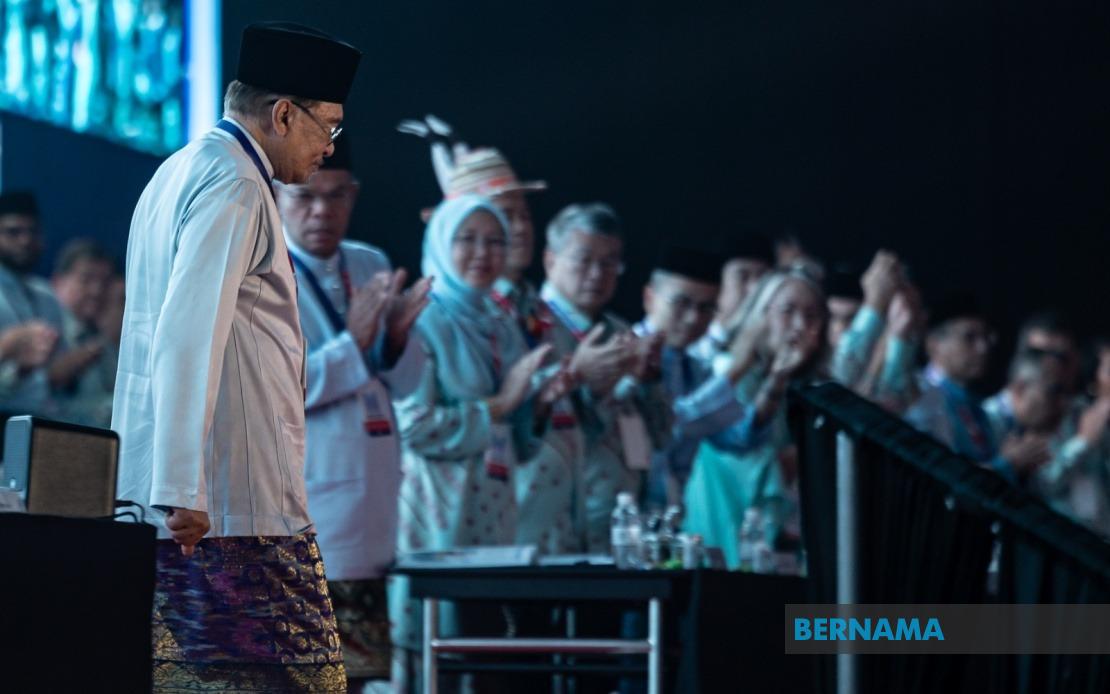
Prime Minister Datuk Seri Anwar Ibrahim has pushed back against suggestions that the government's reform efforts should be downplayed, arguing that substantial institutional and legislative changes have materialised under his administration even as pressure mounts for accelerated action on the broader MADANI transformation agenda. Speaking at the PKR National Congress in Melaka, Anwar acknowledged the tension between those seeking rapid systemic overhaul and the practical realities of governance, contending that dismissing accomplishments simply because more work remains would be both unfair and historically myopic.
The Prime Minister's remarks reflect a delicate balancing act within the ruling coalition, where stakeholders harbour differing expectations about the pace of institutional renewal. Anwar framed the debate as one requiring perspective, noting that numerous reforms legislated and implemented in the past three years had languished unaddressed for six decades previously. His comments at the 2026 PKR National Congress underscored an emerging narrative from the government: that meaningful progress has occurred, even if the journey towards comprehensive governance transformation continues. This framing matters in Malaysian politics, where reform demands often carry moral weight and historical grievance, making success difficult to measure against expectations sometimes unrealistic in their scope and timeline.
Among the tangible reforms Anwar cited were amendments to the Audit Act 1957, revisions to the Parliamentary Service Act, and the enactment of the Public Finance and Fiscal Responsibility Act 2023, alongside the establishment of the Special Task Force on Agency Reform. The government has also passed consumer protection legislation and worker classification laws governing gig economy participants. These measures, while technical in nature, represent material shifts in how Malaysian institutions operate and how Parliament exercises oversight. The Audit Act amendments, for instance, expand the Auditor-General's investigative powers, while the fiscal responsibility framework creates legal guardrails around government spending patterns that previously operated without statutory constraint.
Yet Anwar's defensive posture also reveals the political limits constraining the MADANI administration's reform appetite. As chairman of Pakatan Harapan and Prime Minister leading a Unity Government that incorporates multiple coalition partners with competing interests, Anwar must navigate the reality that comprehensive institutional overhaul requires consensus among ideologically diverse partners. The 2022 General Election outcome, which neither the opposition nor the ruling coalition could claim as a clear mandate, resulted in political arrangements prioritising stability and coalition cohesion over revolutionary change. This structural constraint explains Anwar's emphasis on phased implementation and the need to balance competing priorities with coalition partners' positions and concerns.
The government's approach to reform represents a deliberate departure from what Anwar characterised as the misconception that comprehensive systemic transformation could occur rapidly. He acknowledged that unrealistic expectations existed among some quarters, who anticipated wholesale institutional redesign within months of his administration assuming office. Instead, the government has adopted a staged methodology, arguing that sustainable reform requires establishing foundations, building administrative capacity, and securing stakeholder buy-in at each phase. This gradualist approach contrasts sharply with the urgency some civil society groups and opposition figures have demanded, particularly regarding judicial independence, press freedom, and anti-corruption initiatives.
Anwar also conceded that implementation of the reform agenda has encountered obstacles and that not every government decision has proven optimal upon reflection. This candid acknowledgment potentially constrains future arguments about reform effectiveness, as critics can point to incomplete measures or implementation gaps as evidence of insufficient commitment. However, the Prime Minister positioned such imperfections as inevitable consequences of navigating complex institutional change within a coalition framework. The implicit argument was that perfect reform measures enacted immediately would be preferable to partial measures implemented gradually, but the political reality of Unity Government required accepting the latter scenario.
For Malaysian observers and regional analysts monitoring institutional development in Southeast Asia, Anwar's position raises important questions about how deeply embedded reform becomes when political coalitions shift or public pressure intensifies. The legislative amendments and institutional changes his government has enacted establish new legal baselines that subsequent administrations would find politically costly to reverse, suggesting a ratchet effect where some reforms become difficult to unwind. Consumer protection legislation, for instance, once enacted and civilians acculturate to its protections, becomes politically hazardous to rescind. Similarly, expanded parliamentary oversight mechanisms acquire constituencies invested in their continuation.
The discourse around reform timing also connects to broader patterns visible across Southeast Asia, where governments frequently navigate tension between reform constituencies demanding rapid change and coalition partners or bureaucratic interests preferring stability. Thailand, Indonesia, and the Philippines have all grappled with similar dynamics, where institutional reform agendas face resistance from entrenched interests within broad ruling coalitions. Anwar's framing—that substantial change has occurred while more remains—echoes arguments made by reformist leaders across the region confronting similar political constraints.
Moving forward, the government has signalled commitment to strengthening the reform agenda based on institutional capacity and prevailing political circumstances, while maintaining that implemented changes must benefit ordinary citizens and reinforce institutional integrity. This criterion potentially allows for flexibility in reform sequencing, as the government can emphasise measures with tangible public benefit while deferring more technically arcane institutional reforms less visible to general audiences. For Malaysian business and civil society, this approach suggests certain governance improvements remain likely while others may encounter indefinite delays.
The Prime Minister's remarks also carry implications for how the Pakatan Harapan-led administration frames its electoral prospects, particularly regarding voters who supported the coalition partly on reform expectations. As Malaysia approaches subsequent electoral cycles, the government must articulate whether three years constitutes sufficient progress toward the MADANI vision or whether insufficient momentum warrants accelerating implementation. Anwar's current position essentially argues for patience, contending that durability matters more than speed in institutional transformation, a potentially credible argument if public perception of government effectiveness improves alongside implemented reforms.

