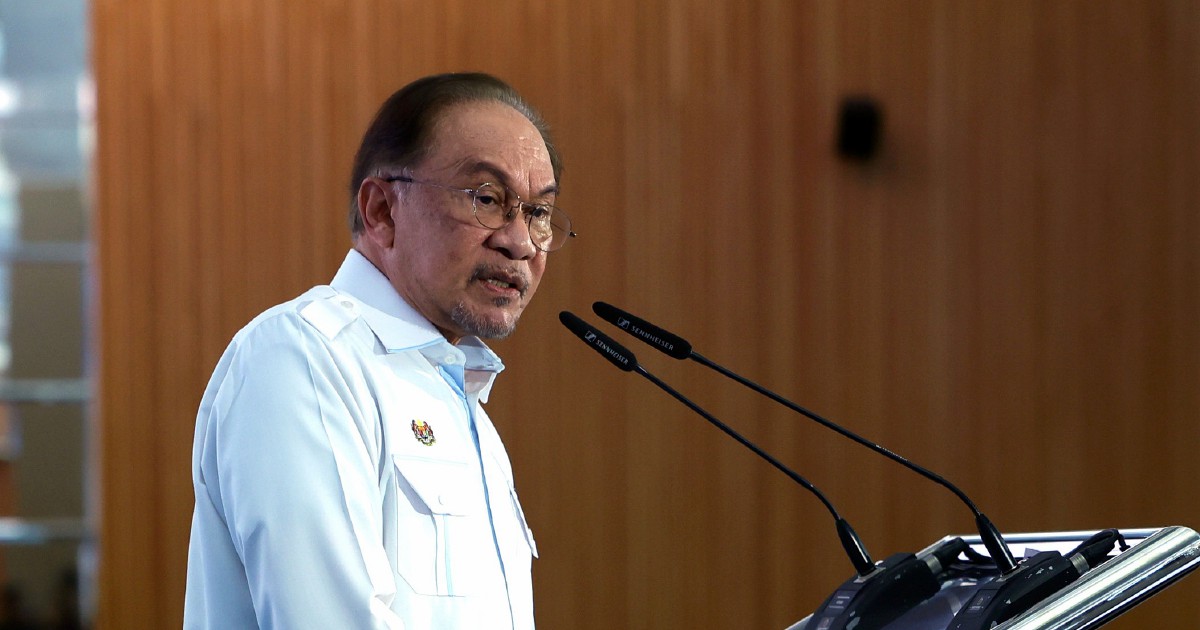
Prime Minister Datuk Seri Anwar Ibrahim has firmly rejected allegations levelled against the federal government regarding allegedly unequal distribution of development funding across Malaysia's states. The statement comes amid ongoing scrutiny over how Putrajaya channels economic investments and infrastructure projects to different regions, a perennial concern that resonates particularly strongly among non-ruling coalition states seeking greater federal support.
The issue of development allocation fairness has become increasingly contentious in Malaysia's political landscape, with opposition-led states and their representatives consistently arguing they receive diminished federal resources compared to coalition-controlled jurisdictions. This disparity has tangible consequences for residents in these areas, affecting everything from road quality and school infrastructure to water systems and healthcare facilities. The tension underscores deeper questions about federalism and equitable resource distribution in a country with significant regional economic disparities.
Anwar's rebuttal represents the government's formal position that development allocations follow transparent, merit-based criteria rather than political calculations. The administration contends that funds are distributed according to assessed infrastructure needs, population density, development indices, and project feasibility rather than partisan considerations. However, critics argue that regardless of stated methodology, the practical outcomes show systematic disadvantaging of opposition-administered territories, creating a two-tier development system across the nation.
The implications for Malaysian governance are substantial. Regional inequality in infrastructure and development can deepen economic divisions between states, perpetuate wealth concentration, and fuel political grievances that destabilize coalitions. Investors and businesses often base location decisions on available infrastructure quality and government support, meaning states with lower federal allocations face competitive disadvantages in attracting economic activity. This creates a self-reinforcing cycle where politically marginalised states fall further behind economically.
For Southeast Asian observers, Malaysia's experience offers cautionary lessons about balancing federalism with national coherence. Neighbouring countries managing multi-state or federal systems face similar pressures to ensure equitable resource distribution while maintaining political stability. The Malaysian situation demonstrates how development funding decisions become proxy battlegrounds for larger power struggles, with ordinary citizens bearing the costs of political division.
The Prime Minister's position also reflects broader government messaging about meritocracy and performance-based governance that the current administration has emphasised since taking office. Officials have repeatedly maintained that development decisions prioritise objective criteria, yet persistent accusations suggest either implementation failures or genuine inequities that require structural reform. The credibility gap between official claims and public perception poses its own governance challenge requiring transparent data and independent verification.
State governments, particularly those not aligned with the federal ruling coalition, have documented what they characterise as significant disparities in development allocations relative to population sizes and development needs. These complaints extend beyond infrastructure to include business licensing, tax incentives, and human resource development initiatives. Opposition-led administrations argue they must undertake critical development projects using constrained state revenue sources while wealthier coalition states benefit from generous federal disbursements.
The federal government controls substantial development budgets through ministries and agencies, providing leverage in intergovernmental relations. While this centralised resource control theoretically allows efficient allocation of national priorities, critics contend it effectively weaponises development funding as a political tool. Conversely, proponents argue concentrated authority prevents wasteful fragmentation and ensures economically sensible projects receive priority regardless of state political affiliation.
Resolving this dispute would likely require establishing independent mechanisms for transparent fund allocation, perhaps involving parliamentary oversight and public reporting disaggregated by state and sector. Such mechanisms might reduce accusations of partiality while providing data-driven bases for policy discussions. Many stakeholders believe greater devolution of development responsibilities to state governments, coupled with corresponding revenue sources, could diminish federal leverage while improving localised responsiveness to regional needs.
Anwar's dismissal of fairness allegations arrives as Malaysia prepares for future electoral contests where development outcomes feature prominently in campaign messaging. Both government and opposition parties will doubtless cite development statistics supporting their narratives, making the establishment of credible, neutral measurement crucial for democratic discourse. Citizens across Malaysia deserve confidence that their tax contributions support nationwide development rather than serving narrow political interests.
The development allocation question remains unresolved within Malaysia's ongoing political evolution. Whether this issue prompts structural reforms toward greater transparency and federalism, or persists as a perennial source of grievance, will significantly shape Malaysia's trajectory as a cohesive nation-state. The Prime Minister's dismissal of concerns, while politically necessary from his perspective, does not eliminate underlying questions about equity, fairness, and sustainable intergovernmental relations that will continue demanding serious national attention.

