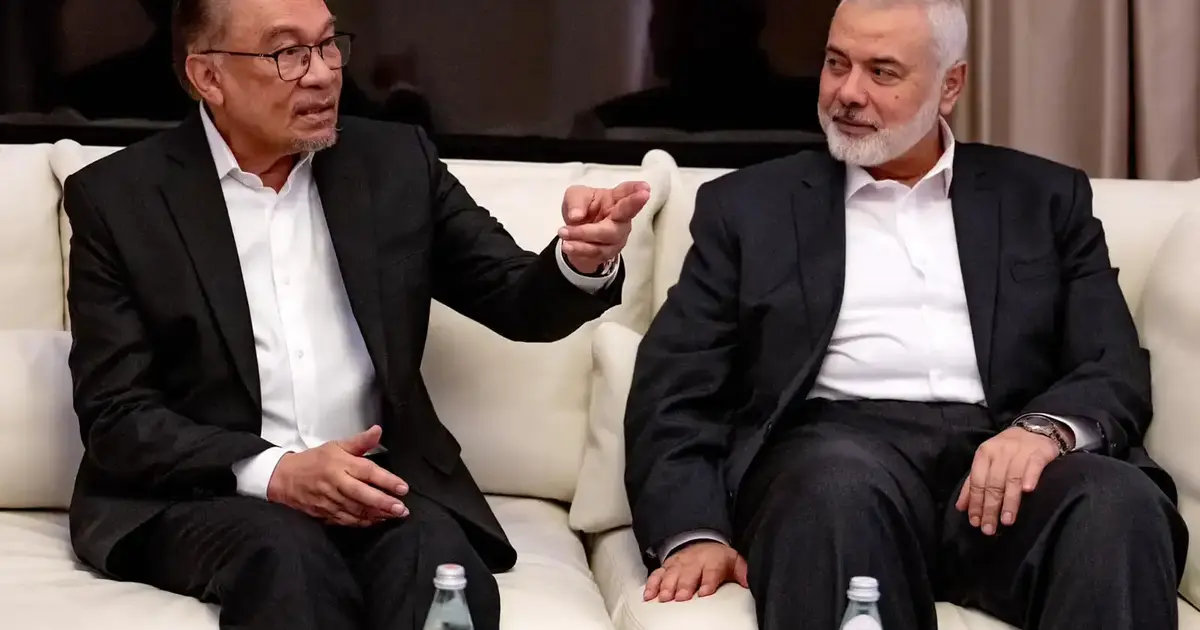
Prime Minister Anwar Ibrahim has categorically denied allegations suggesting that members of the Palestinian militant group Hamas have conducted training operations within Malaysian territory, characterising the claims as entirely without foundation. The assertion comes amid heightened international scrutiny of Malaysia's role in Middle Eastern geopolitics and ongoing concerns about extremist activities across Southeast Asia.
In a significant diplomatic move, Anwar disclosed that he has briefed United States President Donald Trump regarding his historical contact with Hamas leadership. This revelation underscores an important dimension of Malaysia's approach to managing its international relationships—maintaining transparency with Western powers on matters that could otherwise invite misinterpretation or diplomatic tension. The decision to voluntarily disclose such meetings reflects Anwar's broader strategy of engaging openly with the Trump administration on sensitive bilateral and regional issues.
The timing of these statements carries considerable weight given the current geopolitical climate in Southeast Asia and the Middle East. Malaysia has long been a multi-religious, multicultural nation where various communities coexist, making it particularly sensitive to accusations of harbouring militant organisations. Such allegations, if left unaddressed, could substantially damage Malaysia's international reputation and complicate its diplomatic standing with Western nations, particularly the United States.
Anwar's categorical dismissal suggests that the government has thoroughly investigated the claims and found no credible evidence to support them. The prime minister's willingness to confront these allegations head-on, rather than deflecting or minimising them, demonstrates a confidence in Malaysia's security apparatus and its capacity to monitor and prevent illegal activities within the nation's borders. This stance also reflects an attempt to reassure both domestic audiences and international partners that Malaysia maintains adequate oversight of its territory.
The reference to his past engagement with Hamas leadership is particularly noteworthy for Malaysian observers. Prior to becoming prime minister, Anwar held various political positions and maintained international contacts spanning decades. His acknowledgment that he has met with Hamas representatives—and his proactive disclosure of this to Trump—suggests he recognises the sensitivity of such historical connections in the current political climate. By voluntarily bringing this matter to Trump's attention before it could become a source of contention, Anwar appears to be pre-empting potential diplomatic complications.
This approach reflects a calculated understanding of how the Trump administration might view Malaysia's foreign policy direction. The US administration has maintained a strong stance against organisations designated as terrorist entities, and Hamas appears on America's official terrorist designations list. By transparently discussing his historical interactions with Hamas leadership, Anwar is signalling that such contacts were legitimate diplomatic or political engagement rather than ideological alignment or operational coordination. The distinction matters significantly in international relations.
From a regional perspective, Anwar's handling of this matter carries implications for how Southeast Asian nations navigate the complex intersection of Middle Eastern conflicts and great power competition. Malaysia, as a large Muslim-majority nation with significant economic and strategic importance, occupies a delicate position. It maintains relationships with various actors in the Middle East while simultaneously being a key partner for Western powers interested in regional stability. Anwar's statements suggest an effort to demonstrate that Malaysia can maintain such balancing act while remaining a reliable partner for democratic, Western-aligned nations.
The dismissal of training allegations also touches on a broader challenge facing Malaysia in recent years: separating unfounded accusations from legitimate security concerns. Southeast Asia has experienced genuine extremist recruitment and training activities in some contexts, making it crucial for Malaysian authorities to clearly distinguish between real threats requiring action and politically motivated claims that may be designed to embarrass the government or destabilise regional cooperation.
Anwar's disclosure of his Trump conversation also reflects the premium he places on direct, high-level engagement with the United States. Given Malaysia's significance as an economic power in the region and its role in key infrastructure projects and trade arrangements, maintaining strong communication channels with Washington remains a priority for his administration. The willingness to discuss sensitive historical matters directly with Trump suggests confidence in the bilateral relationship and an assumption that Trump will understand the context of such engagement.
Looking forward, these statements may help insulate Malaysia from future accusations of providing safe haven to Hamas or other designated militant organisations. By firmly rejecting the claims and providing transparency to key international partners, Anwar has attempted to establish a clear record that the government neither harbours nor facilitates training activities for such groups. This position matters for Malaysia's international standing and for the government's domestic security narrative.
The incident also illustrates how modern Malaysian politics increasingly intersects with international relations and great power dynamics. Anwar's response demonstrates a sophisticated understanding of how allegations can spread and cause diplomatic damage if not immediately countered. His two-pronged approach—categorical denial and proactive transparency—suggests a deliberate strategy to manage Malaysia's international image while maintaining flexibility in regional relationships. This balancing act will likely remain a central feature of Malaysian diplomacy under his leadership.

