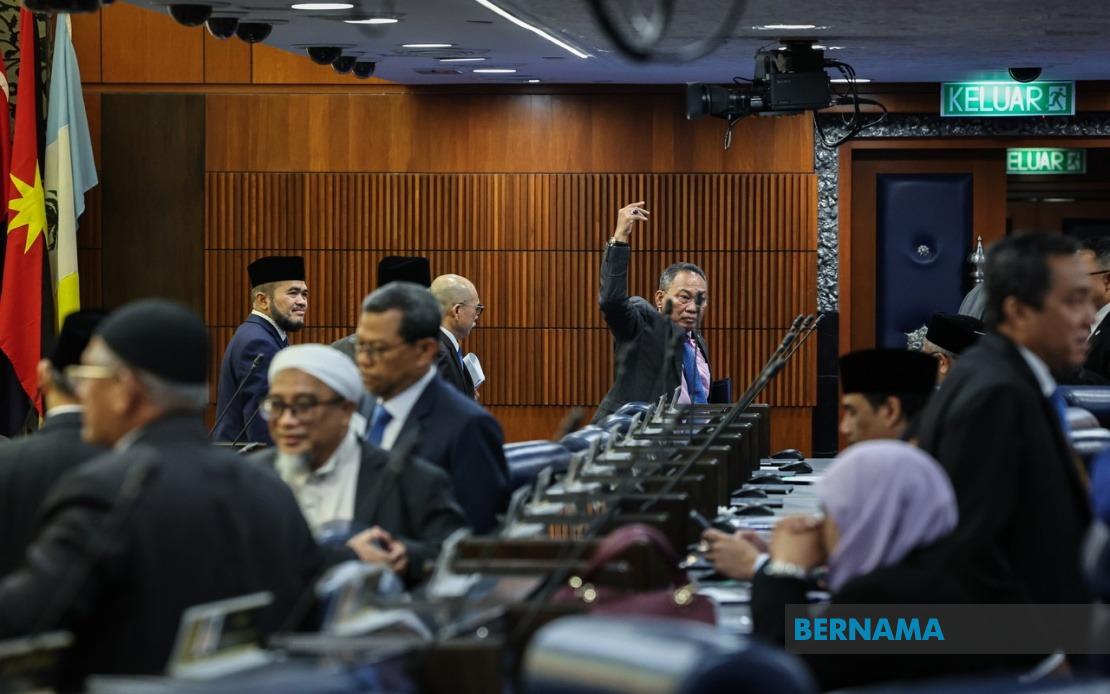
Prime Minister Datuk Seri Anwar Ibrahim has fired back at the opposition for what he characterises as an attempt to weaponise the Tabung Haji controversy for partisan advantage. Speaking through a Facebook post on August 11, Anwar accused opposition lawmakers of manufacturing political theatre around the institution rather than grappling with substantive questions of mismanagement and depositor protection. His comments came in response to opposition members staging a walkout from a special parliamentary session convened to discuss the Royal Commission of Inquiry findings into the troubled pilgrimage fund.
The Prime Minister's frustration centres on what he sees as a deliberate misdirection of public discourse. Rather than examining the systemic failures within Tabung Haji's operations or addressing the mechanisms needed to restore financial stability, Anwar contends that opposition figures have chosen instead to pivot toward personal attacks and procedural disputes. This deflection, in his view, serves the interests of political calculation at the expense of the millions of ordinary Malaysians whose life savings remain tied up in the institution. The framing presents the opposition's conduct as not merely partisan but as fundamentally disloyal to Muslim depositors whose religious obligations and economic security hang in the balance.
The confrontation unfolded during a specially scheduled sitting of the Dewan Rakyat dedicated to briefings on the Tabung Haji RCI Report. Opposition parliamentarians staged their exit to protest Speaker Tan Sri Johari Abdul's decision to proceed with ministerial presentations despite the Prime Minister's absence. Anwar had issued an apology explaining his inability to attend due to ongoing physiotherapy following an elective surgical procedure to address a para-umbilical hernia. The opposition cited this absence as grounds to adjourn proceedings, arguing through their Chief Whip Datuk Seri Takiyuddin Hassan that the gravity of the matter warranted leadership presence. When their request was denied, they withdrew from the chamber in protest.
Anwar's response frames this parliamentary manoeuvre as a calculated distraction from the real issues at stake. The Prime Minister posed a pointed rhetorical challenge to the opposition: whether they genuinely wished to debate the future of Tabung Haji or preferred to engage in personal attacks against him. This framing transforms the opposition's parliamentary tactics into evidence of misplaced priorities, suggesting that those who profess concern for Malay-Muslim interests are instead pursuing narrow political advantage. The language of betrayal becomes central to his argument—not the betrayal of Tabung Haji's mission by management failures, but the betrayal of depositors by an opposition more interested in theatrical protest than institutional reform.
The Prime Minister specifically directed criticism toward Perikatan Nasional, the opposition coalition led by PAS, questioning their commitment to protecting ordinary Malaysians whose entire savings depend on Tabung Haji's recovery. His invocation of fishermen, farmers, teachers, law enforcement personnel, military personnel, and retirees grounds his argument in the lived economic realities of ordinary citizens. By listing these occupational categories, Anwar emphasises that the Tabung Haji crisis is not an abstract policy debate but a matter affecting millions of working Malaysians who have entrusted their earnings to what they understood to be a secure religious savings mechanism. He thereby challenges the opposition's framing by suggesting that their parliamentary posturing actively undermines the interests of these vulnerable constituencies.
The July 29 publication of the 211-page RCI report provided the precipitating event for the parliamentary conflict. The report documents management weaknesses spanning 2014 to 2020 and offers 25 recommendations for institutional improvement. As of July 30, Tabung Haji management confirmed that approximately 75 per cent of these recommendations had already been implemented, suggesting some momentum toward recovery. The government had initiated the inquiry process in 2021, with formal membership appointments following in January 2022. The report's submission to Yang di-Pertuan Agong occurred on August 30, 2022, establishing a formal chain of institutional accountability that preceded the parliamentary session by nearly a year.
Understanding the broader context of Tabung Haji's institutional crisis is essential for assessing the political dispute. The fund operates as a pilgrimage savings scheme deeply embedded in Malaysia's Islamic financial infrastructure, serving millions of Muslim depositors across income levels and professions. When governance failures emerged, they carried not merely financial but religious implications—millions of Malaysians were unable to complete the hajj pilgrimage because their accumulated savings were frozen or diminished. This religious dimension transformed what might otherwise be a technical banking crisis into a matter touching the spiritual obligations of Muslim citizens. The opposition's parliamentary tactics, when viewed against this backdrop, could plausibly be seen as insensitive to the religious urgency motivating reform efforts.
Yet the opposition's decision to stage a walkout cannot be dismissed as purely performative. Parliamentary procedure exists partly to ensure that matters of national consequence receive leadership scrutiny and that executive accountability functions effectively. The Prime Minister's medical absence, while understandable, did raise legitimate questions about whether a special parliamentary sitting on such a consequential issue should proceed without the head of government present. The opposition's effort to adjourn reflected a procedural principle—that certain matters warrant the direct involvement of senior leadership. When that request was rejected, their withdrawal represented a symbolic assertion that the proceedings lacked legitimacy without complete executive participation.
The incident illustrates broader tensions within Malaysian parliamentary democracy regarding the balance between executive convenience and legislative oversight. Anwar's position implicitly argues that the machinery of government should not be paralysed by the temporary indisposition of individual leaders, and that delegated ministerial briefings constitute an adequate form of executive representation for institutional accountability matters. The opposition counter-argues, through their actions rather than articulated statements, that some matters transcend ordinary delegatory arrangements and demand direct leadership engagement. This disagreement reflects competing views about how parliamentary democracy should function when executive and legislative branches conflict.
For depositors and observers across Southeast Asia monitoring Malaysia's economic governance, the political dispute obscures underlying questions about institutional recovery. The percentage of recommendations implemented provides some reassurance, yet the structural vulnerabilities that permitted the original mismanagement remain relevant to assessing whether recovery efforts address root causes. International observers of Islamic finance have watched the Tabung Haji situation closely, as it carries implications for confidence in faith-based financial institutions across the region. When governance crises occur, depositors throughout Southeast Asia evaluate whether comparable institutions in their own nations face similar vulnerabilities.
Anwar's invocation of the opposition as "traitors" to Tabung Haji depositors represents an escalation of the conflict beyond procedural disagreement into questions of institutional loyalty. This rhetorical move transforms what might be characterised as partisan opposition into something closer to dereliction of national duty. By suggesting that the opposition's actions ultimately serve the interests of those who mismanaged Tabung Haji rather than its depositors, Anwar attempts to reframe parliamentary dissent as actively hostile to ordinary Malaysians. The effectiveness of this framing depends substantially on whether observers view the opposition's parliamentary tactics as principled institutional checks or as cynical exploitation of a genuine crisis.
Moving forward, the parliamentary tensions surrounding Tabung Haji reflect deeper questions about how Malaysian democracy processes institutional crises when partisan politics intersect with governance accountability. The RCI report provides a factual foundation for reform efforts, yet the political dispute threatens to overshadow substantive discussion of implementation challenges and progress metrics. Both the government and opposition face pressure to demonstrate that their respective positions ultimately serve depositor interests rather than narrow partisan advantage. The resolution of this tension will likely shape how future institutional crises are handled within Malaysia's parliamentary framework and whether lawmakers can effectively balance legitimate oversight functions with executive operational needs.

