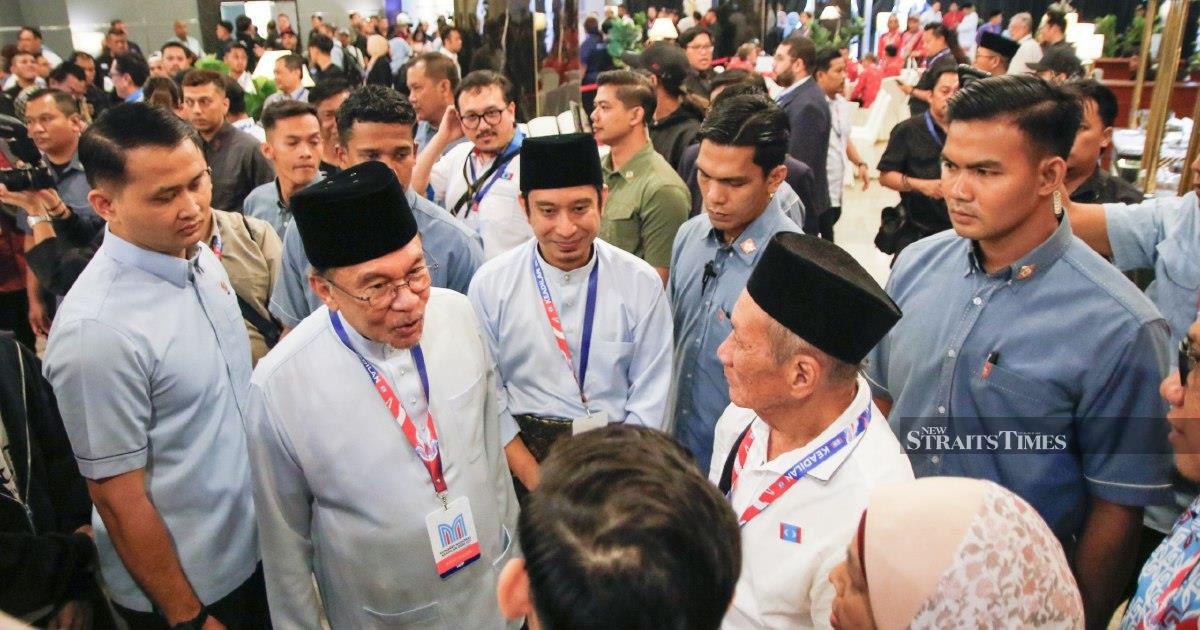
Prime Minister Datuk Seri Anwar Ibrahim moved swiftly to quell speculation about tensions between himself and Deputy Prime Minister Datuk Seri Dr Ahmad Zahid Hamidi during a public address at Ayer Keroh, reiterating that the two leaders maintain a constructive partnership at the highest levels of government. The categorical denial comes amid periodic reports suggesting possible discord within Malaysia's top leadership, a concern that could unsettle investor confidence and derail the administration's policy agenda at a critical juncture in the country's economic recovery.
The assertion of unity at the national level carries significant weight in Malaysia's political ecosystem, where coalition stability and leadership cohesion directly influence parliamentary strength and the government's capacity to implement reforms. Anwar's intervention suggests that questions about the relationship between the two figures have gained sufficient traction in political circles and media discourse to warrant a direct public clarification, underscoring the premium placed on visible solidarity within the executive branch.
The timing of such affirmations typically reflects broader concerns about cabinet dynamics and the fragile balance required to maintain the confidence of diverse coalition partners. Malaysia's governing coalition encompasses parties with distinct regional bases and policy preferences, making public displays of leadership unity essential for preventing individual component parties from exploiting perceived divisions to advance parochial agendas or strengthen their negotiating position ahead of the next electoral cycle.
Anwar's emphasis on ties remaining "good at the national level" is carefully calibrated language that acknowledges the operational reality of a complex, multi-party cabinet while affirming that any routine differences in approach or emphasis do not translate into fundamental disagreement on strategic direction. This formulation allows for the existence of distinct viewpoints within government without conceding that such differences constitute damaging rifts.
The Deputy Prime Minister role has historically been a sensitive post in Malaysian politics, occasionally serving as a focal point for expectations among certain constituencies or as a platform for leadership aspirations. Zahid's assumption of this position represents a significant development given his background leading the United Malays National Organisation (UMNO), a party that represents a crucial pillar of the coalition. Managing the relationship between a Prime Minister and a Deputy who commands substantial grassroots support requires ongoing diplomatic finesse and clear demarcation of respective responsibilities and authority.
For Malaysian business communities, civil society observers, and regional partners, stable governance at the apex of executive power remains fundamental to sustained confidence in policy implementation. The financial markets, foreign investors, and international observers carefully monitor signals emanating from Malaysia's leadership, treating public affirmations of unity as indicators of institutional stability and the likelihood of sustained policy focus on economic growth initiatives.
The coalition government has navigated considerable challenges since its formation, ranging from managing competing fiscal priorities to harmonising positions on sensitive social and religious matters. Each such episode potentially creates opportunities for speculation about internal tensions, requiring periodic reassurances that leadership alignment remains intact. Anwar's statement should be understood in this broader context of managing coalition expectations and maintaining public confidence in governmental coherence.
Zahid's role encompasses significant responsibilities across multiple economic portfolios and strategic initiatives, positioning him as a consequential figure whose engagement is essential for advancing government priorities. Any genuine deterioration in working relations between the Prime Minister and Deputy Prime Minister would inevitably constrain the administration's agility and create space for implementation delays or policy inconsistencies, phenomena that would quickly register in performance metrics and investor sentiment.
The international dimension of such assurances cannot be overlooked, as Southeast Asia's regional standing partly depends on the perceived stability and decisiveness of its major economies' governments. Malaysia's partners in ASEAN and beyond draw conclusions about the nation's reliability as an economic partner and diplomatic actor based on signals about internal political stability and executive cohesion. Public reaffirmations of leadership unity serve the additional function of signalling to the international community that Malaysia remains focused on economic competitiveness and regional engagement.
Moving forward, maintaining this declared unity will require both leaders to demonstrate through concrete policy actions and coordinated public messaging that their partnership translates into tangible outcomes for Malaysians. The credibility of such assurances ultimately depends on sustained institutional performance and visible alignment on major policy thrusts. For the coalition government, weathering periodic speculation about internal relationships while focusing on substantive governance achievements represents an ongoing balancing act essential to its political survival and policy success.
The reaffirmation from Anwar reflects an understanding that Malaysian political culture places premium value on hierarchical harmony and institutional stability, even as healthy democracies require robust debate about policy direction. His statement implicitly acknowledges this cultural reality while signalling that such debates, should they occur within cabinet, remain subordinate to the overarching commitment to effective governance and national development.

