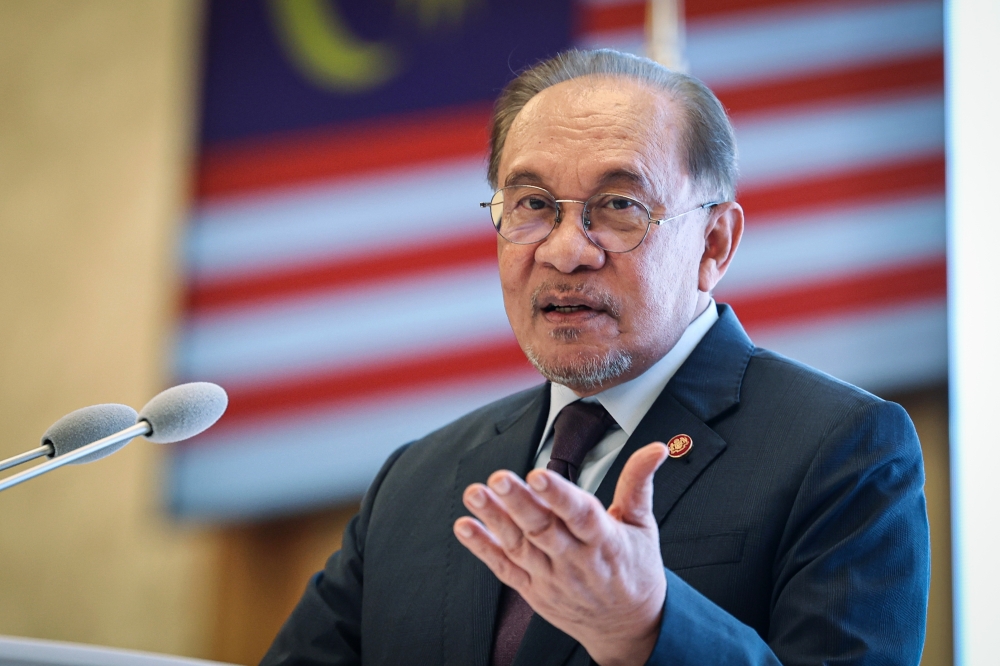
Prime Minister Datuk Seri Anwar Ibrahim publicly acknowledged the outpouring of well-wishes from Malaysians following his recent health concerns, expressing his appreciation to all who had prayed for his swift recovery. In remarks that underscored the significance of public support during personal difficulties, Anwar conveyed heartfelt thanks to citizens across the nation who had demonstrated their concern for his wellbeing during this period.
The premier's gratitude extended beyond mere courtesy, reflecting the intensity of public interest in the health status of Malaysia's top political leader. Such expressions of appreciation serve to reinforce the connection between government and populace, particularly when a sitting prime minister experiences health challenges that naturally generate widespread speculation and concern throughout the country. Anwar's acknowledgment of this support sends a message of resilience and continuity in government leadership during a period of political attention.
Beyond personal matters, Anwar outlined his administration's immediate parliamentary agenda, signalling that the government intends to convene a special sitting of Parliament specifically to deliberate on the findings contained within the Royal Commission of Inquiry report concerning Tabung Haji. This development carries substantial implications for Malaysia's pilgrimage management authority and the broader landscape of governance accountability, as the findings are expected to address significant questions about the organisation's operations and financial stewardship.
The decision to hold a dedicated parliamentary session for Tabung Haji matters reflects the gravity with which the government regards the RCI findings. Rather than folding discussion into routine parliamentary business, the establishment of a special sitting elevates the matter to a position of prominence, signalling to stakeholders and the public that the government treats the inquiry's conclusions with appropriate seriousness. This procedural choice communicates commitment to transparency and legislative scrutiny of the pilgrim fund's management.
Tabung Haji has occupied a central position in Malaysia's national narrative for decades, serving millions of Muslim Malaysians as the primary financial mechanism for undertaking the Hajj pilgrimage to Mecca. The institution's significance extends beyond simple fund management; it represents a trusted repository of savings for ordinary Malaysians pursuing one of Islam's Five Pillars. Any findings questioning the body's administration carry weight that reverberates across both religious and financial dimensions of Malaysian life.
The RCI investigation likely examined matters of particular concern to policymakers and the Muslim-majority population. Questions surrounding investment decisions, fund management practices, and governance structures have historically attracted scrutiny. A dedicated parliamentary session provides the appropriate forum for detailed examination of whatever issues the inquiry identified, allowing legislators to engage substantively with the findings and propose legislative or administrative remedies where necessary.
For Malaysian investors and savings account holders within Tabung Haji's system, parliamentary deliberation of the RCI report offers a mechanism for institutional accountability. The special sitting creates a public record of legislative response to any deficiencies the inquiry uncovered, ensuring that corrective measures undertaken by the institution occur within full view of elected representatives and the media. This transparency framework strengthens public confidence in whatever remedial actions follow.
The timing of Anwar's confirmation regarding the special parliamentary sitting, announced during remarks expressing gratitude for public support, suggests the government's intention to maintain legislative momentum on governance issues despite any disruptions caused by the prime minister's health situation. The pairing of these announcements—personal recovery and institutional accountability—projects an image of governmental continuity and purposeful attention to policy implementation.
From a broader governance perspective, the government's willingness to dedicate parliamentary time to Tabung Haji matters demonstrates recognition that pilgrimage finance operates at the intersection of public trust, religious observance, and financial regulation. Malaysia's substantial expatriate population, many of whom contribute to Tabung Haji accounts before returning home, also maintains interest in the institution's proper functioning. The special parliamentary session thus addresses concerns held by citizens both within Malaysia and across the diaspora.
The forthcoming debate will likely encompass recommendations from the RCI regarding structural improvements, oversight mechanisms, and potential legislative changes to strengthen Tabung Haji's governance framework. Parliament's deliberation on these proposals creates opportunity for cross-party discussion of how best to protect the interests of pilgrims and maintain the institution's financial stability and credibility for generations to come.
For Anwar's administration, the parliamentary handling of Tabung Haji matters represents an early test of its commitment to governance reform and institutional accountability. The government's decision to establish a special sitting rather than minimize the matter demonstrates its positioning on these issues and may set expectations for how subsequent inquiries and institutional reviews will be addressed under the current administration.
Looking ahead, the special parliamentary session will require substantive engagement from government benches with the RCI's specific findings and recommendations. The quality of parliamentary debate and the promptness with which government implements any necessary reforms will likely influence public perception of the administration's commitment to rebuilding institutional trust across Malaysia's public sector.

