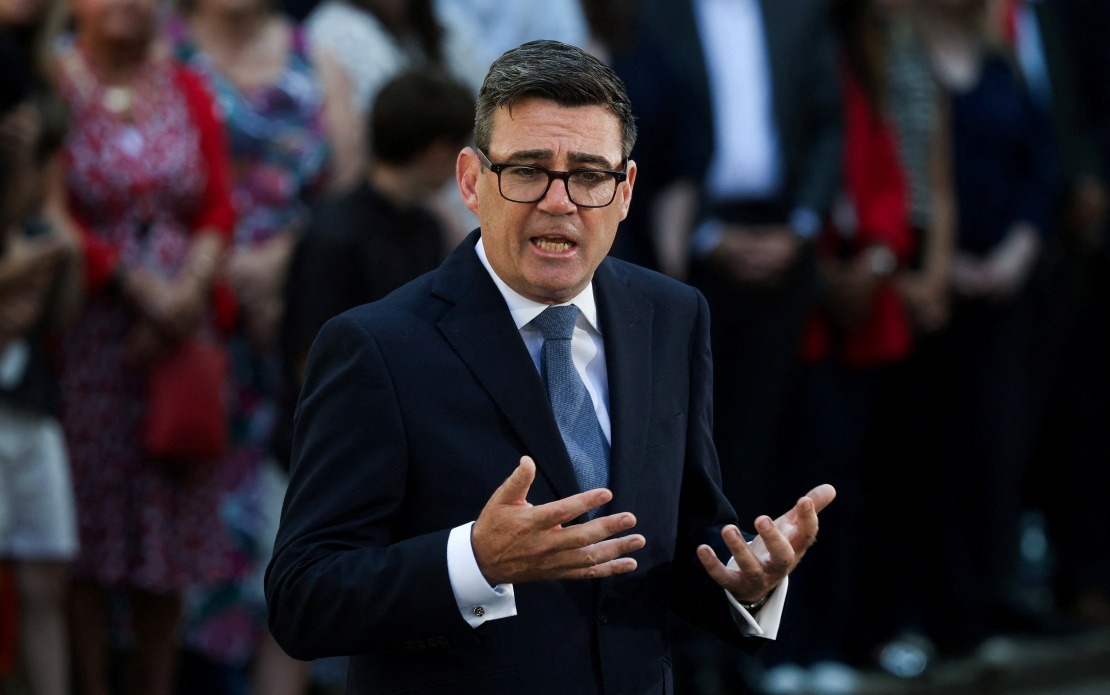
Prime Minister Datuk Seri Anwar Ibrahim has conveyed his congratulations to Andy Burnham following the Labour politician's assumption of the office of Prime Minister of the United Kingdom, seized upon the occasion to signal Malaysia's readiness to forge a more robust partnership with Britain. In comments posted on social media on July 20, Anwar articulated his desire to collaborate with Burnham across a spectrum of contemporary policy domains, framing the leadership transition as an opportune moment for both nations to recalibrate their engagement.
The Malaysian premier identified several priority areas for enhanced cooperation, prominently among them the completion of a Digital Trade Agreement that would facilitate commerce and technology transfer between Kuala Lumpur and London. Beyond commercial ties, Anwar emphasised Malaysia's interest in collaborative ventures spanning artificial intelligence development, broader digitalisation initiatives, clean energy transition efforts, and defence partnerships. These focal points reflect Malaysia's strategic positioning within global technology and sustainability frameworks whilst acknowledging the UK's capabilities in these sectors.
Anwar's statement carried particular significance in its recognition of Burnham's public acknowledgement regarding Western responses to the Gaza crisis. The Malaysian leader commended Burnham's willingness to admit that Britain's initial diplomatic posture had proven inadequate in addressing the humanitarian dimensions of the conflict, alongside the Labour leader's subsequent articulation of demands for intensified international pressure on the Israeli government. This dimension of Anwar's remarks underscores Malaysia's consistent emphasis on Palestine-related advocacy within bilateral diplomacy, a perennial concern in Malaysian foreign policy circles.
The Prime Minister characterised Burnham's candour on the Gaza question as demonstrating the moral leadership Malaysia values in international relations. Anwar observed that during a period when numerous Western governments have appeared reluctant to articulate unambiguous positions on humanitarian crises, Burnham's acknowledgement of past shortcomings and his renewed advocacy represent meaningful progress in moral clarity. This framing suggests that Malaysia views Burnham's approach as potentially more aligned with Kuala Lumpur's own perspectives on international accountability and ethical governance.
Looking forward, Anwar highlighted the forthcoming 70th anniversary of Malaysia-UK diplomatic relations, scheduled for next year, positioning this milestone as a natural juncture for both countries to reaffirm foundational commitments and establish fresh strategic directions. The invocation of this anniversary carries symbolic weight, suggesting that Malaysia seeks to move beyond routine bilateral maintenance toward a revitalised partnership architecture. For Malaysian stakeholders in trade, technology, and defence sectors, this signals potential accelerated negotiation timelines and elevated governmental commitment to finalising pending agreements.
Simultaneously, Anwar extended formal recognition to Keir Starmer, Burnham's predecessor, acknowledging the outgoing Prime Minister's contributions to the Malaysia-UK relationship during his tenure. This diplomatic courtesy ensures smooth continuity and demonstrates Malaysia's respect for institutional transitions within the Westminster system. Anwar's expression of goodwill toward Starmer's future endeavours maintains the cordial tone essential for sustained bilateral relationships across successive administrations.
Burnham's ascension to the premiership concluded a rapid succession of leadership changes within the Conservative and Labour parties, marking his appointment as Britain's seventh Prime Minister within the past decade—a reality that underscores British political volatility and the frequency with which Malaysia must establish rapport with new leadership. Burnham assumed the Labour Party leadership on Friday before receiving formal appointment to the premiership on Monday, following Starmer's formal resignation submitted at Buckingham Palace. This accelerated transition reflects the British electoral outcome and intra-party dynamics that propelled Labour to substantial parliamentary advantage.
For Malaysia, Burnham's ascendancy presents both continuity and opportunity. Labour's return to power after an extended period of Conservative governance may facilitate different diplomatic emphasis areas, particularly regarding Commonwealth relations and approaches to trade negotiations. Malaysia's geographic position within Southeast Asia and its significance as a middle-income economy with growing technological ambitions make it a potentially valuable partner within Labour's reconstructed foreign policy framework.
The timing of Anwar's diplomatic overture also reflects Malaysia's proactive diplomatic posture in building relationships with newly ascendant leaders. By offering congratulations and articulating specific cooperation priorities immediately, Anwar positions Malaysia as an engaged and forward-thinking partner rather than a passive observer of British political transitions. This approach aligns with Malaysia's broader strategy of leveraging bilateral relationships to advance economic interests in technology and trade whilst maintaining platforms for advocating on geopolitical concerns such as Middle Eastern affairs.
The emphasis on digital trade and artificial intelligence collaboration particularly resonates with Malaysia's Vision 2050 objectives and the government's technology modernisation agenda. A formalised Digital Trade Agreement with the UK could establish precedents for Malaysian engagement with other developed economies and potentially enhance Malaysian competitiveness in emerging sectors. Defence collaboration, meanwhile, addresses Malaysia's ongoing modernisation of military capabilities and the strategic imperatives stemming from regional security dynamics.
Anwar's statement encapsulates Malaysia's broader diplomatic philosophy: pragmatic engagement centred on mutual economic benefit, coupled with consistent advocacy for values-based international conduct. By connecting congratulations with concrete cooperation proposals and moral positioning on international crises, the Malaysian Prime Minister demonstrates sophisticated diplomatic communication that simultaneously advances national interests and maintains principled stances on global issues.

