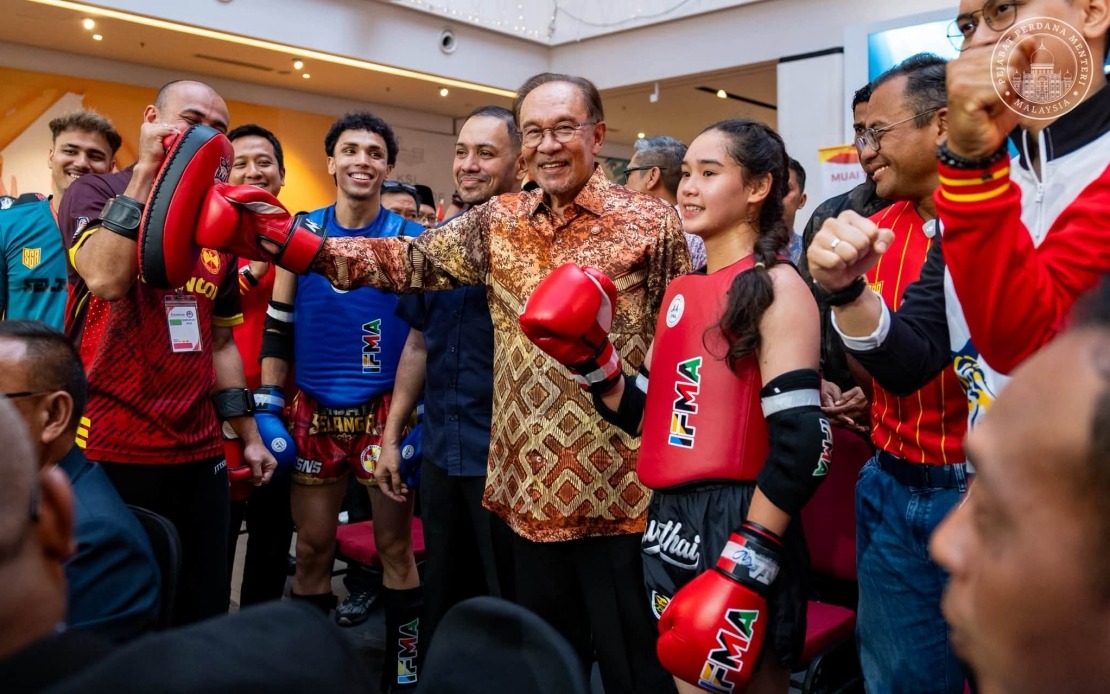
Prime Minister Datuk Seri Anwar Ibrahim has expressed admiration for the calibre of young athletes participating in this year's Selangor Malaysia Games, signalling confidence in their potential to become Malaysia's next generation of international sporting ambassadors. Speaking through a social media post following his visit to the games, Anwar highlighted the exceptional spirit and discipline demonstrated by competitors, suggesting that their current performances at the biennial event could serve as a springboard for future national representation.
During his time at the 2026 SUKMA venue, Anwar took particular interest in observing Muay Thai competitions, where he witnessed firsthand the commitment and technical proficiency of Malaysia's emerging combat sports talent. The Prime Minister's direct engagement with the athletes underscores the government's investment in identifying and nurturing young sporting talent early, a strategic approach that aligns with Malaysia's broader objective to maintain competitiveness in international sporting forums.
The 2026 Selangor Malaysia Games represents a significant milestone for the state, marking the return of this prestigious national sporting event after a gap of nearly three decades. The games are substantially larger in scale than previous iterations, featuring over 5,000 young athletes who have travelled from every corner of the nation to compete for supremacy across 37 different sports disciplines. The competition will culminate on August 24, with athletes vying for 468 gold medals across various categories and age groups.
The concentration of so many promising young competitors in a single venue has created what amounts to a comprehensive talent identification opportunity for national sporting bodies. Malaysia's approach to developing athletes has traditionally relied on such platforms to spot individuals with exceptional potential, allowing federations to channel resources toward those most likely to achieve international success. The comprehensive nature of SUKMA, spanning both mainstream and niche sports, ensures that talent from diverse backgrounds and sporting traditions receives visibility.
Selangor's role as host state carries particular significance given the region's established reputation as a sporting hub within Malaysia. The state's infrastructure development and administrative capacity have made it well-suited to managing an event of this complexity and scale. By hosting SUKMA again after 28 years, Selangor is reaffirming its commitment to grassroots athletic development while simultaneously generating economic activity through the influx of athletes, support staff, and spectators.
The emphasis placed by Anwar on the courage displayed by these young athletes reflects an understanding that international sporting success requires more than mere technical skill. Mental resilience, the ability to perform under pressure, and the determination to overcome adversity are qualities that distinguish competitors who eventually reach the podium at world championships and Olympic Games. The Prime Minister's observation of these intangible qualities suggests that Malaysia's emerging athletes possess not only raw talent but also the psychological fortitude necessary for elite-level competition.
Malaysia's track record in developing young athletes into international competitors provides historical context for Anwar's optimism. The nation has produced numerous world-class sportspeople across disciplines ranging from badminton and squash to diving and wrestling. Many of these accomplished athletes began their journey at competitive events precisely like SUKMA, where early excellence is recognized and systematically cultivated through national sports development programmes.
The government's investment in sports infrastructure and athlete development programmes has expanded considerably in recent years, reflecting recognition that sporting excellence can enhance national prestige and provide economic returns through tourism and sponsorship. The identification of promising talent at SUKMA feeds directly into this ecosystem, with selected athletes receiving financial support, coaching access, and international competition opportunities that would otherwise be unavailable in their home states or communities.
Looking forward, the success of Malaysia's sporting contingents at future international competitions will partly depend on how effectively young athletes like those currently competing at SUKMA are integrated into structured development pathways. The transition from domestic success to sustained international performance remains challenging for many young athletes, requiring not only continued technical development but also exposure to higher levels of competition and coaching expertise.
Anwar's public endorsement of these athletes carries symbolic weight beyond the immediate context of the games. By highlighting the potential of Malaysia's emerging sporting talent, the Prime Minister is reinforcing the national priority placed on athletic development and signalling to young people across the country that excellence in sports is a valued and supported career pathway. This cultural messaging can itself influence participation rates and commitment levels among the broader youth population.
The participation of over 5,000 young athletes represents a substantial cross-section of Malaysia's youth sporting population, encompassing diverse socioeconomic backgrounds and ethnic communities. This inclusive representation strengthens the argument that talent exists throughout society and that systematic investment in grassroots development can yield meaningful returns. Several of the athletes currently competing may indeed go on to represent Malaysia at Commonwealth Games, Asian Games, or Olympic competitions within the next decade, validating the Prime Minister's expressed confidence.

