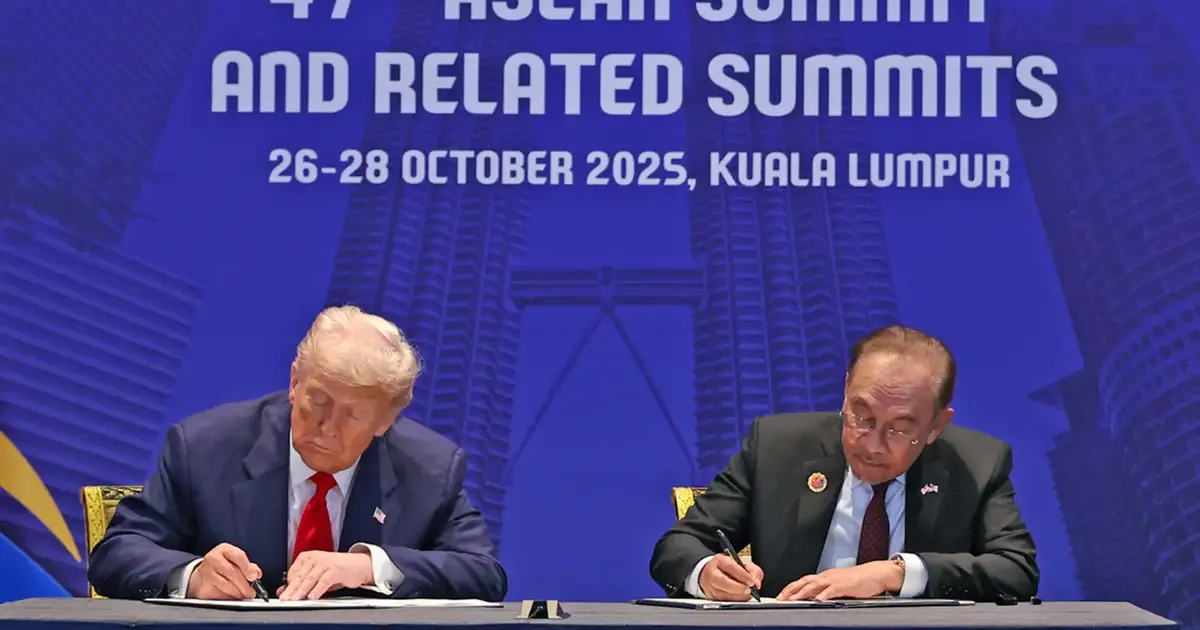
Prime Minister Anwar Ibrahim's administration has moved aggressively to block a legal challenge mounted by opposition MPs contesting the validity and constitutional basis of the Malaysia-US reciprocal trade agreement. The government's filing represents a significant development in an emerging parliamentary dispute over executive authority in negotiating major trade arrangements without explicit legislative approval.
Opposition parliamentarians have simultaneously pursued a two-pronged legal strategy, filing not only the substantive case that prompted the government's striking-out application, but also a separate motion asking the Federal Court to refer constitutional questions arising from the dispute. This dual approach suggests MPs are preparing for a prolonged constitutional battle that could ultimately reshape how Malaysia's executive branch handles major international agreements.
The reciprocal trade agreement with the United States represents one of Malaysia's most significant commercial negotiations in recent years, with implications extending across manufacturing, agriculture, services, and intellectual property protection. The deal affects numerous Malaysian industries and trading partners throughout Southeast Asia, making the constitutional questions at stake far broader than a simple dispute between government and opposition.
The timing of this legal action reflects deeper tensions within Malaysia's political system regarding parliamentary oversight and executive power. Opposition MPs argue that major trade agreements affecting national economic policy should require explicit parliamentary ratification or at minimum transparent legislative scrutiny before implementation. The government appears to be contending that existing constitutional provisions grant the executive sufficient authority to conclude such agreements without additional parliamentary consent.
This dispute touches on fundamental questions about Malaysia's democratic governance structure. Constitutional experts have long debated whether the separation of powers adequately constrains executive action on international trade matters, particularly when agreements contain provisions affecting domestic law or imposing obligations on future governments. The Federal Court's potential involvement in clarifying these constitutional boundaries could establish important precedent for how Malaysia handles trade diplomacy.
Southeast Asian observers note that regional trade negotiations have increasingly become sources of political contention as parliaments demand greater input into agreements affecting their economies. Thailand, Vietnam, and Indonesia have experienced similar disputes, suggesting that Malaysia's current legal wrangle reflects broader regional trends toward parliamentary assertion of economic decision-making authority. How Malaysian courts ultimately rule may influence similar debates elsewhere in the region.
The government's decision to seek dismissal of the suit before substantive consideration suggests confidence in technical procedural grounds, yet the MPs' simultaneous request for Federal Court constitutional referral indicates they anticipate this defensive strategy. The reference mechanism allows lower courts to pause proceedings and submit novel constitutional questions directly to Malaysia's apex court, potentially accelerating resolution of the fundamental legal issues at stake.
Industry groups and trading partners watch this case closely, uncertain whether the outcome could jeopardise implementation of the agreement or require parliamentary ratification procedures that were not part of the original negotiation timeline. Malaysian exporters, particularly in electronics, palm oil, and automotive sectors with existing US supply relationships, have strong interest in the agreement's stability.
The constitutional questions MPs raise likely include whether Malaysia's executive can unilaterally bind the nation to trade obligations affecting domestic legislation, whether parliament's treaty-ratification powers extend to reciprocal trade agreements, and what procedural transparency standards apply to trade negotiations affecting public interest. These questions remain largely unresolved in Malaysian constitutional jurisprudence.
Precedent from Commonwealth jurisdictions shows varying approaches to executive trade authority. Australia's courts have recognised broad executive power in external affairs, while Canadian courts have demanded parliamentary involvement in certain trade matters. Malaysian courts will draw on these comparative examples while interpreting the Federal Constitution's unique distribution of powers between Dewan Rakyat and executive institutions.
The administration's legal strategy likely aims to prevent discovery of cabinet discussions and negotiation documents during litigation, arguing that such materials remain protected executive communications. Opposition MPs counter that parliamentary oversight requires access to at least ministerial accounts of the agreement's provisions and negotiations' context. This procedural conflict often determines which side gains informational advantage before substantive arguments commence.
Observers suggest the government possesses confidence in its legal position, having presumably assessed constitutional precedent before proceeding with such an assertive response. Yet the opposition's constitutional referral application preserves their capacity to escalate to the Federal Court regardless of the striking-out motion's outcome, ensuring this dispute will generate significant judicial interpretation of executive authority in Malaysia's trade governance.
The resolution of this case will likely influence how future Malaysian governments approach major international agreements, potentially requiring greater parliamentary consultation, transparency, or explicit ratification votes depending on which side ultimately prevails in constitutional interpretation.

