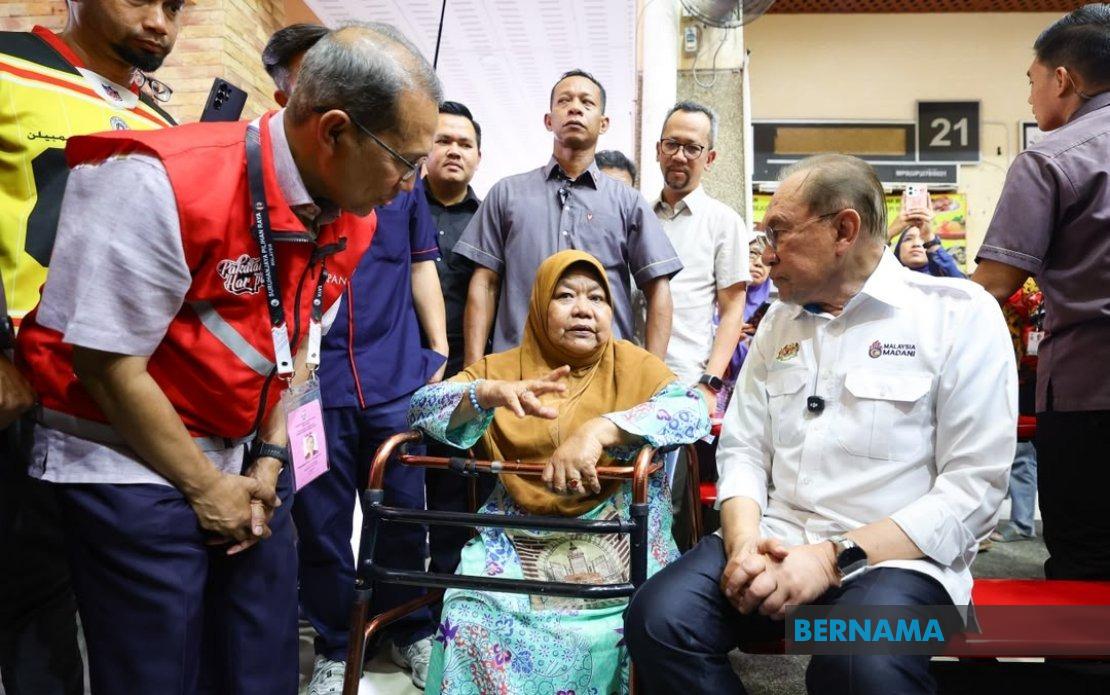
Prime Minister Datuk Seri Anwar Ibrahim has used recent infrastructure developments in Negeri Sembilan to demonstrate the Pakatan Harapan coalition's commitment to transparent governance and resource stewardship. Speaking at a community engagement event in Ampangan, Anwar highlighted how the state government's reciprocal approach to river management projects exemplifies an administration genuinely focused on returning benefits to citizens rather than concentrating wealth among elites. With the 16th Negeri Sembilan State Election drawing near, the message carries clear political weight as PH seeks to retain control of the state assembly.
The centrepiece of Anwar's argument was a river widening and deepening initiative in Ampangan, a constituency that will play a significant role in determining the election outcome on August 1st. Unlike conventional infrastructure projects that might enrich contractors or politically connected individuals, Anwar explained that sand extracted during the dredging operations is being repurposed to finance ongoing maintenance and improvements to the river systems themselves. This circular approach, he suggested, demonstrates how PH-led governance prioritises long-term community welfare over short-term extraction of value. The model creates a self-sustaining mechanism where project byproducts directly benefit the areas where development occurs.
Transparency in resource management has become a defining theme for Anwar's administration since PH returned to federal power in 2022. The Prime Minister's remarks underscore a deliberate repositioning of PH as the party of clean governance, a critical distinction in Malaysian politics where concerns about corruption and misappropriation of public funds remain deeply embedded in voter consciousness. By drawing explicit connections between state-level projects and transparent practices, Anwar is attempting to construct a narrative of governance integrity that extends from federal policy down to constituency-level initiatives. This resonates particularly in Negeri Sembilan, where historical patterns of resource distribution have sometimes favoured connected elites.
Anwar's invocation of his own experience negotiating a hotel development in Port Dickson adds a personal dimension to his governance philosophy. In describing how that project incorporated provisions for the fishing community including educational support and housing improvements, Anwar positions himself as a leader who considers marginalised stakeholders in development planning. This anecdote serves a dual purpose: it humanises his political message while demonstrating how development and social welfare need not exist in tension. For voters in Ampangan and other Negeri Sembilan constituencies, the implication is that PH governance means considering their interests, not simply extracting resources from their locality.
The timing of Anwar's campaign visit to Negeri Sembilan reflects broader strategic considerations for PH. The coalition faces pressure across multiple fronts in Malaysian politics, with Barisan Nasional and increasingly assertive Perikatan Nasional posing electoral challenges. Negeri Sembilan represents a relatively secure PH stronghold, but complacency could prove costly. By actively campaigning and articulating governance achievements, PH seeks to maintain voter enthusiasm and consolidate its position before the August 1st polling date. Early voting scheduled for July 28th means the campaign window is compressed, making high-profile visits by the Prime Minister particularly valuable for generating media coverage and energising grassroots supporters.
PH's slate of 36 candidates across all constituencies reflects the coalition's commitment to contested representation. The distribution across component parties—16 candidates from PKR, 11 from DAP, and nine from Amanah—roughly reflects internal power dynamics while attempting to project unity and inclusivity. This multiethnic composition carries subtle significance in Negeri Sembilan's electoral context. By fielding candidates across different racial and religious backgrounds, PH sends a message about inclusive governance that contrasts with parties emphasising narrow communal interests. In a state with substantial Malay-Muslim, Chinese, and Indian populations, this positioning matters substantially for electoral outcomes.
The emphasis on integrity-based governance forms the intellectual core of Anwar's campaign message in Negeri Sembilan. He explicitly called for voters to select candidates with trustworthiness and dignity, urging people across ethnic communities to look beyond racial or religious identity toward character and competence. This framing reflects a governance philosophy that PH has attempted to market since returning to federal office: a vision of Malaysia where meritocracy, transparency, and institutional integrity supersede patronage networks and communal politics. Whether voters ultimately embrace this vision or revert to traditional electoral calculations remains an open question.
The river projects themselves carry practical significance beyond their symbolic value for governance messaging. Flooding remains a persistent challenge across Negeri Sembilan and many Malaysian states, with climate change intensifying rainfall patterns and waterlogging affecting residential and commercial areas. Infrastructure projects addressing these issues generate tangible public goods that voters directly experience. When sand extracted during river maintenance is reinvested in maintaining those systems rather than sold for private profit, the benefit becomes visible and continuous. This transforms infrastructure from a one-time event into a sustainable cycle of community improvement.
For Malaysian and Southeast Asian observers, the Negeri Sembilan election serves as a microcosm of broader regional political trends. Coalition governance, multiethnic representation, and contestations between different visions of development and resource distribution play out at state level before potentially influencing national politics. The specific mechanisms PH emphasises—transparency, community benefit, sustainable resource management—reflect aspirations held across the region's democracies. How successfully PH implements and communicates these values will influence not only Negeri Sembilan's electoral outcome but broader perceptions of Malaysian governance quality.
Looking ahead to August 1st, PH's performance in Negeri Sembilan will provide important signals about voter sentiment toward the coalition's governance record and policy platform. The state election occurs in the context of ongoing federal challenges including economic management, religious sensitivities, and interstate political dynamics. Success in retaining Negeri Sembilan would reinforce PH's narrative of effective governance and voter confidence, while setbacks would invite questions about whether pledges of transparency and resource return to communities are resonating with voters or remain abstract political rhetoric. The river projects that Anwar highlighted represent PH's case study for why voters should grant them continued authority to lead.

