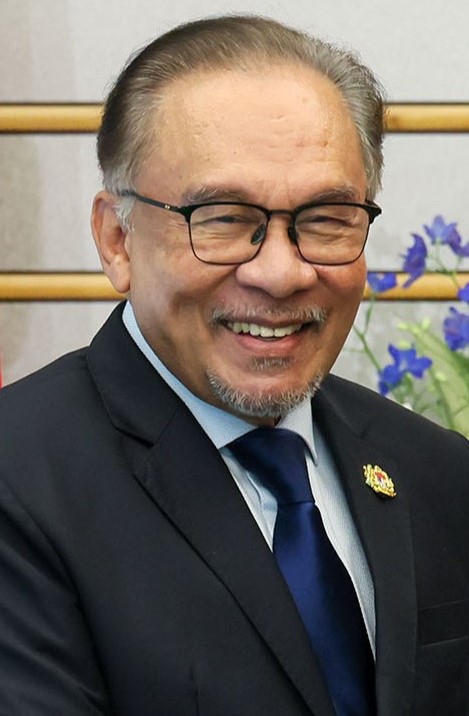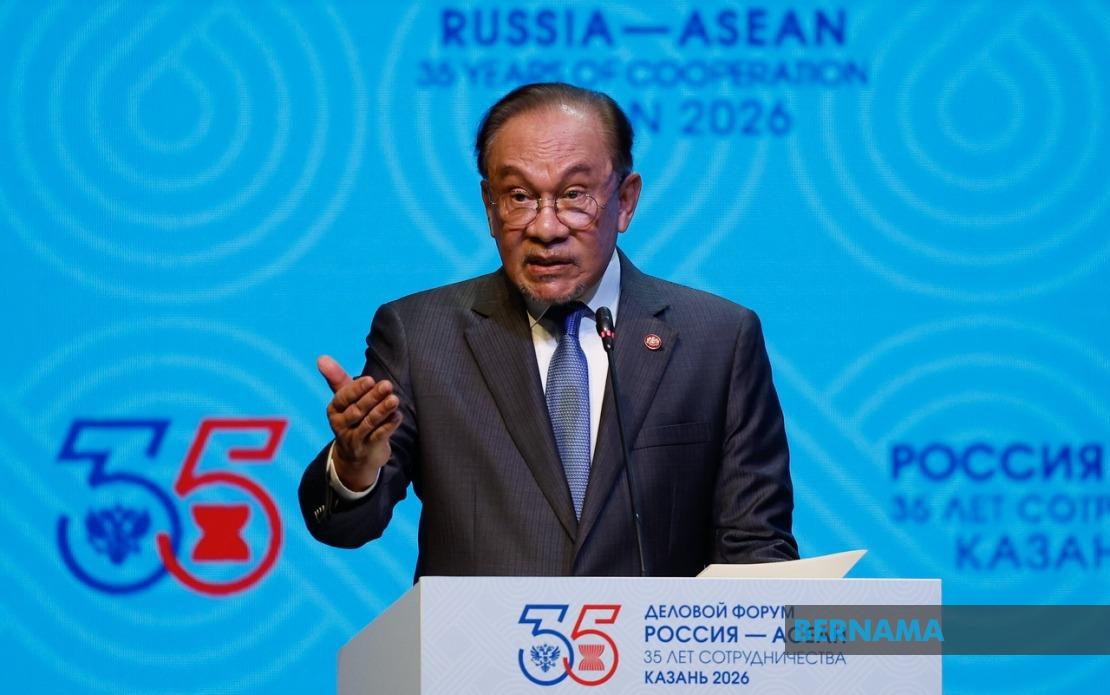
Prime Minister Datuk Seri Anwar Ibrahim has used his attendance at the ASEAN-Russia Business Forum in Kazan to outline an expansive vision for bilateral cooperation that extends well beyond traditional economic channels, signalling Malaysia's intent to position Southeast Asia as a key strategic partner for Moscow across multiple domains.
During extensive remarks to international media gathered at the forum, Anwar characterised the present state of ASEAN-Russia relations as substantially underdeveloped relative to the region's existing partnerships with major powers. While ASEAN maintains deeply rooted economic frameworks with the United States, China and India, the Malaysian leader observed that comparable engagement with Russia remains largely dormant, presenting what he termed "enormous" untapped potential for mutual benefit. This assessment carries particular weight given Malaysia's dual role as ASEAN chair and a nation historically committed to non-aligned principles, positioning it as a natural bridge between Southeast Asian interests and Russian strategic objectives.
The Prime Minister identified several specific sectors as priority areas for deepened collaboration, including energy security—a consideration of acute relevance to Southeast Asian economies heavily dependent on stable fuel supplies—alongside cybersecurity frameworks, agricultural development, digital infrastructure, scientific research initiatives and tertiary education partnerships. Anwar's emphasis on energy cooperation reflects regional vulnerabilities exposed by global supply chain disruptions and price volatility, issues that directly affect Malaysian households and businesses. The inclusion of cybersecurity cooperation suggests recognition of shared vulnerabilities in an increasingly digitised geopolitical landscape, where smaller nations often lack independent capacity to defend critical systems from state-sponsored threats.
Anwar also drew attention to Tatarstan's developmental achievements in technology, science and defence capabilities, framing the Russian republic as a potential source of knowledge transfer and collaborative innovation for ASEAN member states. This localized focus demonstrates sophisticated diplomatic positioning, acknowledging Russia's federal structure and suggesting that ASEAN engagement need not remain confined to Moscow-level relationships. For Malaysian stakeholders, Tatarstan's experience in technology commercialization and research-intensive industries offers practical models for regional development strategies.
The Prime Minister's recent bilateral discussion with Russian President Vladimir Putin featured prominently in his remarks, with Anwar describing the exchange as productive, particularly regarding economic cooperation frameworks and energy security arrangements. Though limited details emerged regarding specific outcomes, the characterization of the meeting as substantive suggests ongoing high-level momentum for bilateral advancement, though observers should note that diplomatic language often masks genuine friction or limited concrete progress.
A notable dimension of the Kazan engagement involved cultural diplomacy, as journalists questioned Anwar about Russian music featured on his Instagram account, including traditional pieces such as "Matushka", "Zemlya" and "Kalinka Malinka". Rather than treat the query as tangential, Anwar elevated cultural exchange to strategic importance, articulating a vision wherein artistic and literary appreciation undergird political and economic relationships. He articulated appreciation for canonical Russian writers including Leo Tolstoy, Anton Chekhov and Boris Pasternak, noting that translations of these works circulate within Malay-language literary traditions, creating unexpected cultural bridges between Southeast Asia and Russia.
This emphasis on cultural foundations represents a deliberate messaging strategy, positioning people-to-people connections as essential infrastructure for sustained diplomatic progress. For Malaysian audiences, the Prime Minister's cultivation of cultural literacy in Russian traditions signals that government engagement extends beyond transactional economic dealings toward civilizational understanding. The observation that numerous Russian literary masterpieces have been translated into Malay underscores existing intellectual and creative connections that policymakers can leverage to deepen popular support for closer bilateral ties.
Anwar opened his forum remarks with a recitation from Abdullah Tukay, a renowned Tatar poet, further cementing the connection between cultural appreciation and diplomatic messaging. This gesture acknowledged Tatarstan's distinct cultural identity within the Russian federation while demonstrating personal familiarity with regional intellectual heritage—a form of soft power that costs little materially yet yields substantial diplomatic dividends through demonstrations of genuine respect.
The conversation shifted toward pressing international concerns when Anwar addressed Middle Eastern tensions, particularly developments involving Iran and the United States. He indicated ongoing consultations with leaders including Iranian President Masoud Pezeshkian, Pakistani Prime Minister Shehbaz Sharif, Egyptian President Abdel Fattah El-Sisi and Turkish President Recep Tayyip Erdogan, all reportedly aligned toward de-escalation and peaceful conflict resolution. This diplomatic mapping reveals Malaysia's positioning as a regional consensus-builder on contentious international issues, a role consistent with its non-aligned philosophy and its influence within ASEAN as an organization formally committed to neutrality in great power competition.
The Gaza humanitarian situation dominated closing questions, with Anwar articulating withering criticism of international institutional responses. He characterized the ongoing crisis as emblematic of fundamental failures in global governance, specifically highlighting what he perceives as hypocritical application of democratic and human rights standards. The Prime Minister's pointed assertion that the international community cannot simultaneously tolerate systematic violence against civilian populations while maintaining rhetorical commitments to human rights reflects Malaysia's consistent advocacy for Palestinian causes and challenges prevailing Western narratives regarding Middle East policy.
Anwar's characterization of Gaza as representing international moral bankruptcy carries implications for Southeast Asian positioning on global governance reform. Many regional leaders share frustration with international institutions perceived as reflecting historical great power preferences rather than universal principles, a sentiment that animates ongoing debates about restructuring multilateral bodies to better represent emerging powers and developing nations. Malaysia's vocal stance potentially amplifies these critiques within ASEAN and broader developing world forums.
The Prime Minister's two-day Kazan visit, undertaken to attend the ASEAN-Russia Commemorative Summit, occurs amid broader strategic competition for influence in Southeast Asia. Russia's cultivation of ASEAN partnerships, while less economically dominant than Chinese or American engagement, carries distinct appeal for nations valuing non-aligned positioning and seeking diversified great power relationships. Malaysia's active diplomatic engagement in Kazan signals that policymakers view Russian partnership as complementary to rather than competitive with other major power relationships.
Anwar's comprehensive articulation of ASEAN-Russia potential across economic, technological, cultural and political domains suggests Malaysia intends to position Southeast Asia as an indispensable regional partner for Russian interests, particularly as Western sanctions constrain Moscow's access to Western markets and technology. For Malaysian observers, the implicit message involves ensuring that any deeper ASEAN-Russia engagement proceeds on terms protecting regional autonomy and avoiding excessive dependence on any single great power, a principle that has historically guided Malaysian foreign policy across multiple administrations and geopolitical eras.