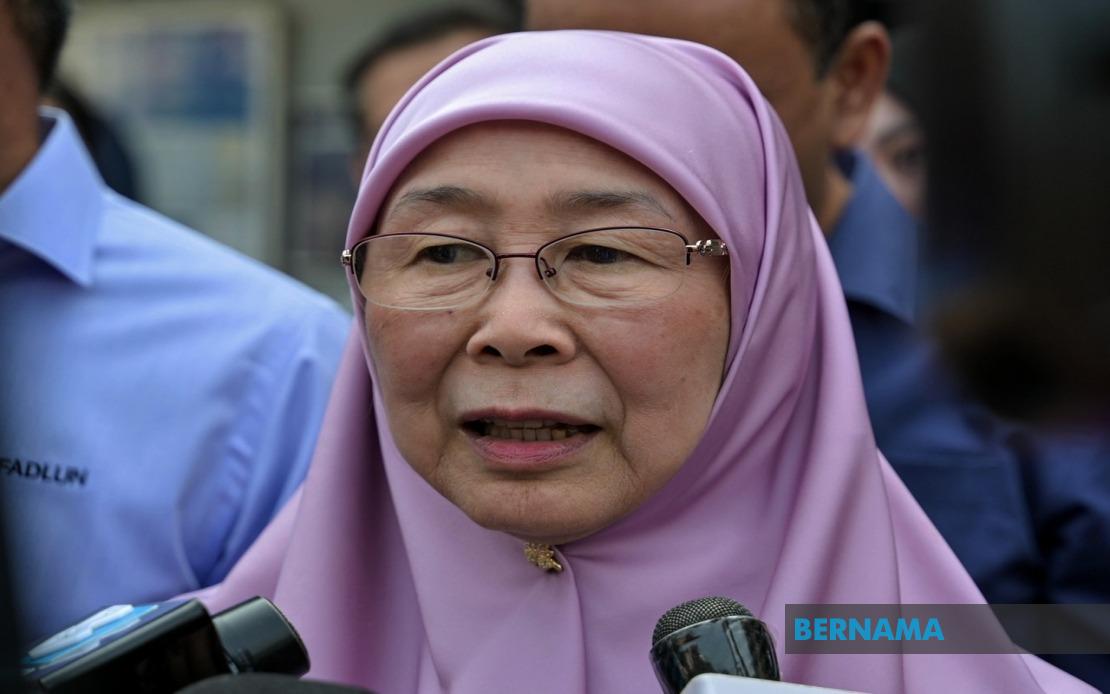
Prime Minister Datuk Seri Anwar Ibrahim is anticipated to leave hospital today, according to an announcement by his wife Datuk Seri Dr Wan Azizah Wan Ismail. The disclosure came as the country's political leadership resumed public engagement following the premier's brief medical leave, signalling a swift recovery trajectory that should provide reassurance to Malaysian stakeholders and international observers monitoring governmental continuity.
Dr Wan Azizah revealed that her husband has conveyed appreciation to citizens and well-wishers whose prayers and support accompanied his treatment. The gesture reflects the personal dimension underlying the nation's interest in the health of its chief executive, particularly given the prominent role media and the public play in tracking the wellness of sitting prime ministers across Southeast Asia. Such communications serve to humanise political leadership whilst simultaneously reinforcing the institutional importance of full presidential capacity during periods when major legislative or executive matters may be pending.
Anwar underwent an elective laparoscopic surgical intervention on Monday to address a para-umbilical hernia—a condition involving a protrusion of tissue through the abdominal wall near the navel. The procedure selected, laparoscopic surgery, represents a minimally invasive technique employing small incisions and camera guidance, typically associated with shorter recovery windows compared to traditional open surgical approaches. This methodological choice for handling what constitutes a manageable medical concern indicates clinical confidence in rapid rehabilitation and resumed full duties.
The timing of the operation and discharge cycle carries subtle but noteworthy implications for Malaysia's governance architecture. The parliament and cabinet machinery continued functioning during Anwar's brief absence, though the symbolic weight of prime ministerial presence remains significant in Malaysian political culture where executive-centric decision-making predominates. The swift turnaround from Monday procedure to anticipated Wednesday discharge compresses the disruption window, minimising any perception of governmental drift during the intervening period.
Dr Wan Azizah articulated her husband's sentiments whilst participating in the Semarak Merdeka programme, a National Month celebration initiative held at the Bandar Tun Razak branch of Kuala Lumpur City Hall. Her continued public engagement during the recovery window underscores the family's confidence in the medical trajectory, positioning their involvement in national commemorative events as an implicit endorsement that no complications warrant concern. This calculated visibility serves dual purposes: reassuring the population whilst maintaining the narrative momentum of governmental activities through the approaching 2026 National Month celebrations framework.
For Malaysian observers, the incident reflects broader patterns within Southeast Asian political life where medical events of sitting leaders attract substantial public scrutiny. Unlike some regional counterparts where opacity characterises leadership health disclosures, Malaysia's approach through spousal intermediaries balances transparency with dignity. The laparoscopic intervention represents the type of routine preventive or corrective healthcare that sits comfortably within public acceptability, distinguishing it from more serious medical interventions that might trigger succession contingencies or constitutional provisions regarding executive incapacity.
The para-umbilical hernia treatment exemplifies elective healthcare management—a deliberate choice to address a condition that, whilst manageable, benefits from timely intervention before potential complications arise. This proactive stance aligns with modern governance expectations whereby leaders maintain operational fitness through contemporary medical practices. The decision to proceed with the procedure during the sitting parliament and amid ongoing governmental operations reflects confidence both in the medical establishment and in the administrative capacity to sustain institutional functions during temporary absences.
International dimensions warrant consideration as well. Malaysia's regional standing and investment climate benefit from perceptions of stable, continuously functioning governance. Transparent communication regarding leadership health, combined with demonstrated swift recovery, reinforces investor confidence and strengthens Malaysia's diplomatic posture within ASEAN and broader geopolitical contexts. The routine characterisation of the procedure and uncomplicated recovery narrative contrasts markedly with scenarios in other jurisdictions where leadership medical events trigger uncertainty and volatility.
The involvement of Dr Wan Azizah as the primary communicator reflects established Malaysian practice whereby spouses serve as trusted intermediaries for sensitive governmental and personal information. Her visibility at national commemorative events whilst her husband recuperated, coupled with the reassuring discharge timeline, constructed a coherent narrative of manageable disruption. This governance-by-proxy mechanism, whilst differing from Westminster traditions, functions effectively within Malaysian political culture where family dynamics intersect substantively with public administration.
Looking forward, Anwar's anticipated swift return to full duties maintains momentum across multiple policy fronts from economic management through regional diplomatic engagements. The absence of any indication of prolonged recovery or complications positions the premier to resume his characteristically active engagement with cabinet responsibilities, parliamentary sessions, and international commitments without the stigma of protracted incapacity. For Malaysian observers tracking continuity and competence within the highest office, the managed nature of this medical episode reinforces institutional stability during a period when economic pressures and regional challenges continue demanding sustained executive attention.

