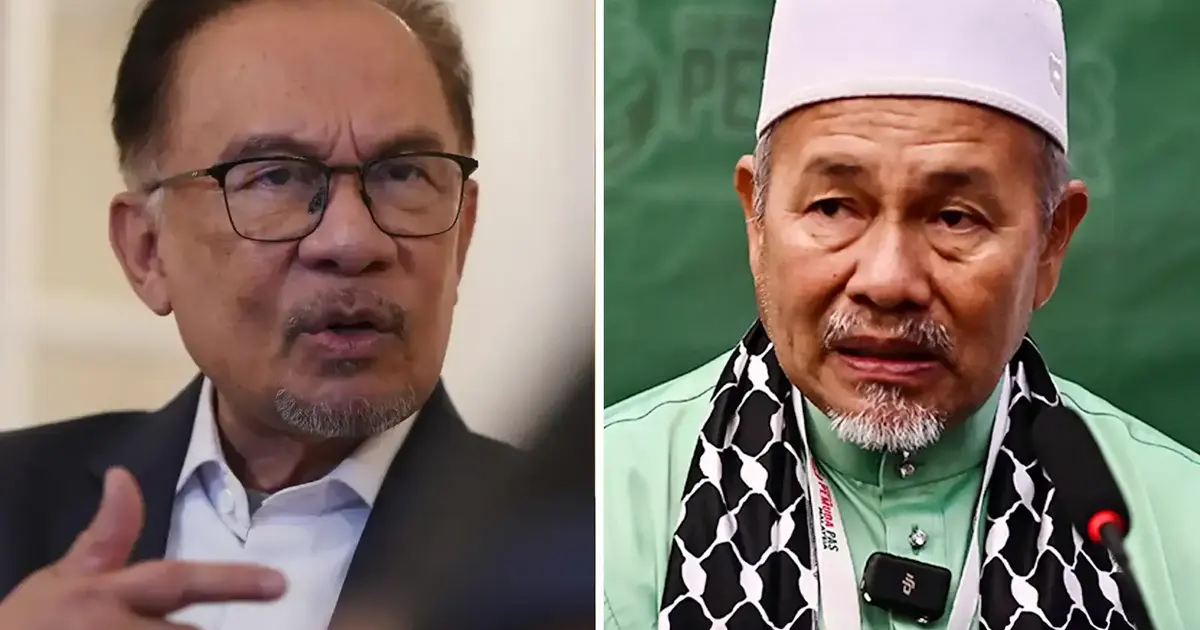
Prime Minister Anwar Ibrahim has taken the significant step of filing a defamation suit against Tuan Ibrahim Samsudin, the deputy president of the Pan-Malaysia Islamic Party, over inflammatory remarks reportedly made at a public ceramah gathering. The legal action centres on accusations that Tuan Ibrahim levelled against the Prime Minister, specifically claiming interference in ongoing police investigations and alleged meddling with royal institutions in Negeri Sembilan. This development marks another flashpoint in the increasingly contentious relationship between the government coalition and the opposition, underscoring the fraught political terrain Malaysia continues to navigate.
The ceramah in question appears to have been a public religious and political discourse event, a traditional forum in Malaysian politics where politicians address constituents on matters ranging from governance to Islamic principles. During this address, Tuan Ibrahim allegedly made statements portraying the Prime Minister as overstepping constitutional boundaries and exerting inappropriate influence over law enforcement and state-level monarchical institutions. Such accusations, if made without substantiation, strike at the heart of separation of powers doctrine and raise serious questions about institutional independence—matters that resonate deeply in Malaysia's constitutional framework.
The decision to pursue legal recourse reflects how Malaysian political discourse has increasingly become litigious. Rather than engaging in parliamentary debate or allowing the political process to mediate disagreements, both government and opposition figures increasingly resort to courtrooms to settle disputes. This trend has implications for the nature of political competition in the country, potentially raising the stakes beyond electoral contests into the realm of personal financial liability and legal jeopardy. For Anwar, launching this suit signals he views the allegations as sufficiently damaging to his reputation and political standing to warrant formal legal challenge.
Negeri Sembilan's specific mention in the allegations suggests the dispute may relate to state-level governance issues or particular incidents within that jurisdiction. The state has been a political battleground between different coalitions, and any interference allegations touching on both police functions and royal prerogatives would be extraordinarily sensitive. Malaysia's constitutional monarchy system places paramount importance on the sanctity of royal institutions, and suggestions that executive authority has overstepped in relation to these bodies carry significant political and constitutional weight.
For the PAS party, which has navigated a complex political positioning in recent years, this legal challenge from the Prime Minister's office presents a tactical dilemma. The party has attempted to maintain relevance as both an Islamic authority and a political force, sometimes allying with the government coalition and sometimes maintaining adversarial stances. Tuan Ibrahim's remarks, whatever their specific content, appear to have crossed a threshold that prompted the government's legal response, suggesting the allegations were framed in particularly strong or repeated terms.
From a Malaysian public interest perspective, the substance underlying these allegations warrants serious consideration. Questions about police independence and appropriate respect for royal institutions are fundamental to constitutional governance. If there is legitimate concern about executive interference in these domains, such concerns deserve transparent airing and resolution through proper institutional channels. Conversely, if the allegations represent political hyperbole or misrepresentation, the PM's decision to defend his reputation through legal action is understandable. The courts will now become the arbiter of these competing claims.
The timing of this legal action within Malaysia's broader political cycle deserves attention. The country continues to navigate post-election dynamics, with various coalitions jockeying for position ahead of state-level contests and eventual federal elections. Legal suits between political figures can reshape voter perceptions, inject uncertainty into coalition stability, and consume political oxygen that might otherwise focus on governance issues. Observers should watch whether this case becomes a template for other legal actions between political rivals, potentially further juridifying Malaysian politics.
The defamation suit mechanism itself raises questions about burden of proof and remedies. Defamation law requires the plaintiff to establish that statements were false and damaging, while defendants may raise truth as a defence or claim privileged commentary on matters of public interest. The outcome will depend substantially on how courts interpret the specific language used by Tuan Ibrahim and whether his statements constituted fair criticism of government action or crossed into unsubstantiated personal attack. This distinction will have ramifications for the bounds of political speech in Malaysia going forward.
Regionally, this development reflects broader tensions in Southeast Asian democracies regarding the relationship between executive power, institutional independence, and political opposition. Several nations in the region have seen governments use defamation and related laws against critics, raising concerns about weaponisation of legal systems for political purposes. Malaysia's case will be watched by observers monitoring judicial independence and the health of democratic discourse in the region. Whether courts can adjudicate such matters fairly, insulated from political pressure, will matter enormously for public confidence in both the legal system and democratic institutions.
Looking ahead, this litigation could reshape political dynamics in multiple ways. It might chill critical speech if opposition figures fear financial and legal consequences, or it might galvanise PAS supporters and other government critics around Tuan Ibrahim as a symbol of resistance. The case could also expose details about governance in Negeri Sembilan and central authority's relationship with state institutions, matters of legitimate public interest. Political observers across Malaysia and the region will monitor this case closely as a bellwether for the current health of democratic discourse and institutional integrity.

