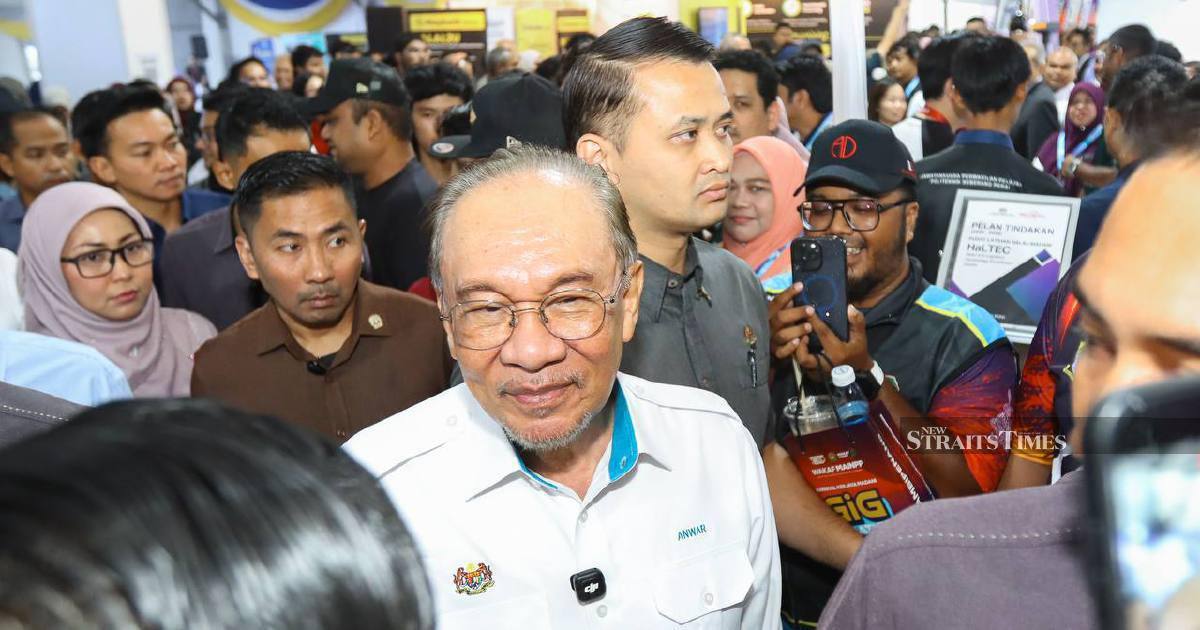
Prime Minister Datuk Seri Anwar Ibrahim will travel to Negri Sembilan tomorrow to participate in campaigning efforts as the state prepares for what appears to be a fiercely competitive electoral contest. Speaking from George Town, Anwar refrained from offering any substantive remarks regarding the upcoming election, maintaining a measured public stance even as political parties intensify their ground operations across the state.
The Negri Sembilan state election has emerged as one of the most unpredictable races on Malaysia's current political calendar. Unlike some previous state contests that produced clear frontrunners weeks in advance, current polling data suggests voters remain genuinely divided across competing political coalitions. This uncertainty has elevated the stakes considerably, prompting national-level political figures including the Prime Minister to commit personal campaign time to influence the outcome.
Anwar's decision to visit the state reflects the strategic importance Negri Sembilan holds within Malaysia's broader political landscape. The state, situated in the Klang Valley's periphery, maintains meaningful leverage in discussions regarding federal governance and resource allocation. A strong performance by Anwar's coalition could provide momentum heading into potential future elections, whereas a disappointing showing might embolden opposition forces and complicate the government's legislative agenda.
The Prime Minister's reluctance to offer public commentary on the election, despite appearing in George Town, suggests a deliberate communication strategy. Rather than making sweeping predictions or inflammatory statements that might backfire if circumstances shift, Anwar appears focused on direct engagement with voters and party machinery. This approach allows flexibility in messaging while demonstrating his personal commitment to the campaign.
Negri Sembilan's political composition has undergone significant transformation over recent years. The state contains constituencies with divergent voter preferences, ranging from urban areas with younger, education-focused demographics to rural regions where traditional concerns dominate political discourse. This diversity means no single campaign narrative effectively reaches all voters, requiring sophisticated targeting of messaging and resource deployment.
The competitive nature of the race has intensified activity among all participating political coalitions. Party operatives have established extensive ground networks, organized community engagement activities, and mobilized volunteer networks across constituencies. The arrival of high-profile figures like the Prime Minister represents an escalation in these efforts, signalling that national political leadership views the outcome as genuinely consequential.
For Malaysian observers, the Negri Sembilan election serves as a bellwether for broader political sentiment. State elections frequently reveal shifts in voter priorities and coalition strength before they become apparent in national polling. A close result here could suggest that previous assumptions about electoral stability require reassessment, potentially affecting political calculations across Southeast Asia's largest economy.
The timing of Anwar's Negri Sembilan visit carries particular significance given Malaysia's complex political environment. Managing multiple coalition partners with distinct ideological positions and constituent bases demands constant attention. By demonstrating personal engagement in key state contests, the Prime Minister reinforces his leadership credentials and signals commitment to all political allies, irrespective of current polling predictions.
Electoral prediction in Negri Sembilan remains exceptionally uncertain because several factors could shift voter behaviour at the final moment. Local issues specific to particular constituencies, campaign incidents, or last-minute strategic announcements by political parties might push voters decisively toward one side. This fluidity explains why experienced political observers hesitate to forecast definitive outcomes, instead characterizing the race as genuinely competitive.
The election also reflects broader patterns in Malaysian politics where traditional party loyalties have weakened considerably. Voters increasingly make decisions based on perceived competence, local service delivery, and specific policy positions rather than automatic allegiance to political formations. This shift has made elections less predictable and more responsive to campaign effectiveness, candidate quality, and contemporary political messaging.
Anwar's involvement in the Negri Sembilan campaign underscores the interconnection between state and federal politics in Malaysia. While state governments exercise jurisdiction over education, land, agriculture, and certain public services, federal coordination remains essential for economic development and infrastructure investment. Strong state-level governments aligned with federal administration facilitate smoother policy implementation and resource management.
The close polling in Negri Sembilan also demonstrates that Malaysian voters remain politically engaged and willing to switch support based on performance and policy offerings. This competitive environment, while sometimes creating short-term political uncertainty, ultimately strengthens democratic accountability by preventing any single political formation from achieving permanent dominance without continuous effort to earn public trust.

