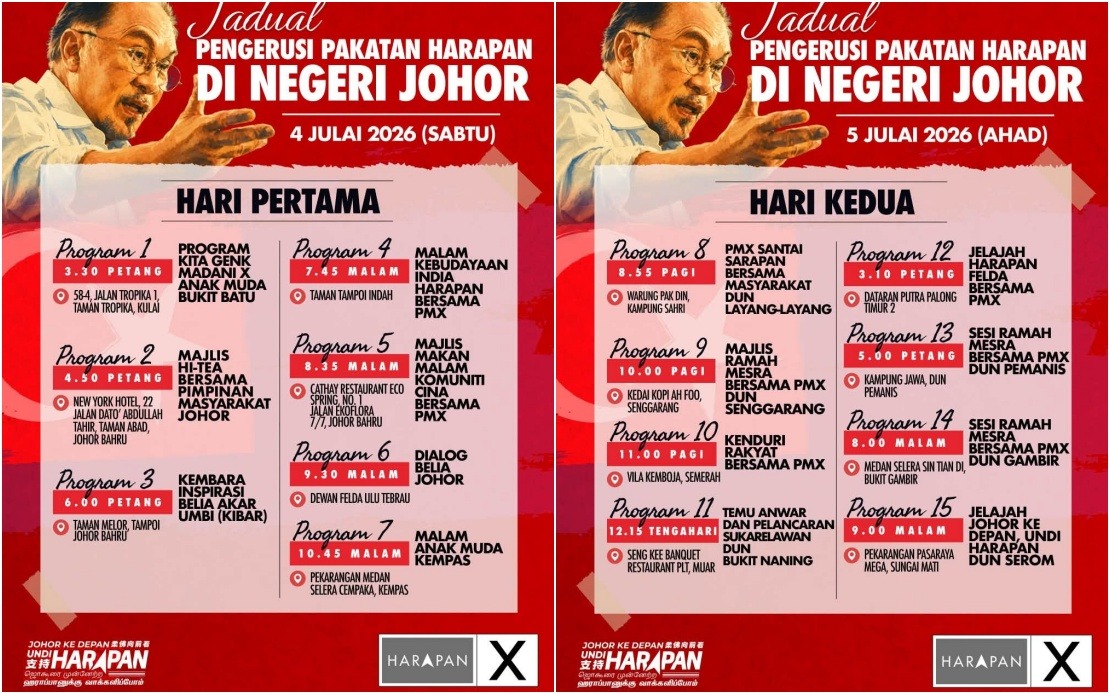
Pakatan Harapan chairman Datuk Seri Anwar Ibrahim is mounting an intensive grassroots push across Johor this weekend, planning to attend 15 separate campaign events in support of the coalition's 56 candidates vying for seats in the 16th Johor state election. The high-profile show of solidarity marks a crucial phase in the opposition bloc's strategy to retain and expand its footprint in Malaysia's second-largest state, where voter sentiment will significantly shape both state and federal political dynamics in the months ahead.
Through a public Facebook announcement, Anwar has extended an open invitation to residents across Johor to join the slate of engagements, signalling the coalition's confidence in its ground organisation and messaging. His personal participation underscores the campaign's importance to PKR and allied parties, as the party president seeks to energise volunteers and consolidate support among diverse voter segments ranging from urban professionals to rural communities. The breadth of events—spanning cultural nights, community dinners, youth dialogues, and grassroots assemblies—reflects a deliberate effort to connect with Johor's multiethnic population across different settings and time slots.
Saturday's itinerary demonstrates the campaign's methodical approach to constituency coverage and demographic targeting. Anwar will commence proceedings in Kulai with the Kita Genk MADANI x Anak Muda Bukit Batu programme at 3.30 pm, immediately followed by a high-tea session with Johor community leaders designed to engage traditional influencers and opinion-shapers. The evening schedule then shifts gears, progressing through the Inspirasi Belia Akar Umbi event in Tampoi at 6 pm before transitioning into a series of cultural and communal engagements. These include the Indian Cultural Night, a Chinese Community Dinner, and a Youth Dialogue scheduled for progressively later hours, extending campaigning deep into the night and maximising visibility among younger voters who might otherwise disengage from traditional political activities.
Sunday's programme maintains this tempo while adjusting focus toward different constituencies and demographic priorities. Beginning with an early breakfast session in Kampung Sahri, Anwar will maintain momentum through daytime meet-and-greet sessions and kenduri rakyat events—traditional community feasts that carry significant symbolic weight in Malaysian political culture by positioning candidates and senior party figures as custodians of shared communal values. The Bukit Naning Volunteers launch and sessions targeting specific constituencies like Pemanis and Gambir reveal a sophisticated understanding of Johor's electoral map, with Anwar concentrating effort on marginal seats where Pakatan Harapan's majority could be either consolidated or challenged depending on ground sentiment.
The campaign's relentless scheduling reflects intensifying competition within Johor politics. The state has historically been a stronghold for Barisan Nasional, yet Pakatan Harapan captured significant ground in recent elections and now contests for seats previously held by competing factions within the ruling coalition. By maintaining high visibility and direct engagement with voters across multiple evenings and settings, Anwar aims to demonstrate that Pakatan Harapan offers an energetic, people-focused alternative to incumbent state administration. The sheer number of events—15 programmes compressed into a single weekend—also serves as a powerful narrative element for party media and grassroots networks, projecting momentum and organizational capability to undecided voters and wavering supporters.
Johor's electoral timeline adds urgency to these final campaign pushes before polling day. Voters will cast ballots on July 11, with early voting mechanisms activated on July 7, compressing the remaining campaign window into roughly one week from the time of Anwar's weekend blitz. This compressed timeframe explains the intensity of personal campaigning by the party chair, whose presence generates local media coverage and signals to party machinery that the state election deserves maximum resource allocation. For Pakatan Harapan's 56 candidates, Anwar's visible support provides crucial momentum as they compete against Barisan Nasional, Perikatan Nasional, and independent candidates across Johor's legislative constituencies.
The coalition's candidate allocation across 56 of Johor's contested seats reflects negotiated agreements between PKR, DAP, Amanah, and other component parties, each seeking to balance electoral viability with internal power-sharing arrangements. Anwar's role in shepherding these candidates through final campaign phases helps maintain coalition cohesion by demonstrating that all factions share equal access to top-level party support. His systematic movement through different constituencies and engagement with diverse voter communities—from rural Felda settlers to urban Chinese business communities to Indian cultural associations—reinforces the coalition's broad-based appeal and rejection of narrow sectarian positioning.
For Malaysian political observers, this campaign intensity raises questions about where Johor voters currently stand after years of political flux. The state has witnessed transitions from BN dominance to PKR leadership, alongside the rise and influence of Perikatan Nasional's Bersatu component. Anwar's personal investment in Johor's campaign suggests internal party assessments indicate the state remains genuinely competitive rather than secured. Early voting mechanics and the compression of campaign schedules into final weekends have become standard features of Malaysian electoral management, though they also concentrate decision-making pressures on voters operating with limited information windows.
The weekend's programmes also carry significance for Anwar's own political positioning beyond Johor state politics. As Federal Prime Minister and PKR president, his campaign activities in Johor serve dual functions: supporting state-level candidates while maintaining his own national political profile and demonstrating continued grassroots engagement. In Malaysian politics, where personal relationships and direct voter contact remain influential despite digital campaigns' growth, a Prime Minister's physical presence at community events carries symbolic weight beyond policy announcements or formal governance functions.
Looking ahead toward July 11, the intensity of these final campaign activities will likely set the baseline for post-election analysis regarding voter engagement levels, coalition dynamics, and state-level power configurations. Johor's result will influence federal political calculations given the state's size and the implications for broader BN versus Pakatan Harapan competition. Anwar's commitment to spending an entire weekend traversing Johor's constituencies demonstrates that despite holding the Prime Minister's office, the coalition leadership views state-level electoral performance as requiring sustained personal attention and high-profile investment of political capital.

