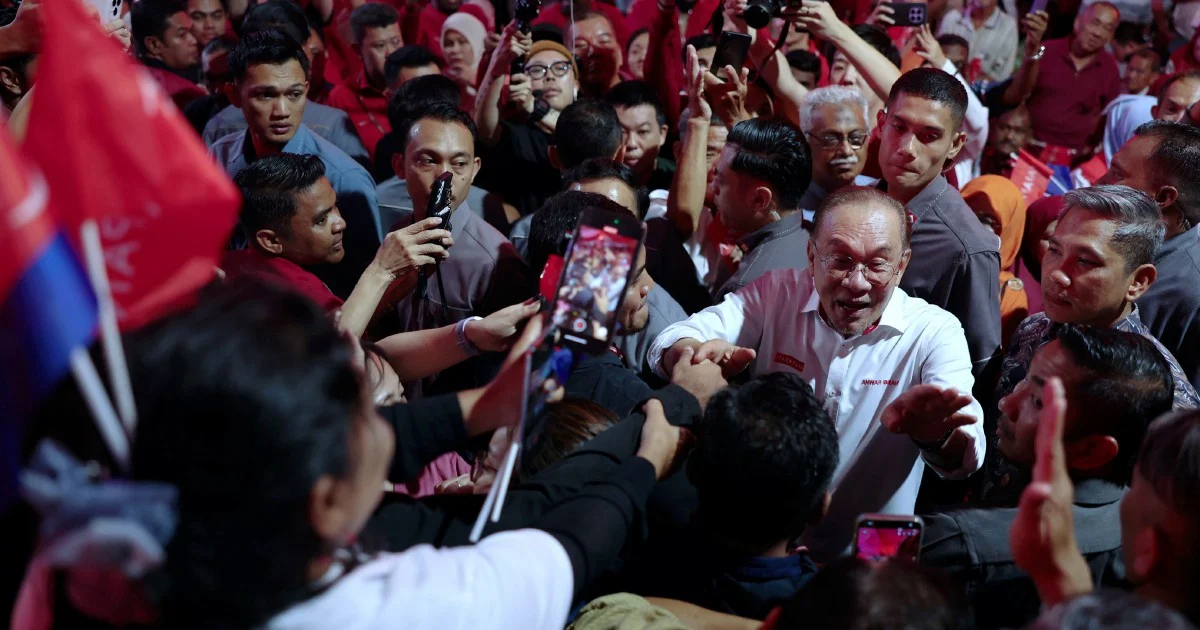
Pakatan Harapan's coalition leadership demonstrated its commitment to reclaiming ground in Johor by formally presenting its comprehensive candidate roster during an event in Tangkak today. The announcement by PH chairman Datuk Seri Anwar Ibrahim represents the culmination of internal negotiations among the coalition's constituent parties—a process that typically involves intense bargaining over seat allocations and selection criteria. With 56 candidates ready to contest across the state, the coalition is positioning itself as a significant challenger to incumbent powers, potentially reshaping the political dynamics within Malaysia's southern economic corridor.
Johor's electoral importance cannot be overstated within the Malaysian political landscape. As the country's second-largest state by population and a historically dominant Barisan Nasional stronghold, control of the state assembly carries substantial implications for coalition strength at the federal level. The state's economic significance—encompassing major port facilities, manufacturing hubs, and agricultural sectors—means that whoever governs Johor effectively influences regional development priorities and resource allocation. PH's decision to field a full slate demonstrates the coalition's conviction that challenging entrenched powers in this traditional fortress remains strategically viable, despite historical voting patterns that have consistently favoured established governing coalitions.
The July 11 polling date establishes a compressed campaign timeline in which coalition members must mobilise grassroots machinery, articulate policy differentiation, and build public confidence in their leadership credentials. For Anwar Ibrahim personally, this election serves as a barometer of his coalition's capacity to attract support beyond urban centres and metropolitan areas where PH has traditionally performed better. Johor's diverse demographic composition—encompassing Malay-Muslim majority zones, substantial Chinese and Indian communities, and migrant worker populations—requires campaigns sensitive to varied economic concerns, cultural priorities, and governance expectations.
The candidate selection process itself illuminates broader coalition dynamics. Negotiations between component parties over seat allocation typically reflect both organizational strength and bargaining positions within the partnership. Distributive fairness, electoral viability, and demographic representation all factor into final designations. By announcing the complete slate now, PH leadership signals that internal disputes have been resolved and the coalition enters campaigning with unified messaging. This unified approach proves crucial for electoral competitiveness, as fragmented or publicly contentious selection processes frequently undermine coalition credibility among undecided voters.
For Malaysian political observers, this announcement arrives amid broader repositioning of opposition strategies following recent electoral cycles. Johor's political trajectory over the past decade reveals fluctuating voter sentiment, with communities responding to both national political developments and state-specific governance performance. PH's sustained emphasis on fielding competitive candidates across multiple constituencies suggests the coalition believes electoral opportunities exist, particularly if national economic concerns translate into protest voting or demand for governance change. The state election thus functions as both a direct contest for Johor leadership and an indirect referendum on federal governance satisfaction.
Regional Southeast Asian contexts matter too. Malaysia's political stability, coalition formation patterns, and electoral outcomes attract attention from neighbouring governments and regional analysts. Competitive elections in major states demonstrate democratic resilience and multiparty contestation, elements increasingly valued within regional governance discussions. Johor's electoral exercise, by extension, contributes to broader narratives about democratic health and institutional legitimacy within Southeast Asia's largest economy by GDP.
The coalition's 56 candidates represent diverse backgrounds, constituencies, and political trajectories. Some will be incumbents defending previous victories, others first-time contestants competing in demographically unfamiliar terrain. This mix reflects realistic assessments about where PH possesses competitive advantages and where defending territory proves necessary. Candidate quality, local rootedness, and policy expertise significantly influence electoral outcomes, particularly in state elections where voters frequently prioritise local representatives' capacity to address immediate community concerns rather than national political narratives.
Campaign resource allocation decisions become critical following formal candidate announcement. Coalition parties must strategically deploy campaign finance, volunteer efforts, and leadership attention toward constituencies offering highest marginal return possibilities. Marginal seats—those with narrow previous victory margins or shifting demographic trends—typically receive disproportionate resources. Safe constituencies benefit from reduced external support, with local machinery bearing primary responsibility for mobilising core supporters. This strategic calculus shapes campaign geography and intensity across Johor's 56 state constituencies.
Rivalry patterns within PH coalitions themselves occasionally surface during state campaigns. While national-level coordination focuses on federal governance, state elections sometimes permit component parties to emphasise distinctive policy platforms or leadership personalities. Competition between PKR, DAP, Amanah, and other coalition members for credit and seat advancement occasionally creates tensions that surface through media commentary or grassroots perceptions. Successful campaigns balance coalition unity messaging with component party identity preservation.
Voter demographics and turnout patterns will substantially determine electoral outcomes. Johor's urban centres exhibit different political propensities compared to rural constituencies and semi-urban zones. Migration patterns, economic diversification, and demographic shifts have gradually altered electoral composition across state constituencies. PH's campaign strategy likely reflects detailed demographic analysis attempting to identify constituencies where coalition messaging aligns with voter priorities and concerns.
The July 11 election occurs within broader Malaysia's political timeline. Proximity to other state or federal electoral events shapes voter attention and political momentum. Campaign duration, media coverage availability, and voter fatigue resulting from frequent elections all influence electoral dynamics. PH's 56 candidates now enter public scrutiny, with voters evaluating candidates' records, competence, policy understanding, and community connection throughout the compressed campaign period.
Pakatan Harapan's formal candidate announcement initiates what political analysts will monitor closely as indicator of coalition health, electoral strategy sophistication, and capacity to translate political dissatisfaction into concrete election results. Whether voters respond positively to these 56 candidates and coalition governance platforms will meaningfully shape Johor's political trajectory and, by extension, federal Malaysian political dynamics throughout the remainder of this electoral cycle.

