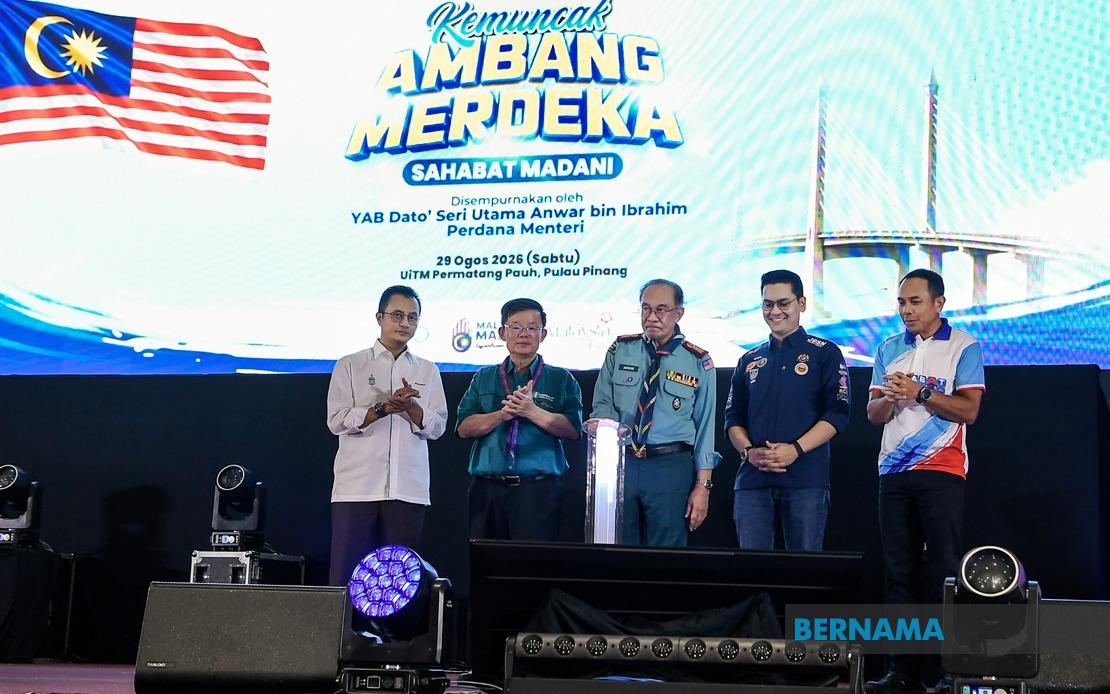
Prime Minister Datuk Seri Anwar Ibrahim has launched Sahabat MADANI, a national volunteer movement designed to unite Malaysians from diverse ethnic, religious and social backgrounds in community service. The initiative, formally introduced at Universiti Teknologi MARA (UiTM) Permatang Pauh in Bukit Mertajam during the Ambang Merdeka Sahabat MADANI 2026 highlight programme, has already mobilised 11,060 volunteers across the country in its opening phase.
The Implementation Coordination Unit of the Prime Minister's Department (ICU JPM) frames Sahabat MADANI as a practical embodiment of Malaysia's reform agenda, moving beyond symbolic gestures to create tangible community benefits. Rather than focusing solely on ceremonial patriotism, the movement channels the spirit of national service into structured programmes addressing real social needs. This approach recognises that meaningful national development requires active citizen participation working alongside government institutions and community organisations.
The volunteer network operates across several priority areas identified as critical to inclusive development. These include targeted support for marginalised and vulnerable groups who often fall outside mainstream assistance programmes, intervention strategies for school-age children facing dropout risks that perpetuate cycles of poverty, and youth-focused initiatives creating sustainable employment and entrepreneurial pathways. Additionally, the movement establishes rapid-response mechanisms enabling volunteers to provide humanitarian assistance during national crises, from natural disasters to public health emergencies.
For Southeast Asian observers, Sahabat MADANI represents an interesting governance model attempting to bridge the gap between state capacity and community resilience. In a region where civil society organisations sometimes operate at arm's length from government, Malaysia's approach integrates volunteers directly into a coordinated national framework. This three-way partnership between government, volunteers and communities aims to improve service delivery efficiency while building social capital through structured interaction across traditional dividing lines.
The initiative's emphasis on cross-community participation carries particular significance in Malaysia's multicultural context. By deliberately encouraging citizens from different ethnic and religious backgrounds to serve together, Sahabat MADANI positions volunteerism as a harmony-building mechanism. This framing suggests that shared practical work on common problems can organically strengthen social cohesion better than top-down messaging about unity.
The programme aligns with the government's broader "Malaysia MADANI: Kesejahteraan Dinikmati" vision, which translates to shared wellbeing enjoyed collectively. Under this umbrella concept, Sahabat MADANI operationalises abstract aspirations through concrete community action. The volunteering framework transforms wellbeing from a policy objective into a participatory process where citizens contribute to their own and others' prosperity.
Young people represent a critical demographic target for Sahabat MADANI's recruitment and messaging strategy. Government statements specifically appeal to youth to reject divisive ideologies and instead channel their skills toward collective progress. This outreach acknowledges generational concerns about polarisation while providing constructive outlets for civic engagement, potentially steering younger Malaysians toward nation-building activities rather than digital spaces where polarising content proliferates.
The emphasis on transparency and accountability within Sahabat MADANI's operational framework reflects anti-corruption commitments central to Malaysia's reform narrative. By building transparency mechanisms into volunteer coordination and resource allocation, the initiative attempts to model governance standards that extend beyond the volunteers themselves. This demonstration effect, if successful, could influence community expectations for public administration more broadly.
The registration of over 11,000 volunteers within the initiative's launch phase suggests considerable public receptiveness to structured volunteering opportunities linked directly to government priorities. This baseline provides momentum for scaling operations, though sustained recruitment will depend on volunteers experiencing tangible impact and recognition for their contributions. The initial enthusiasm must translate into genuine problem-solving capacity to avoid volunteer fatigue common in similar initiatives.
Regional governments observing Malaysia's experiment will likely assess whether Sahabat MADANI successfully delivers on its dual objectives of addressing concrete social needs while simultaneously strengthening social cohesion. The initiative's success metrics extend beyond volunteer hours or services provided to include measurable improvements in community resilience, inter-ethnic relations, and youth employment outcomes. These broader impacts remain to be documented as the movement matures beyond its launch phase.
For Malaysian communities, Sahabat MADANI offers potential benefits across multiple dimensions. Vulnerable populations gain access to services tailored to their actual circumstances rather than bureaucratic convenience. Young people discover employment pathways and skill-development opportunities outside traditional structures. Volunteers themselves gain social satisfaction and develop networks transcending their usual circles. However, realising these benefits requires consistent resource allocation, volunteer training and coordination, and accountability mechanisms ensuring services reach intended beneficiaries.
The timing of Sahabat MADANI's launch during National Day celebrations symbolically connects individual service to national identity, framing patriotism through active contribution rather than passive symbol display. This reframing may resonate particularly with citizens seeking meaningful participation channels and communities seeking reliable local support systems. As the movement expands from its initial 11,060 volunteers, its ability to maintain quality standards while scaling operations will determine whether it becomes a sustainable force for community-driven development or remains primarily a goodwill initiative.

