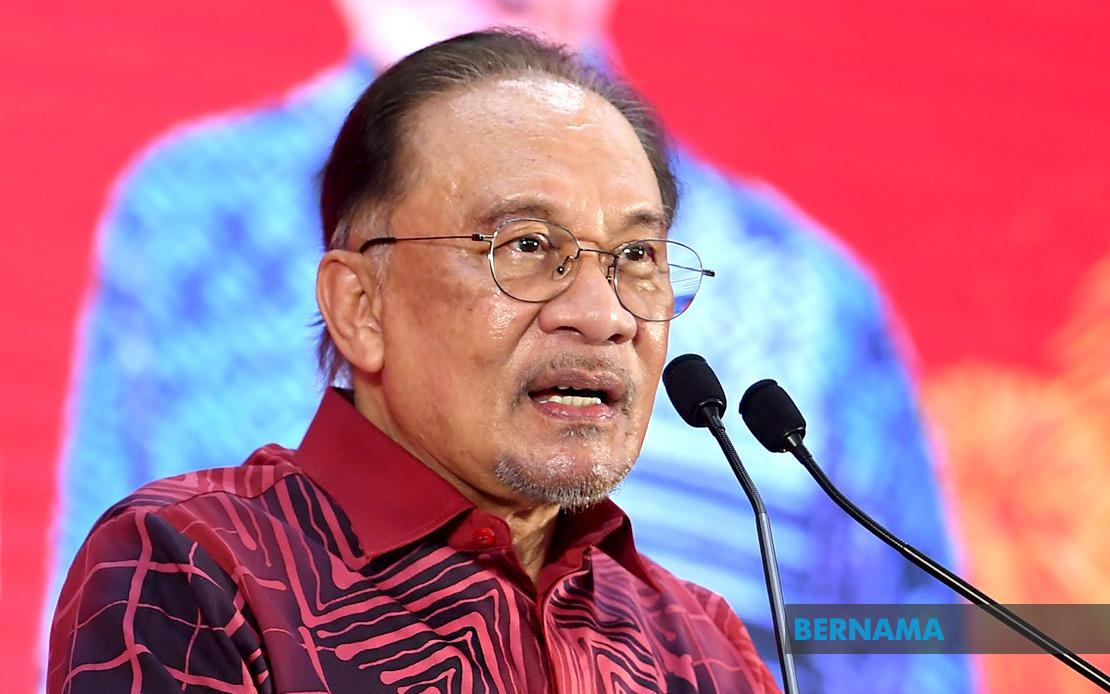
Prime Minister Datuk Seri Anwar Ibrahim has consolidated his standing as Malaysia's most favoured political leader, maintaining a 52 per cent approval rating according to a comprehensive nationwide survey by Merdeka Center released this week. The polling exercise, conducted between March 12 and April 9, provides a snapshot of public sentiment during a period marked by mounting global uncertainties and domestic economic pressures that have tested confidence in various governments across the Asia-Pacific region.
The consistency of Anwar's approval figures proves noteworthy when examined against the backdrop of Malaysia's challenging macroeconomic environment and regional geopolitical tensions. The rating has remained stable since December 2025 and February 2026, suggesting that the Prime Minister has managed to retain voter confidence despite headwinds that might typically erode political support. This stability indicates either successful government communication of its policy direction or a perception among respondents that current leadership offers the most viable path forward compared to available alternatives.
Optimism about Malaysia's overall trajectory shows more modest but still meaningful strength, with 42 per cent of voters believing the country is moving in the right direction. This figure, also unchanged from earlier measurements, masks significant variations across Malaysia's diverse demographic landscape. The survey reveals a striking generational divide, with younger voters aged 21 to 30 displaying substantially higher confidence at 57 per cent—nearly double the pessimism of those aged 51 to 60, who registered just 32 per cent positive sentiment. This gap merits serious attention from policymakers, as it suggests either divergent lived experiences between age cohorts or fundamentally different expectations about economic opportunity and social mobility.
Ethnic breakdowns illuminate another dimension of public sentiment that carries implications for national cohesion. Chinese respondents proved significantly more optimistic than their peers, with 50 per cent expressing confidence in the nation's direction compared to 39 per cent among Malays and 33 per cent among Indians. These disparities likely reflect distinct economic positions, sectoral employment patterns, and policy priorities across communities, suggesting that government messaging and policy implementation may resonate unevenly. Understanding these differential perceptions becomes crucial for crafting inclusive policies that address the specific concerns of each community rather than pursuing one-size-fits-all approaches.
Federal Government satisfaction registers at a near-even 50 per cent approval against 48 per cent dissatisfaction, indicating a public fundamentally divided over executive performance. However, when examined through ethnic and age lenses, clear patterns emerge. Non-Muslim Bumiputera respondents from Sabah and Sarawak demonstrated the highest satisfaction at 68 per cent, while Chinese voters registered 53 per cent approval. Notably, Malay and Indian respondents showed considerably lower satisfaction at 44 per cent and 46 per cent respectively, highlighting potential vulnerabilities in government support among these traditionally significant constituencies. Young voters again demonstrated higher approval, with those aged 21 to 30 recording 64 per cent satisfaction—suggesting that if the government can sustain this backing among the youth demographic, it may secure a crucial generational advantage.
Beyond immediate approval metrics, the survey captured substantial enthusiasm for institutional reforms that transcend typical partisan divides. Strong majorities backed proposals to limit prime ministerial tenure to a maximum of two terms or ten years, a structural reform that would fundamentally reshape Malaysia's executive governance and prevent indefinite consolidation of executive power. Respondents also showed substantial support for separating the roles of Attorney General and Public Prosecutor—a reform that addresses longstanding concerns about potential conflicts of interest in the justice system—and for introducing direct elections for the Mayor of Kuala Lumpur, expanding democratic participation at municipal level.
The cross-ethnic resonance of these reform proposals deserves particular emphasis. Merdeka Center's observation that support for institutional changes showed minimal variation between Malay and non-Malay respondents suggests a rare convergence of opinion across Malaysia's historically divided political landscape. This consensus transcends the ethnic and religious considerations that typically structure Malaysian politics, indicating that voters across communities share fundamental concerns about governmental accountability, transparency, and democratic legitimacy. Such broad-based support for systemic reform may create political space for governments that champion these changes, potentially rewarding bold institutional innovation.
The survey methodology commands confidence through its rigorous design and demographically representative sampling. Merdeka Center interviewed 1,209 voters reflecting Malaysia's actual electoral composition—51 per cent Malay, 27 per cent Chinese, eight per cent Indian, and seven per cent Muslim Bumiputera alongside seven per cent non-Muslim Bumiputera respondents drawn from Sabah and Sarawak. This stratified random sampling approach conducted via telephone ensures results reliably capture public opinion across geographic regions and demographic categories, though telephone surveying may slightly overweight older respondents with established landline connections.
For Malaysian policymakers, these findings suggest both opportunity and vulnerability. Anwar's sustained approval demonstrates public acceptance of current leadership, yet the 42 per cent directional confidence and near-parity government satisfaction indicate that substantial portions of the electorate remain uncertain or dissatisfied. The generational enthusiasm among younger voters offers a potential foundation for long-term political support but requires concrete delivery of economic opportunity and policy outcomes that specifically address youth concerns around employment, housing affordability, and wage growth. The variations in satisfaction and optimism across ethnic communities signal that inclusive governance and visible progress on community-specific priorities remain essential for maintaining the broad coalition Anwar currently enjoys.

