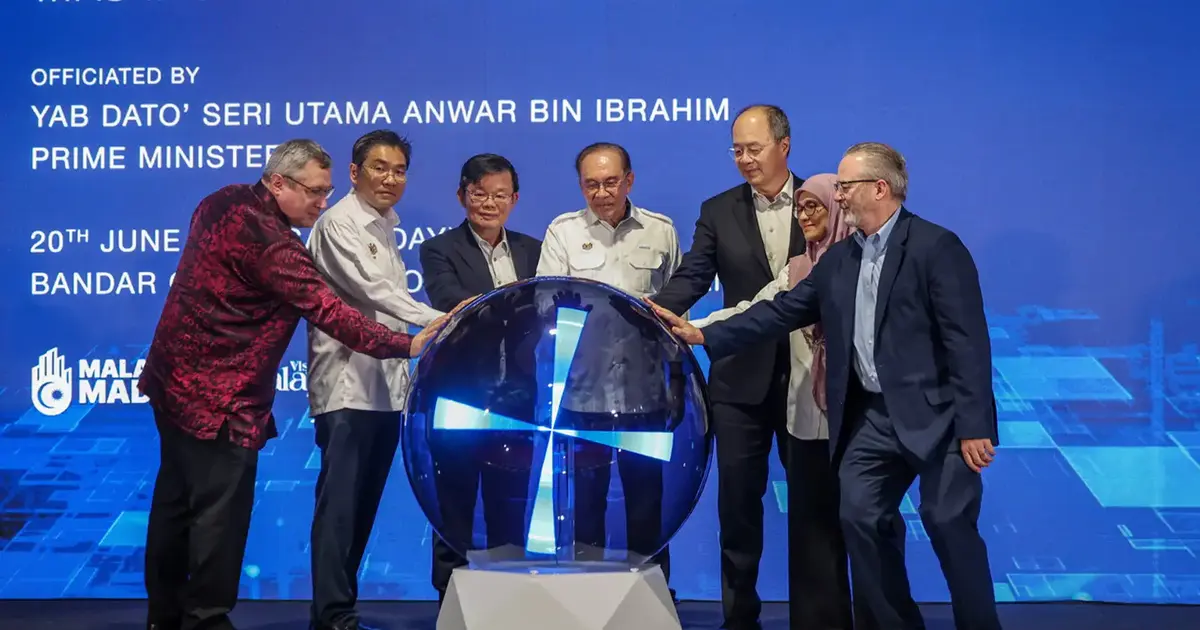
Prime Minister Anwar Ibrahim has moved to fortify links between Malaysia's semiconductor sector and higher education institutions through a strategic advisory appointment, signalling the government's determination to position the nation as a competitive player in global chip manufacturing and research. The decision underscores the administration's focus on leveraging academic expertise to strengthen industrial capacity at a time when semiconductor demand and geopolitical competition for chip production are reshaping supply chains across the Asia-Pacific region.
The appointment reflects recognition within government circles that Malaysia's prosperity increasingly depends on deepening synergies between corporate innovation and university research capabilities. The semiconductor industry, which already constitutes a significant pillar of Malaysia's manufacturing base and export revenue, stands to benefit from closer engagement with academic institutions that house cutting-edge laboratories, emerging talent pipelines, and intellectual property development. By installing an adviser dedicated to this bridging role, the administration aims to accelerate technology transfer and ensure that local universities contribute more directly to solving industry challenges.
Prime Minister Anwar emphasised that the appointment will impose no supplementary financial burden on the national budget, a crucial reassurance given Malaysia's fiscal consolidation efforts and competing budgetary demands across health, education, and infrastructure. This constraint-conscious approach reflects political pragmatism, as major new spending commitments remain politically sensitive. By routing the advisory function through existing government structures or by appointing someone already in the public sector, the administration preserves fiscal space while still demonstrating commitment to semiconductor sector development.
The semiconductor industry holds particular strategic importance for Malaysia's economic future. The sector has long been a backbone of manufacturing output and foreign direct investment, attracting multinational corporations seeking stable locations for design, assembly, testing, and production facilities. Yet competition from other Southeast Asian nations and global powers intensifies continually. Vietnam, Thailand, and Indonesia are each pursuing their own semiconductor ambitions, while advanced economies are reshoring production. Malaysia must therefore innovate within its niche, emphasising skills, reliability, and the ability to support bespoke manufacturing solutions that rely on tight integration with research institutions.
Universities across Malaysia house semiconductor-related expertise spanning materials science, microelectronics design, nanotechnology, and manufacturing processes. Institutions including Universiti Malaya, Universiti Teknologi Malaysia, and others operate advanced fabrication and testing facilities, yet these remain underutilised in terms of direct commercial collaboration with industry. The adviser will likely focus on identifying bottlenecks preventing knowledge exchange, streamlining intellectual property agreements, and creating pathways for postgraduate researchers to transition into industry roles while maintaining links to academic inquiry.
The timing of this initiative aligns with broader shifts in global semiconductor strategy. Nations worldwide are recognising that chip self-sufficiency and technological independence depend on cultivating deep talent pools and research capabilities. The United States, European Union, and Taiwan are all investing heavily in research-industry partnerships. Malaysia, by formalising and elevating coordination through an adviser close to the Prime Minister's office, signals that semiconductor excellence ranks among national priorities alongside broader economic diversification.
For Malaysian universities, the appointment opens possibilities to secure more industry funding, field-test research in real production environments, and graduate students with stronger industry credentials. Conversely, companies gain access to specialised expertise and emerging technologies developed within academic settings, potentially reducing their own research timelines and capital expenditure. Startups in semiconductor design, testing, and advanced manufacturing could particularly benefit from university partnerships that might otherwise remain inaccessible due to cost or information asymmetry.
The adviser's success will depend significantly on bridging what remains a cultural and structural gap between academic institutions and commercial enterprises. Universities prioritise peer-reviewed publication, long research timelines, and fundamental discovery; industry demands rapid prototyping, commercialisation pathways, and immediate return on investment. The adviser must facilitate compromise frameworks—perhaps through joint laboratories, sponsored research agreements, and mentorship schemes—that respect both contexts while generating tangible progress.
Regionally, Malaysia's enhanced focus on industry-university semiconductor collaboration could influence how other Southeast Asian economies approach similar challenges. Thailand and Vietnam are themselves grappling with how to develop indigenous semiconductor capabilities beyond assembly and testing. If Malaysia's adviser-led model demonstrates results—higher patent output from universities, increased industrial funding of research, or more university spin-offs in the sector—the approach could become a template for neighbours pursuing semiconductor self-sufficiency within ASEAN frameworks.
The government's insistence that no additional funds are required also suggests the adviser will operate through coordination and facilitation rather than through large-scale new programmes or grant schemes. This minimalist approach may constrain initial impact but reflects fiscal realities. The priority becomes removing regulatory obstacles, improving information flows, and encouraging existing stakeholders to deepen engagement voluntarily. Whether such a lean model can generate sufficient momentum remains an open question as the adviser begins work.
Longer term, the success of this appointment will be measured against Malaysia's ability to retain semiconductor-related talent, increase university-originated innovations that reach commercial scale, and ensure the nation's semiconductor ecosystem adapts to emerging technologies including advanced packaging, chiplet design, and green manufacturing. The adviser serves as a visible commitment to these objectives, even as the administration manages fiscal constraints and competing national priorities that demand attention and resources.

