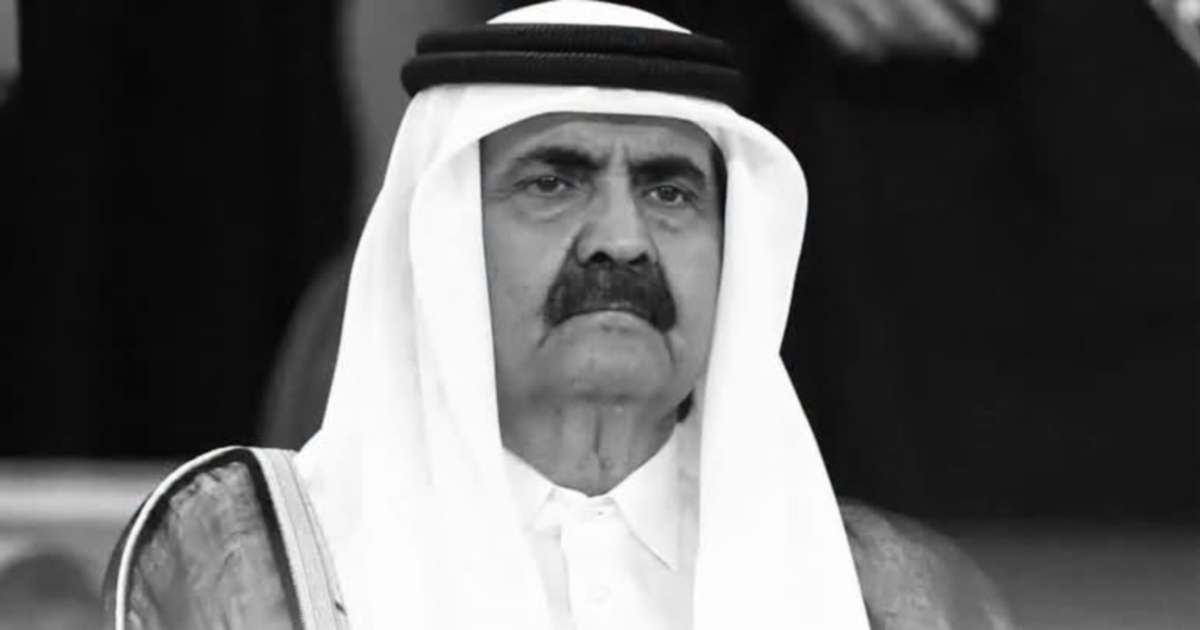
Prime Minister Datuk Seri Anwar Ibrahim has conveyed Malaysia's deepest sympathy to Qatar's government and citizens in the aftermath of former emir Sheikh Hamad bin Khalifa Al Thani's passing. The prominent Gulf statesman died at the age of 74, marking the conclusion of a leadership tenure that fundamentally reshaped the oil-rich peninsula state during the latter decades of the twentieth century and into the modern era.
Sheikh Hamad bin Khalifa Al Thani's death represents a significant moment for the region, given his outsized influence in shaping Qatar's trajectory as both a political and economic powerhouse. His three-decade reign, which commenced in 1995 following a bloodless transition of power, witnessed Qatar's transformation from a minor Gulf principality into a globally significant nation. The former ruler oversaw the creation of the Qatar Investment Authority, one of the world's largest sovereign wealth funds, and spearheaded an aggressive diversification strategy that reduced the nation's reliance on petroleum exports.
The diplomatic gesture from Malaysia's premier underscores the enduring bilateral relationship between Kuala Lumpur and Doha. Qatar maintains substantial economic ties with Southeast Asia, extending beyond energy trade into infrastructure development and financial partnerships. Malaysian companies have pursued significant contracts in Qatar's ongoing development initiatives, whilst Qatari investors have diversified their regional portfolio across the Malaysian economy, encompassing real estate, telecommunications, and renewable energy sectors.
Sheikh Hamad's tenure proved transformative in establishing Qatar's cultural and sporting credentials on the world stage. He championed the nation's 2022 FIFA World Cup hosting ambitions, an undertaking that required unprecedented investment in stadium construction, transportation networks, and hospitality infrastructure. The tournament ultimately became a defining moment for Qatar's international profile, attracting worldwide attention and establishing the emirate as a capable organiser of megaevents despite earlier skepticism from global observers.
Beyond sports, the former emir's governance legacy encompasses the launch of Al Jazeera, the pan-Arab satellite news network established in 1996 that revolutionised regional media consumption and challenged established Western news monopolies. This venture demonstrated Sheikh Hamad's commitment to projecting Qatar's soft power throughout the Arab world and beyond, a strategy that continues to influence the nation's foreign policy orientation today.
The succession of Sheikh Hamad's son, the current Emir Sheikh Tamim bin Hamad Al Thani, in 2013 marked a generational transition that many analysts viewed as remarkably smooth given the magnitude of transformation preceding it. The handover nonetheless retained the foundational diplomatic and economic frameworks established during his predecessor's reign, ensuring continuity despite the change in leadership. Sheikh Tamim has largely maintained his father's forward-looking vision whilst adapting to evolving regional dynamics and international relations.
Qatar's geopolitical standing has become increasingly complex during the intervening decade. The nation experienced significant international isolation from 2017 to 2021 following a blockade imposed by neighbouring Saudi Arabia, the United Arab Emirates, Bahrain, and Egypt over allegations of financing extremist organisations and maintaining excessive Iranian diplomatic ties—charges Doha consistently denied. The blockade's resolution coincided with broader regional reconciliation efforts and demonstrated the resilience of the institutional frameworks established during Sheikh Hamad's leadership tenure.
For Malaysia specifically, Qatar's stability and economic prosperity represent valuable opportunities within the broader Southeast Asian economic integration framework. Malaysian workers constitute a notable proportion of Qatar's expatriate labour force, whilst bilateral tourism exchanges have expanded considerably following increased air connectivity between Kuala Lumpur and Doha. Educational partnerships have also deepened, with Qatari institutions establishing satellite campuses within Malaysia's growing higher education sector.
Anwar's expression of sympathy reflects diplomatic convention whilst acknowledging the personal and familial dimensions of leadership transitions within the Gulf monarchies. The Malaysian premier has cultivated a reputation for maintaining pragmatic, multi-aligned foreign relations that prioritise economic cooperation alongside cultural understanding. Qatar's significance as both a regional power and global player ensures that Malaysian strategic interests remain closely aligned with the emirate's political stability and continued prosperity.
The passing of Sheikh Hamad bin Khalifa Al Thani closes a remarkable chapter in modern Gulf history. His legacy encompasses not merely the accumulation of sovereign wealth or the hosting of international events, but rather the demonstration that smaller Gulf states could leverage institutional innovation, strategic investment, and soft power projection to achieve outsized influence in international affairs. As Qatar navigates its future under sustained leadership from Sheikh Tamim's government, the foundations established during his father's groundbreaking tenure will continue shaping the emirate's role within regional and global systems for decades to come.

