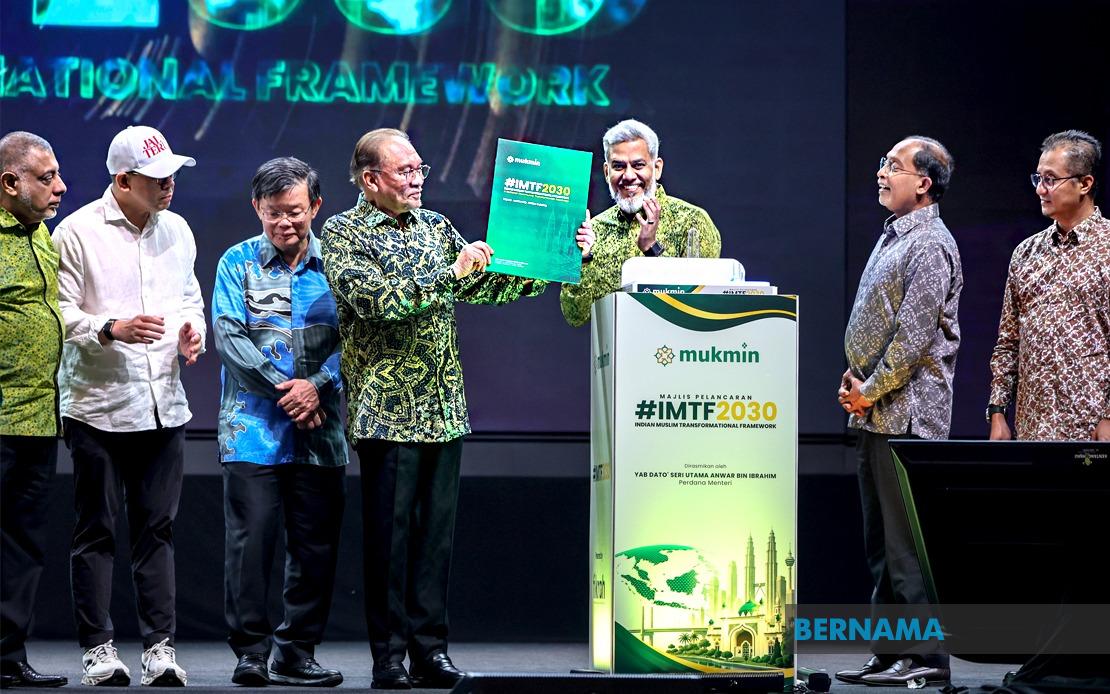
Prime Minister Datuk Seri Anwar Ibrahim has issued a directive to the country's ministries and agencies to address delays and obstacles in foreign worker employment applications within a single month, with the hospitality and food service sectors identified as priority areas requiring immediate attention. Speaking at the launch of the Indian Muslim Transformational Framework 2030 at the PICCA@Arena Butterworth Convention Centre in Penang on July 24, Anwar acknowledged the critical staffing challenges facing restaurant operators across Malaysia and signalled the government's willingness to streamline bureaucratic processes that have hampered recruitment efforts.
The Prime Minister's intervention reflects a delicate balancing act within his administration regarding foreign labour policy. While emphasizing the urgent necessity to fill vacancies in essential sectors, Anwar simultaneously cautioned against wholesale liberalization of work permits that would exacerbate Malaysia's already substantial foreign worker population. His comments suggest frustration with the pace at which applications are processed, even as government policy deliberately restricts the overall influx of migrant workers into the economy.
Malaysia's approach to foreign labour has long been constrained by demographic concerns and the desire to prioritize employment opportunities for Malaysian citizens. Under the 12th Malaysia Plan framework, the government has capped foreign workers at no more than 15 per cent of the national workforce. This ceiling represents a deliberate policy choice to prevent over-reliance on migrant labour and to maintain job security for local workers, particularly in lower-skilled occupations where competition would be most acute.
The situation facing the restaurant sector has become increasingly untenable, with many operators reporting persistent difficulties in recruiting sufficient staff despite rising wages and improved working conditions. This bottleneck reflects broader labour market dynamics in Malaysia, where younger generations increasingly pursue post-secondary education and service sector roles that offer greater social prestige or better career progression prospects. The restaurant industry, historically dependent on both local and migrant workers, has struggled to attract and retain personnel at the pace demanded by the sector's expansion and recovery following pandemic-related disruptions.
Communications Minister Datuk Seri Fahmi Fadzil had previously indicated that the government would undertake a comprehensive review of foreign worker requirements across multiple sectors, including construction and food service. This review emerged from discussions within the Cabinet, suggesting that pressures from industry stakeholders have reached sufficient levels to warrant policy reconsideration. The one-month timeline announced by Anwar indicates that rather than conduct a protracted bureaucratic review, the government intends to expedite internal processes that can be streamlined without fundamentally altering aggregate foreign worker quotas.
The 13th Malaysia Plan, which charts the nation's development trajectory through 2030, incorporates an even more ambitious target of reducing foreign workers to just 10 per cent of the national workforce by the end of the decade. This long-term objective sits in apparent tension with Anwar's acknowledgment of urgent sectoral needs, but may ultimately drive the government toward investments in automation and productivity improvements within hospitality and food services. Such technological adoption could address labour shortages without requiring permanent increases in migrant worker populations.
Anwar's announcement occurred during an event celebrating the Indian Muslim community in Malaysia, and the Prime Minister used the occasion to announce a RM2 million government allocation to Pertubuhan Gabungan MUKMIN Nasional for educational and welfare programmes benefiting children from low-income families. This commitment underscores the government's stated priority of strengthening educational access and social mobility for disadvantaged communities, a principle that intersects with broader labour market and workforce development strategies.
The Indian Muslim Transformational Framework 2030 represents a comprehensive five-year initiative designed to advance community aspirations across education, entrepreneurship, leadership development, and contributions to national economic growth. Such targeted community development programmes reflect Anwar's broader governance philosophy of inclusive development that addresses specific demographic needs while maintaining national economic competitiveness.
For Malaysian business operators, particularly those in the hospitality and restaurant sectors, Anwar's directive offers hope of more expeditious processing of foreign worker applications in coming weeks. However, the emphasis on maintaining overall foreign worker caps suggests that any relief will be temporary or limited in scope rather than representing a wholesale policy reversal. Operators may find that accelerated application processing improves throughput without necessarily expanding the absolute number of positions available.
The broader implications for Malaysia's economy and workforce development strategy remain significant. The government faces competing pressures: industry demands for labour flexibility, national policy objectives around workforce localization, demographic realities of an aging population increasingly pursuing higher education, and wage inflation pressures that reshape labour market dynamics. Anwar's intervention seeks to navigate these tensions through improved administrative efficiency rather than policy transformation, at least in the immediate term.
The restaurant sector's labour challenges mirror difficulties experienced across Southeast Asia as economies recovered from pandemic impacts and faced structural shifts in labour supply. Malaysia's experience will likely inform discussions within ASEAN regarding appropriate foreign worker policies balancing national development objectives with sectoral economic needs. The government's commitment to resolving application backlogs within one month will serve as a measurable test of its capacity to implement streamlined administrative processes while maintaining policy coherence.

