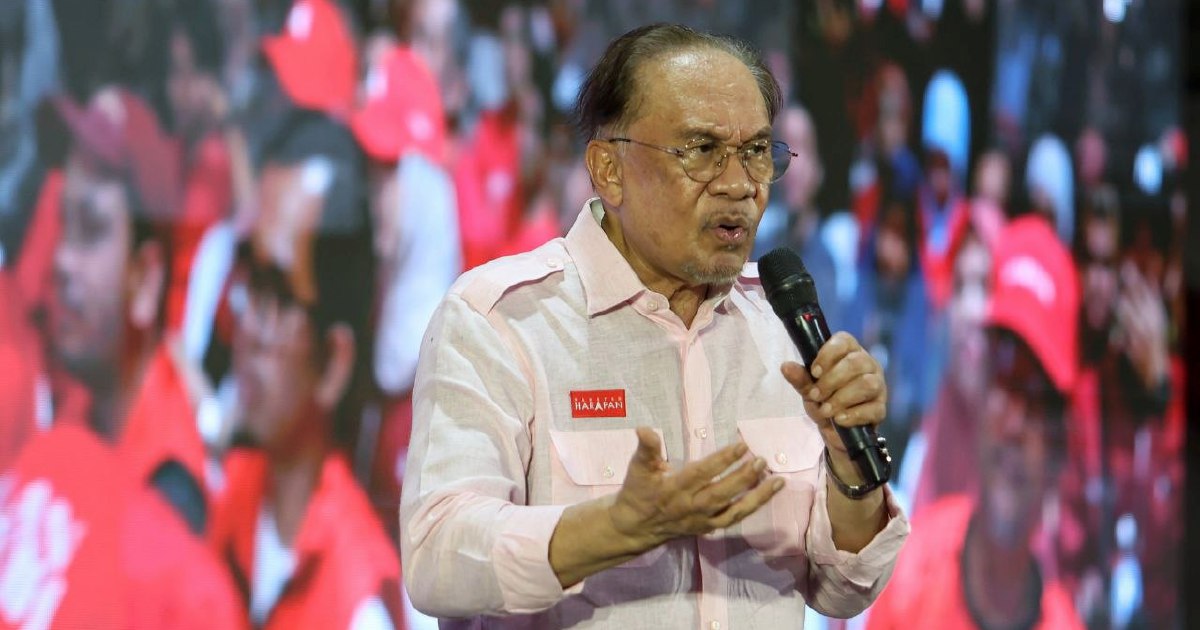
Prime Minister Datuk Seri Anwar Ibrahim has reaffirmed his determination to maintain the stability and cohesion of the federal unity government, striking a careful balance between protecting the nation's political architecture and engaging in competitive state-level politics. Speaking in Seremban, the premier sought to reassure stakeholders that the looming state election in Negri Sembilan would not destabilise the fragile coalition arrangements that have underpinned federal governance.
The pronouncement comes as Malaysia navigates the inherent tensions that arise when partners in a national unity coalition find themselves in opposing camps at the state level. The unity government, formed after the 2022 general election, brought together multiple political parties under an overarching framework designed to ensure stable and inclusive governance. This arrangement has been credited with restoring investor confidence and providing predictability to policymaking, though it requires careful management of competing interests.
Anwar's statement reflects the delicate political calculus that characterises contemporary Malaysian politics, where the same parties that collaborate at the federal level often compete fiercely in state contests. Negri Sembilan presents a test case of this dynamic, with Barisan Nasional preparing to contest the state election as a rival force rather than a unity partner. The traditional powerhouse coalition, once dominant in Malaysian politics, has repositioned itself as an opposition force in many state arenas whilst maintaining its broader role in federal arrangements.
For Malaysia's economic and political stability, the preservation of the unity government carries significant weight. Markets have responded positively to the relative predictability that the coalition structure provides, and dismantling it could trigger uncertainty regarding policy continuity, investor sentiment, and the government's legislative agenda. Anwar's emphasis on federal stability thus carries implications that extend beyond party politics to affect economic performance and citizen confidence in governance.
The Prime Minister's commitment signals to both domestic and international observers that Malaysia's ruling coalition remains fundamentally intact despite electoral competition at the state level. This distinction between federal and state-level politics, while understood in theory, proves challenging in practice, as state election campaigns inevitably generate momentum that can affect national political dynamics. Party leaders must navigate the tension between campaigning aggressively at the state level whilst preserving relationships necessary for federal collaboration.
Negri Sembilan's significance in this context stems partly from its political history and partly from its symbolic importance as a test of whether the unity government framework can withstand the strain of competitive elections. The state's outcomes could influence perceptions of momentum and strength heading into future electoral contests. For Anwar and his coalition partners, demonstrating that state-level competition need not rupture federal arrangements becomes crucial to sustaining the unity government model beyond its initial formation.
Barisan Nasional's positioning as a competitor in Negri Sembilan reflects broader strategic recalibration within the coalition. Rather than participating as a junior partner in the federal unity arrangement, BN has opted to contest state elections competitively, potentially seeking to expand its territorial influence and rebuild its electoral credibility. This approach allows the coalition to maintain its federal role whilst pursuing power in specific states where it believes it can be competitive.
Anwar's reassurances about federal stability address concerns that emerged following the 2022 election, when some analysts questioned whether the unity government could function effectively given the different ideological orientations of its component parties. The coalition brings together Pakatan Harapan, Barisan Nasional, and various other political groups under a power-sharing arrangement that requires continuous negotiation and compromise. Three years into this arrangement, the challenge intensifies as parties prepare for state elections and position themselves for eventual general elections.
The state election in Negri Sembilan represents a live test of whether such divided governance can function without triggering broader political instability. Should the state election proceed with minimal spillover effects on federal relations, it would strengthen the case for viewing unity government arrangements as compatible with electoral competition. Conversely, significant tensions or dramatic shifts in state control could signal fractures within the federal coalition.
For Malaysian voters, particularly in Negri Sembilan, Anwar's statement clarifies that state-level electoral choices need not carry implications for federal stability. This framing potentially allows voters to assess state-level candidates and policies without worrying that their choice could inadvertently destabilise the national government. It also reflects confidence that the unity government can withstand the ordinary currents of electoral politics.
The months ahead will test whether Anwar's pledge can withstand reality. State elections generate passionate campaigns, personal rivalries between candidates, and momentum shifts that frequently surprise political observers. Managing these dynamics whilst simultaneously stewarding a complex federal coalition demands considerable political skill and, at times, willingness to absorb short-term setbacks in pursuit of longer-term stability.
For Southeast Asia's third-largest economy, the maintenance of political stability whilst permitting genuine electoral competition remains a critical objective. Malaysia's experience with the unity government model may offer lessons relevant to other regional democracies grappling with political fragmentation and the need for inclusive governance. Whether Anwar can deliver on his commitment to preserve federal stability whilst allowing Negri Sembilan voters to make genuinely competitive choices will significantly influence assessments of Malaysia's political maturity.

