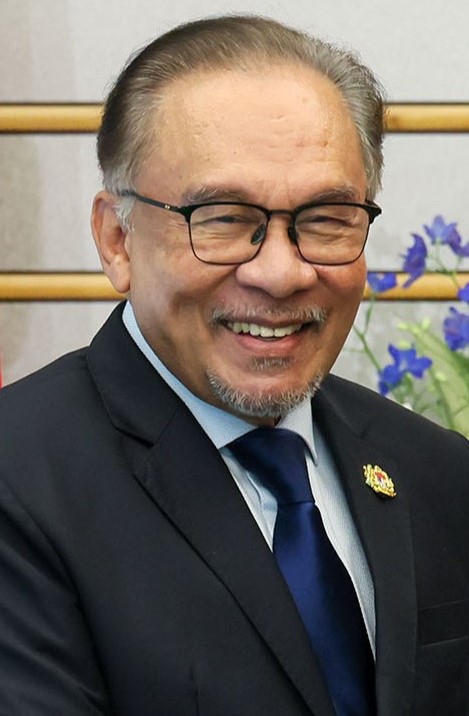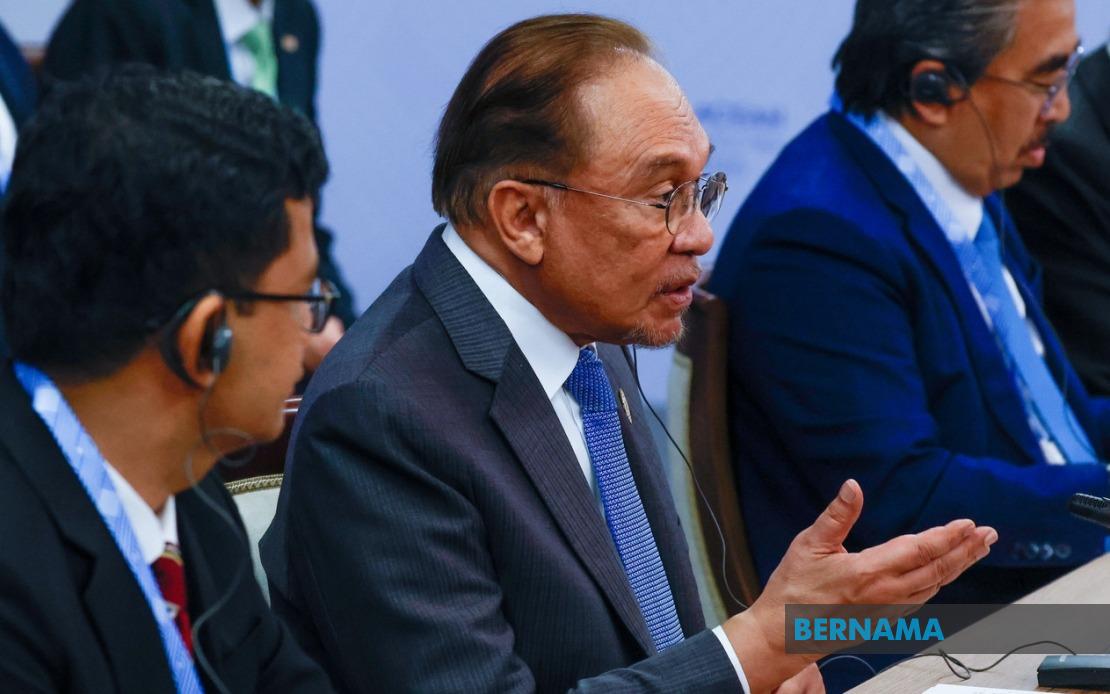
Malaysian Prime Minister Datuk Seri Anwar Ibrahim used a bilateral meeting with Russian President Vladimir Putin in Kazan on Wednesday to express his country's appreciation for Moscow's unwavering diplomatic approach to two of the world's most pressing Middle Eastern crises. Speaking during opening remarks at their summit, Anwar highlighted Russia's commitment to principled positions on both the Gaza conflict and the broader Iran situation, framing these stances as exemplary in international relations at a time when geopolitical tensions continue to reshape global alignments.
Anwar's endorsement of Russia's foreign policy reflects Malaysia's broader alignment with nations seeking multipolar alternatives to Western-dominated international order. By publicly commending Putin's consistency and conviction, the Prime Minister signalled Malaysia's appreciation for Moscow's approach to regional stability at a moment when the Middle East faces unprecedented uncertainty. His remarks carried particular weight given Malaysia's own historical advocacy for Palestinian rights and its delicate balancing act in managing relations with major powers while maintaining principles of non-alignment and sovereign decision-making.
Russia's position on Gaza has centred on advocating for immediate ceasefires and protecting Palestinian humanitarian interests, distinguishing it from Western approaches that have often been perceived in the region as prioritising Israel's security concerns. Moscow has consistently called for unrestricted humanitarian corridors to allow aid into Gaza and has supported United Nations efforts to address the humanitarian catastrophe. This stance has resonated with many developing nations, including Malaysia, where public opinion strongly favours Palestinian self-determination and criticises what many view as disproportionate civilian casualties in the territory.
On Iran, Russia has maintained strategic partnership while simultaneously encouraging diplomatic dialogue over military escalation. Moscow's refusal to join Western pressure campaigns against Tehran, combined with its advocacy for negotiated solutions to regional disputes, positions it as a counterweight to unilateral Western interventionism in Middle Eastern affairs. Anwar's commendation of this approach suggests Malaysia views Russia's restraint and emphasis on dialogue as preferable to confrontational alternatives that risk further destabilising the region and drawing in major powers in direct conflict.
The bilateral meeting in Kazan occurred against a backdrop of intensifying great power competition in Asia-Pacific and beyond. Malaysia, as a significant Southeast Asian economy with interests spanning energy security, trade routes, and regional stability, must carefully calibrate its relationships with major powers. By publicly acknowledging Russia's principled foreign policy, Anwar reinforced Malaysia's non-aligned tradition while demonstrating that Kuala Lumpur values consistency and principle in international relations, regardless of which power demonstrates these qualities.
Gaza remains a flashpoint in global politics, with the conflict drawing international scrutiny and dividing nations along geopolitical lines. Russia's support for Palestinian humanitarian access and ceasefire proposals contrasts sharply with other major powers' approaches and has elevated Moscow's standing among developing nations and Muslim-majority countries. For Malaysia, with its significant Muslim population and historical commitment to Palestinian solidarity, Russia's stance aligns with domestic political sensitivities and the government's own international advocacy priorities.
The Iran question carries equally significant implications for regional stability. Tensions between Tehran and Western powers, particularly the United States, have escalated intermittently, threatening to disrupt vital shipping lanes through the Persian Gulf and Strait of Hormuz—waterways critical to Asian economies including Malaysia. Russia's insistence on diplomatic channels and opposition to military confrontation with Iran serves regional interests by advocating for stability over conflict. Anwar's appreciation of this position reflected Malaysia's own preference for peaceful resolution of international disputes through dialogue rather than coercive measures.
Anwar's public remarks during the meeting also underscored Malaysia's growing strategic engagement with Russia beyond traditional economic sectors. While Malaysia and Russia have longstanding trade and energy relationships, the Prime Minister's emphasis on diplomatic principles suggested deepening intellectual and political alignment on global governance questions. This development reflects a broader Southeast Asian trend of engaging Russia more actively in regional dialogues and recognising Moscow's role in maintaining global balance, even as the region remains wary of great power competition and seeks to preserve its strategic autonomy.
For Malaysian policymakers and analysts, Anwar's comments represent a calculated diplomatic gesture affirming Malaysia's non-aligned credentials while strengthening bilateral relations with Russia. The Prime Minister's explicit acknowledgement of Russia's consistency and conviction on Gaza and Iran sends signals to both domestic audiences—where these issues command attention and emotional investment—and to the international community about how Malaysia positions itself within emerging geopolitical alignments. This approach allows Malaysia to maintain meaningful relations with Russia without compromising its existing partnerships with Western nations or other regional powers.
The significance of the Kazan meeting extends beyond bilateral ceremony. It reflects how Malaysia, like other Southeast Asian nations, is navigating a multipolar world where traditional allies coexist with emerging partners and where principles of non-alignment have gained renewed relevance. By commending Russia's principled positions, Anwar articulated a vision of international relations where consistency, dialogue, and respect for humanitarian concerns override great power strategic convenience—values that resonate particularly strongly in the Global South and among nations conscious of their historical experiences with colonialism and external interference.