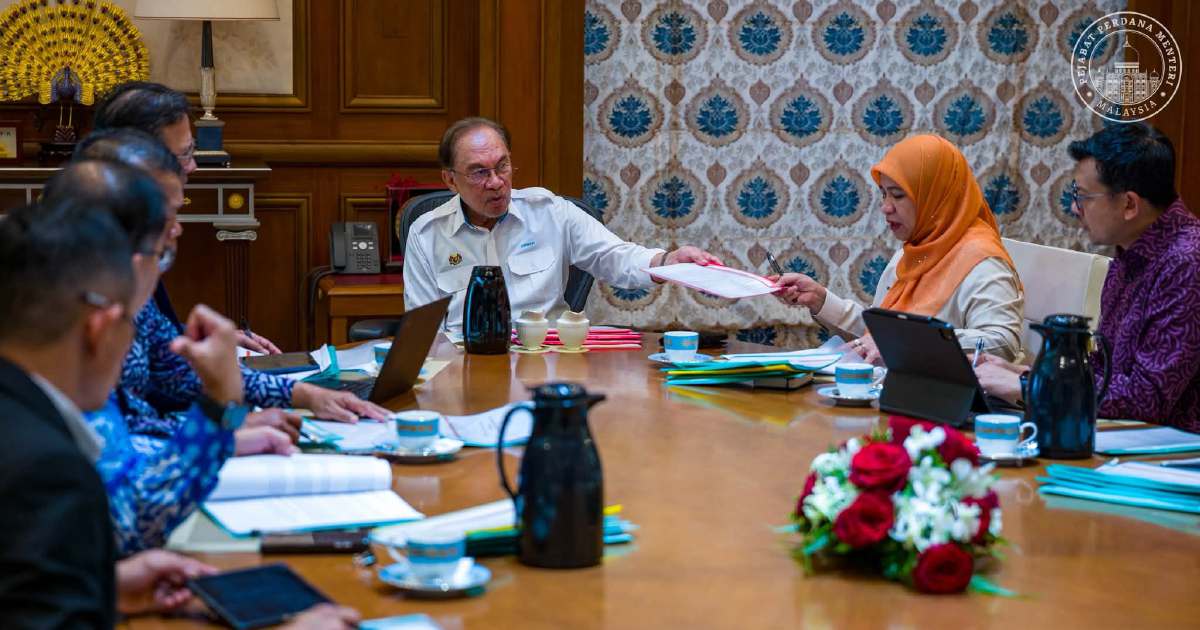
Prime Minister Datuk Seri Anwar Ibrahim has signalled fresh momentum on resolving chronic difficulties plaguing Federal Land Development Authority (Felda) settlers, with particular emphasis on land ownership clarity and housing provision for the next generation. The intervention from Malaysia's top political office underscores mounting pressure to address grievances that have festered for decades within one of the country's most significant rural development schemes.
Felda, established in 1956 as a cornerstone of Malaysia's rural transformation strategy, has long been central to the nation's agricultural policy and social fabric. The organisation was designed to settle landless farmers and their families on developed plots, primarily for palm oil and rubber cultivation. However, the scheme's original framework—which vested formal land ownership with Felda rather than individual settlers—has become a source of persistent tension and insecurity among beneficiaries and their descendants.
The land ownership question cuts to the heart of generational economic anxiety within Felda schemes nationwide. First-generation settlers, now advancing in age, lack formal title deeds to their plots, creating uncertainty about inheritance rights and limiting their ability to leverage property as collateral for loans or business ventures. This structural ambiguity has compounded as populations aged and younger Felda-born Malaysians sought to build lives independent of their parents' schemes, often without viable pathways to secure housing or land access.
Second-generation housing has emerged as perhaps the most visible flashpoint in Felda grievances. As original settlers' children reached adulthood, they faced an accommodation crunch. The government's original colonial-era structures, designed for single households in a vastly different economic context, proved inadequate for modern family arrangements. Many second-generation Felda members have been unable to construct or acquire homes within their parent schemes due to land constraints and bureaucratic restrictions, forcing migration to urban centres or informal housing arrangements.
Anwar's call for swift, equitable resolution signals recognition that these are not merely administrative inconveniences but fundamental questions of property rights, economic mobility, and social equity. The Felda settler base, numbering in the hundreds of thousands across the peninsula, represents a historically significant but increasingly marginalised demographic. Many face stagnant incomes from aging agricultural holdings, limited alternative employment within their schemes, and generational wealth gaps widening as urban-based opportunities concentrate in cities.
The political dimensions merit careful attention. Felda settlers have traditionally formed a core constituency for governing coalitions, yet rising dissatisfaction has created space for opposition parties to mobilise grievances. Resolving these issues carries implications beyond welfare policy—it reflects the government's capacity to deliver on commitments to constituencies that supported earlier development models but now require contemporary solutions to retain their support and dignity.
A comprehensive settlement framework would likely need to address multiple interconnected challenges simultaneously. Formal title transfer to individual settlers requires legislative amendments and potentially substantial fiscal commitments to survey, document, and register hundreds of thousands of land parcels. Such a process demands careful sequencing to prevent disputes between settlers, their families, and Felda authorities regarding rightful claimants, particularly as intestacy cases and generational transfers complicate ownership chains.
Second-generation housing solutions present equally complex terrain. Expanding residential land within existing schemes may be impractical given geographic constraints and competing agricultural productivity mandates. Alternative approaches might include facilitating off-scheme housing with subsidies or loan guarantees, liberalising restrictions on land use within schemes, or establishing satellite developments accessible to younger beneficiaries. Each option carries different financial implications and community impacts.
International comparisons offer cautionary lessons. Land reform and settler scheme modernisation elsewhere have proven prolonged and contentious, often requiring decades and substantial political will to resolve satisfactorily. Indonesia's experiences with transmigration schemes and the Philippines' struggles with agrarian reform illustrate how unresolved settler grievances can become destabilising issues if left unaddressed across electoral cycles.
For Malaysian policymakers and Felda authorities, Anwar's intervention appears to signal willingness to move beyond incremental tinkering toward structural reform. Whether such momentum translates into genuine legislative change and resource allocation remains uncertain. Implementation challenges—from land surveying backlogs to financial constraints—loom large. Crucially, any resolution will require genuine consultation with settlers themselves, whose accumulated experience and family knowledge of their holdings must inform legal and administrative redesign.
The broader development implications extend beyond Felda communities themselves. Resolution of settler issues could establish precedents for addressing similar historical inequities embedded in Malaysia's other planned agricultural schemes, while demonstrating government capacity to revisit foundational policy frameworks when circumstances demand evolution. Conversely, protracted inaction risks deepening the wedge between rural settlers and urban-focused development models that have characterised Malaysian policy for the past two decades.
The coming months will illuminate whether this latest call for resolution represents genuine policy inflection or rhetorical positioning before electoral considerations. Concrete timelines, allocated budgets, and legislative drafting would signal serious intent. For hundreds of thousands of Felda settlers and their children awaiting clarity on their futures, swift movement on these fronts would represent long-overdue recognition of their legitimate claims to security, property, and prosperity.

