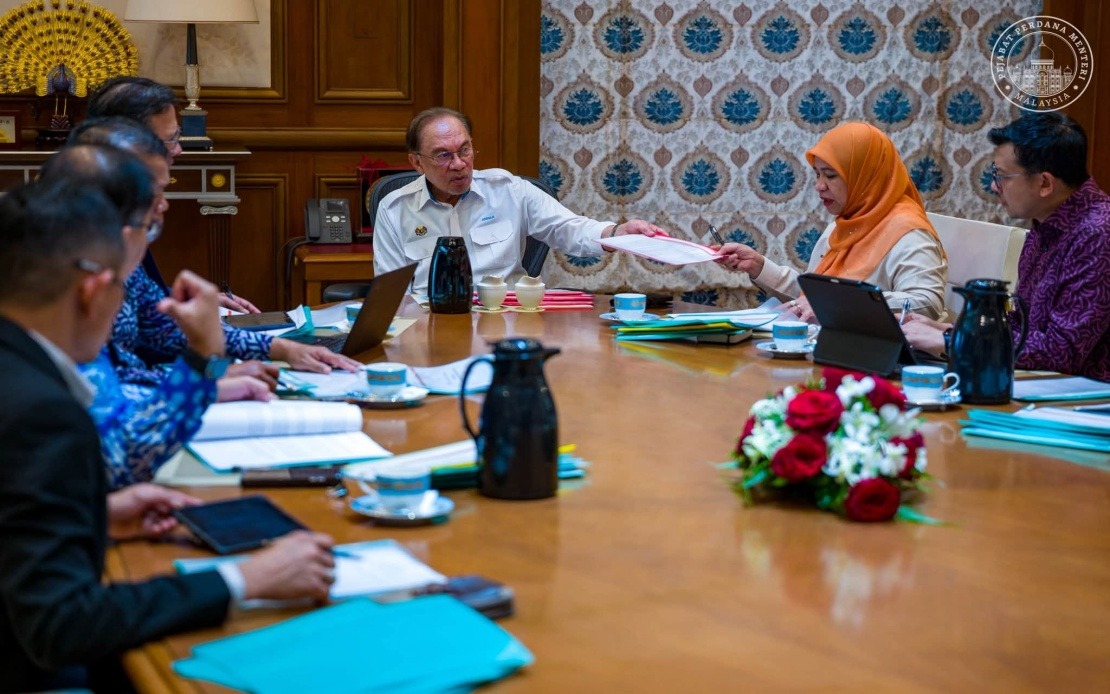
Prime Minister Datuk Seri Anwar Ibrahim has intensified pressure on the Federal Land Development Authority to move decisively on unresolved grievances that have burdened settlers for years, with particular emphasis on the thorny matters of housing provision and land tenure for the second generation. Through a public Facebook statement, Anwar signalled that the MADANI Government views the accumulation of these problems as unacceptable and requires prompt intervention grounded in the genuine needs of FELDA communities.
The Prime Minister's directive reflects growing recognition within government circles that FELDA residents, many of whom represent Malaysia's agricultural backbone, have endured extended delays in addressing fundamental issues that affect their economic security and family welfare. Second-generation housing has emerged as a critical concern, as the children of original FELDA settlers have struggled to obtain adequate accommodation within the settlement framework or secure alternative land parcels. This generational dimension adds urgency to a matter that extends beyond individual settlers to encompass the sustainability and social cohesion of FELDA schemes nationwide.
Land ownership complications further compound the challenge. Many FELDA settlers and their descendants face ambiguities regarding title, inheritance rights, and transferability of land holdings, creating legal uncertainty that inhibits long-term planning and investment. These complications often stem from the original conditions under which FELDA was established, and resolving them requires careful navigation of historical arrangements, individual settler circumstances, and institutional regulations. Anwar's insistence on thorough examination of each case underscores awareness that blanket solutions may prove inadequate given the diversity of situations across different FELDA schemes.
By emphasizing the need for "careful examination" followed by "clear solution plans," the Prime Minister has essentially directed FELDA leadership to move beyond mere acknowledgment of problems toward actionable remedies. This language suggests frustration with bureaucratic inertia and signifies that government expectations have shifted toward concrete delivery rather than extended consultation periods. For FELDA settlers accustomed to protracted administrative processes, the Prime Minister's intervention represents a potential turning point in how their grievances are processed and addressed.
The broader context reveals that FELDA, once envisioned as a transformative instrument for rural development, has increasingly faced criticism for outdated operational frameworks and governance structures. The organization manages extensive land holdings and affects hundreds of thousands of people across schemes in Peninsular Malaysia, and its institutional effectiveness directly impacts the welfare of rural communities. Anwar's directive to strengthen FELDA while ensuring benefits materialize for residents suggests recognition that the authority requires both organizational renewal and recommitment to its core mission.
Second-generation issues carry particular resonance in Malaysian rural politics. As FELDA settlements have matured over decades, the original settler cohort has aged, and succession questions have intensified. Young adults born into FELDA communities often lack clear pathways to economic opportunity within the settlement model their parents inhabited. Some have migrated to urban areas seeking employment, while others have remained but struggled with limited access to land or housing. Anwar's focus on this demographic acknowledges that demographic change demands institutional adaptation.
The Prime Minister's intervention also reflects political calculation. FELDA settlers and communities represent a significant electoral constituency, particularly in rural heartlands where government support remains consequential. By publicly championing their cause and demanding administrative accountability, Anwar positions the MADANI administration as responsive to grassroots concerns. Conversely, delays in implementation could expose the government to criticism from opposition figures claiming unfulfilled promises.
For FELDA settlers, the practical implications hinge on whether high-level directive translates into operational change. Previous government pronouncements regarding FELDA improvements have not always resulted in proportionate implementation, and residents have learned to await concrete policy announcements and budgetary commitments. The effectiveness of Anwar's call will ultimately be measured by whether FELDA develops accelerated timelines for housing allocation, clarifies land ownership procedures, and establishes transparent criteria for resolving settler grievances.
Regionally, Malaysia's experience with FELDA holds lessons for other Southeast Asian nations attempting agricultural settlement and rural development. The emergence of second-generation problems in a scheme initiated decades ago illustrates how initial institutional designs may require substantial recalibration as circumstances evolve. How Malaysia addresses these FELDA challenges could inform approaches elsewhere in the region grappling with similar rural development frameworks and generational transitions.
Moving forward, FELDA will need to balance historical commitments to original settlers with emerging obligations toward their descendants, a tension that administrative solutions alone cannot fully resolve. Anwar's directive suggests that government capacity and political will now exist to attempt this balance, though success requires sustained commitment and coordination across multiple agencies. The coming months will test whether this Prime Ministerial intervention catalyzes genuine systemic change or remains symbolic gesture.

