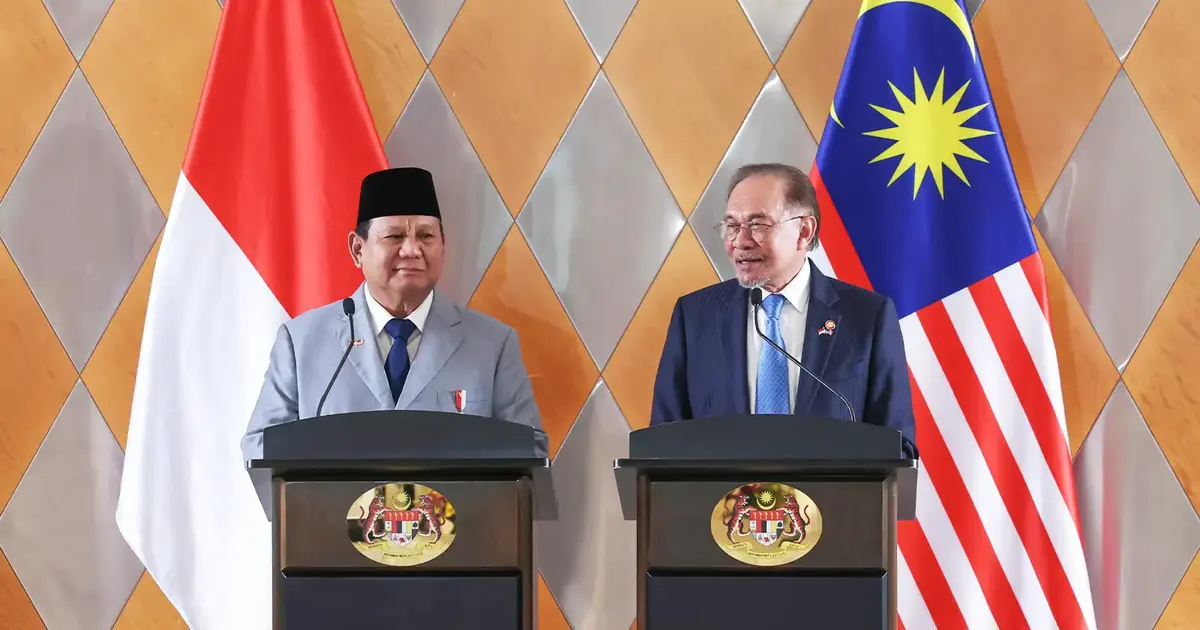
Prime Minister Anwar Ibrahim has escalated diplomatic communication with Indonesian President Prabowo Subianto regarding a substantial cross-border investment exposure that threatens to drain billions from Malaysia's largest palm plantation cooperative. The correspondence underscores the complexity of managing major corporate investments across Southeast Asian borders and the potential for diplomatic coordination when shareholder interests become national concerns.
The disputed investment centres on Felda's involvement in the Eagle High venture, an undertaking that threatens the financial stability of the Federal Land Development Authority, an institution managing agricultural holdings affecting hundreds of thousands of Malaysian smallholder farmers and their families. According to Anwar's assessment, Felda stands to lose more than RM2 billion if current circumstances persist without intervention, though recovery of approximately RM200 million remains theoretically possible under improved conditions. This stark disparity between potential loss and recovery scenarios highlights the precarious nature of the investment's current trajectory.
Felda's historical role as a vehicle for rural economic development makes this exposure particularly sensitive in Malaysian politics. The cooperative operates extensive plantations across the peninsula and serves as a crucial income source for smallholder participants whose livelihoods depend on stable institutional performance. An investment that could precipitate losses exceeding RM2 billion would inevitably reverberate through rural communities and raise questions about corporate governance and decision-making processes that permitted such exposure to accumulate.
The decision to involve Indonesia's president directly reflects the cross-border nature of the Eagle High transaction and suggests that resolving the matter requires cooperation at the highest governmental levels. Indonesian interests or involvement in the venture appear significant enough to warrant direct presidential engagement, indicating that bilateral coordination could unlock solutions unavailable through conventional corporate or regulatory channels. This approach signals Anwar's recognition that economic disputes increasingly demand diplomatic apparatus alongside financial expertise.
The timing of the communication carries weight within the context of Malaysia-Indonesia relations, which have experienced periodic tensions over maritime boundaries, labour migration, and palm oil trade practices. Elevating a corporate investment issue to presidential correspondence demonstrates how commercial disputes can intersect with diplomatic channels when institutional credibility and substantial sums are at stake. The willingness of both governments to engage at this level suggests underlying recognition that allowing the situation to deteriorate would damage broader bilateral relations.
Felda's corporate structure and investment decisions have attracted scrutiny in recent years as Malaysia's plantation sector navigates global sustainability pressures, commodity price volatility, and competition from alternative vegetable oils. An investment vehicle that could generate losses exceeding RM2 billion represents precisely the kind of strategic vulnerability that governance reforms typically seek to prevent. The magnitude of potential loss raises questions about due diligence processes, risk assessment frameworks, and oversight mechanisms that should have been operational within a state-linked entity managing public resources.
For Malaysian investors and policymakers, the Eagle High situation offers cautionary lessons about international investment expansion during periods of commodity price pressure and evolving global sustainability standards. Felda's experience mirrors broader challenges facing Southeast Asian agricultural enterprises attempting to diversify revenue streams while managing climate-related risks and regulatory changes across multiple jurisdictions. The investment's troubled trajectory illustrates how cross-border transactions can accumulate complications that domestic remedies struggle to address alone.
The distinction between potential RM2 billion losses and RM200 million recovery projections hinges on negotiating outcomes that remain fluid and dependent on Indonesian government cooperation. This variation underscores how bilateral relations and diplomatic engagement can materially affect corporate financial outcomes. Anwar's engagement with Prabowo represents an attempt to shift outcomes toward the more favourable recovery scenario by securing coordination that purely corporate-level discussions might not achieve.
Southeast Asian investors increasingly navigate investment environments shaped by both market dynamics and government intervention, particularly where state-linked enterprises hold significant exposure. The Eagle High situation reflects this regional reality, where corporate structures and governmental relationships become inseparable when investments reach scales affecting national economic interests and political constituencies. Felda's experience will likely inform future investment evaluation criteria across Malaysian agricultural enterprises contemplating similar cross-border commitments.
The unfolding situation also highlights vulnerabilities within Malaysian institutional frameworks designed to govern large-scale investments by state-linked entities. Whether existing regulatory structures permitted this exposure to accumulate without triggering intervention mechanisms, or whether warning signs were present but not adequately acted upon, remains a question likely to receive scrutiny from parliamentary oversight bodies and financial regulators. The incident points toward potential governance improvements applicable across Malaysia's broader portfolio of state-linked enterprises managing substantial public resources in increasingly complex international environments.

