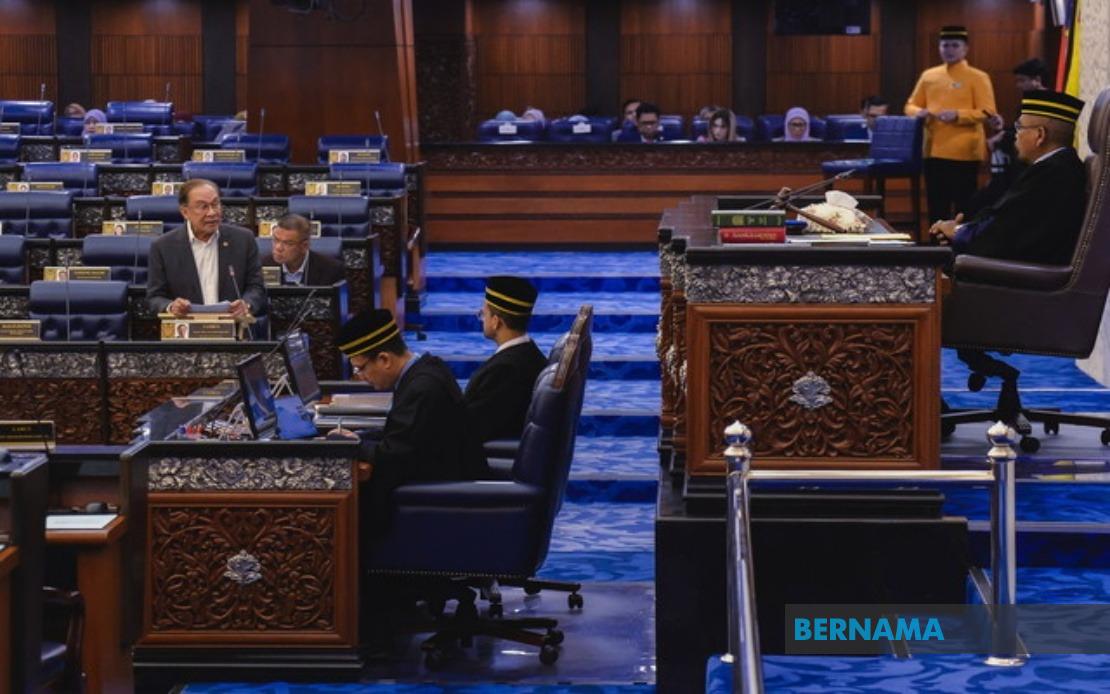
Prime Minister Datuk Seri Anwar Ibrahim has reaffirmed the strict legal prohibition against announcing new projects or policies during electoral campaigns, emphasizing that this restriction applies uniformly across all levels of government and has no exceptions based on the announcing body's status. Speaking during Minister's Question Time in the Dewan Rakyat, Anwar clarified that once nomination day arrives and campaigning commences, the announcement of fresh initiatives or commitments becomes legally impermissible regardless of whether they originate from city councils, state administrations, or the federal government itself. This foundational principle remains central to Malaysia's electoral framework and reflects the commitment to maintaining level playing fields between competing parties.
The legal basis for this constraint is enshrined in Section 24B of the Election Offences Act 1954, which Anwar cited when outlining the government's position on the matter. This statutory provision represents a deliberate safeguard designed to prevent incumbent administrations from leveraging the machinery of state to gain unfair electoral advantages through the strategic announcement of projects timed to coincide with campaign periods. The restriction operates as a counterbalance to the inherent structural advantages possessed by sitting governments, which command substantial resources and public platforms that opposition parties cannot easily match. By prohibiting new announcements during elections, the legislation seeks to create a more equitable contest where voters can evaluate candidates and parties based on established track records and positions rather than potentially hollow campaign promises.
Anwar's statement came in response to a question raised by Datuk Seri Dr Shahidan Kassim, the Perikatan Nasional member for Arau, who specifically sought clarification on whether the restriction remained operative ahead of the upcoming Johor, Melaka, and Negeri Sembilan state elections. Dr Shahidan's inquiry also pressed the Prime Minister on how compliance with these rules would be monitored and enforced across the three states preparing to conduct their electoral processes. The timing of this question suggests ongoing concerns within the political landscape about potential violations, indicating that election authorities and stakeholders continue to grapple with the practical challenges of policing government announcements across multiple administrative levels and diverse institutions.
Crucially, Anwar introduced an important distinction that provides government with legitimate flexibility in its communications during campaign periods. Projects that had previously been approved or received budgetary allocations under earlier federal budgets remain eligible for announcement without triggering election law violations. This clarification recognizes the operational reality that government continues to function during elections and that previously committed financial resources must eventually be disbursed and publicly acknowledged. The exception prevents an artificial freeze on all government communication and acknowledges that stopping the normal flow of budget execution would be neither feasible nor equitable. However, the distinction between pre-approved and newly announced initiatives requires careful scrutiny, as determining the precise moment when a project transitions from planning to announcement can become a technical and legal grey area.
The relevance of these rules extends beyond the immediate context of these three state elections. For Malaysian voters and observers, understanding these restrictions illuminates the formal constraints operating within the electoral system and shapes expectations about the conduct of campaigning. Regional observers from Southeast Asia, where election integrity concerns vary significantly across the bloc, may view Malaysia's statutory approach as a structural mechanism attempting to address democratization challenges. The explicit legal codification of the prohibition signals governmental acknowledgment that electoral campaigns present heightened risks of official abuse, warranting specific protective legislation rather than reliance on conventions or voluntary compliance standards.
The enforcement of these provisions presents inherent administrative and legal complexities. Election authorities must distinguish between routine government announcements required for regular operations and strategic announcements timed to capitalize on campaign momentum. An overly strict interpretation could paralyze government functions and prevent necessary public communications about ongoing initiatives. Conversely, lenient enforcement could render the prohibition toothless and invite the very abuses it was designed to prevent. The burden falls on independent election commissions and investigating bodies to evaluate the authenticity of claims that projects were genuinely pre-approved versus retrospectively documented to circumvent restrictions. This prosecutorial discretion inevitably involves political sensitivity, particularly when investigating sitting governments.
The Prime Minister's reiteration of this position reflects broader efforts to strengthen institutional frameworks governing electoral conduct. Malaysia's electoral system has evolved considerably in recent years, with various reforms implemented to address transparency and fairness concerns raised by domestic observers and international democracy monitors. Anwar's emphasis on consistent application of these rules across all governmental levels suggests an intention to resist pressure from powerful state or federal figures who might seek exemptions or special treatment. His explicit mention of federal, state, and local government bodies indicates awareness that the temptation to violate restrictions exists at all administrative tiers and that vigilance must be maintained accordingly.
The upcoming state elections in Johor, Melaka, and Negeri Sembilan will provide a test case for how rigorously these provisions are enforced. These three states represent important political battlegrounds with varied political dynamics, and the conduct of these elections will influence voter confidence in electoral institutions. Opposition parties and civil society organizations will likely monitor government announcements closely during the campaign period, potentially filing complaints or initiating investigations if violations are suspected. The transparency and timeliness with which election authorities respond to such complaints will significantly shape public perceptions of whether the legal framework translates into meaningful practice.
For Malaysian businesses and stakeholders affected by infrastructure or development projects, the campaign-period restrictions introduce timing considerations into project planning and announcement strategies. Companies and government agencies must coordinate announcements carefully to avoid inadvertently becoming instruments of alleged electoral misconduct. This requires advance planning and clear communication between relevant bodies about when previous approvals can legitimately be publicized. The legal framework thus extends its influence beyond pure politics into the operational sphere of government administration and public-private coordination.
Anwar's statement ultimately affirms that Malaysia's electoral system operates under rules that formally constrain even the most powerful governmental actors. Whether this translates into genuine equality of opportunity between incumbent and challenger remains a matter of ongoing debate, but the existence and reaffirmation of these legal limits represents an important institutional commitment. The upcoming state elections will demonstrate whether these principles are honored in practice or whether the gap between formal rules and actual conduct remains problematic.

