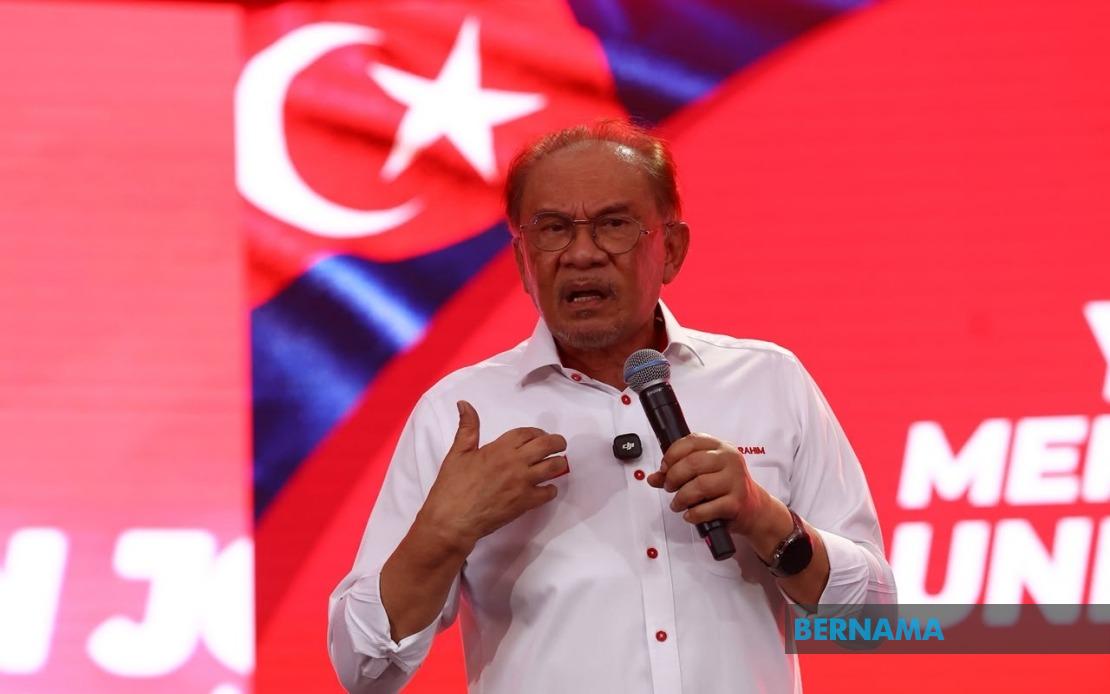
Prime Minister Datuk Seri Anwar Ibrahim moved swiftly to dispel viral claims that he had acquired a luxury BMW for his personal use, addressing the controversy during a campaign event in the Batu Pahat district on July 9. Speaking at the 'Yok! Meriahkan Johor! Undi Harapan' rally in Senggarang, he directly challenged the allegations emerging across social media platforms, characterizing them as deliberate falsehoods designed to undermine his public image and messaging around poverty relief initiatives.
The Prime Minister's statement came as part of a broader defensive posture against accusations that his lifestyle contradicts the equity-focused policies he champions. Anwar questioned why critics would propagate misinformation, emphasizing that the BMW in question represented an existing asset rather than a new acquisition funded through government expenditure. The incident reflects growing scrutiny of ministerial expenditures and asset management in Malaysia, where public perception of governance often hinges on the perceived personal conduct of senior political figures.
In parallel remarks, Anwar provided clarification regarding the Mercedes-Benz vehicle currently in his official use, stating that the automobile had been bestowed upon him by His Majesty Sultan Ibrahim, King of Malaysia. This gift, he stressed, was never registered under his personal name or ownership structure. Instead, the vehicle remains formally registered under the Prime Minister's Department, maintaining its status as government property rather than a private acquisition. This technical distinction carries considerable significance in Malaysian administrative procedure, where the categorization of assets fundamentally determines accountability frameworks and usage protocols.
Anwar's emphasis on this administrative distinction appears designed to preempt further criticism regarding what constitutes appropriate use of state resources by the sitting Prime Minister. By registering the Mercedes-Benz through the Prime Minister's Department rather than claiming personal ownership, he positioned himself within established government procedures and highlighted a contrast with what he characterized as corrupt practices elsewhere in the political establishment. His assertion that "I am not like others who siphon off and steal the people's money" deployed a comparative moral framework that suggested his conduct reflected integrity standards differing from unnamed predecessors or rival figures.
The Prime Minister's Department and the Ceremonial and International Conference Secretariat Division (BIUPA) had already issued a formal statement on Monday preceding these remarks, providing institutional backing to the Prime Minister's personal denial. The statement categorically identified the BMW as an existing government asset that had long been under BIUPA's administrative management, designated for official government logistics requirements rather than recent procurement. This institutional confirmation added official weight to Anwar's personal rebuttal, creating a coordinated response from both political and bureaucratic layers.
The timing of these clarifications proved significant, arriving amid the intensive campaigning phase for the 16th Johor state election, scheduled for polling day on Saturday following the July 9 rally. Election campaigns in Malaysian politics frequently witness intensified scrutiny of candidates and senior party officials, with social media serving as a primary vehicle for opposition messaging and fact-checking claims. The emergence of these BMW allegations during the critical campaigning window suggested coordinated messaging from rival political actors seeking to damage Pakatan Harapan's electoral positioning in Johor.
The Senggarang event itself functioned as a platform for Pakatan Harapan to consolidate its electoral campaign messaging ahead of the state-level contest. Alongside Anwar, the gathering featured Datuk Fahmi Fadzil, the coalition's communications director and Communications Minister, whose presence underscored the strategic importance assigned to managing media narratives surrounding the vehicle controversy. The attendance of coalition candidates contesting the Senggarang, Semerah, and Penggaram seats—Onn Abu Bakar, Mohd Khuzzan Abu Bakar, and Felicia Poh Rui Ling respectively—demonstrated the party's mobilization across multiple constituencies as it sought to contest all 56 state seats in Johor.
For Malaysian voters and observers, the incident illustrates broader tensions surrounding ministerial asset management and the perception of political leadership conducting itself in accordance with publicly articulated values. In a context where public trust in governmental institutions remains subject to historical experiences of corruption and misappropriation, even allegations regarding vehicle ownership carry symbolic weight beyond their technical substance. The controversy underscores how digital platforms enable rapid dissemination of claims about political figures, often outpacing institutional capacity to provide clarification.
The distinction between an "old vehicle" and a newly purchased luxury car represents a crucial factual claim within Anwar's rebuttal. If the BMW did indeed exist as a previously acquired government asset, the allegation would constitute a material misrepresentation. Conversely, if recent acquisition had occurred, the Prime Minister's characterization would prove inaccurate, with significant implications for public confidence in his administration. The institutional statement from BIUPA provides corroboration for the older asset narrative, though such statements require acceptance based on governmental credibility.
For broader Southeast Asian contexts, this incident reflects patterns evident across the region where political figures face intensified scrutiny regarding personal conduct and asset management. The emergence of such allegations during electoral campaigns demonstrates how social media has transformed political communication, enabling rapid mobilization of narratives that may or may not withstand factual verification. Malaysian political observers continue monitoring how such controversies influence voter behavior and electoral outcomes, particularly in state-level contests where local issues intersect with national political dynamics.
The episode also highlights the Communications Minister's role in managing governmental messaging during periods of political controversy. Datuk Fahmi Fadzil's presence at the Senggarang event signaled institutional commitment to narrative control and public reassurance regarding the Prime Minister's integrity. As campaigns progress toward Saturday's polling, the effectiveness of these clarifications in neutralizing social media allegations will bear observation, particularly regarding their resonance among undecided voters in marginal constituencies across Johor.

