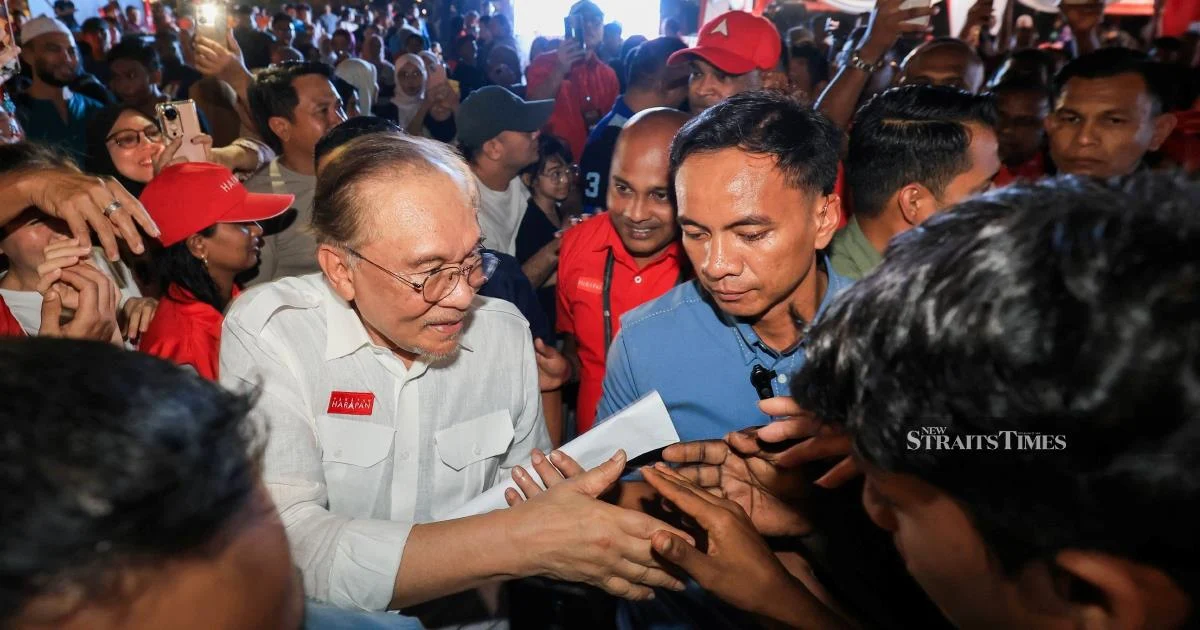
Prime Minister Datuk Seri Anwar Ibrahim has firmly rebuffed mounting calls for an immediate dissolution of Parliament and early election, insisting his administration maintains the democratic mandate to govern through its full term. Speaking on the matter, Anwar expressed confidence that the unity government coalition continues to enjoy the confidence necessary to implement its policy agenda and deliver on commitments made to Malaysian voters.
The push for early elections has emerged from various quarters in recent months, reflecting broader anxieties about political stability and economic performance. However, Anwar's position reflects the practical realities facing his coalition government, which would face significant electoral risks were a snap poll to be called prematurely. The Prime Minister's dismissal of such proposals underscores his administration's determination to maintain continuity in governance rather than subject the nation to the disruption and expense of an unscheduled electoral exercise.
The mandate argument carries particular weight in Malaysia's political context, where coalition governments frequently navigate competing interests between multiple parties with divergent agendas. Anwar's coalition encompasses diverse political factions that agreed to work together following the 2022 general election, establishing what has been termed a unity government structure. This arrangement, while sometimes fragile, has provided greater governmental stability than previous administrations and allowed for the implementation of economic and social policies that required sustained parliamentary focus.
The timing of early election calls reflects investor and public concerns about Malaysia's economic trajectory and the government's capacity to address inflation, employment, and growth challenges. International analysts have repeatedly warned that political uncertainty compounds economic vulnerabilities, creating a feedback loop of reduced business confidence and delayed investment decisions. Anwar's insistence on completing the government's term serves partly to reassure markets that Malaysia's political environment remains predictable enough for sustained policy implementation and capital deployment.
Within Malaysia's parliamentary democracy, government mandates derive both from electoral results and from demonstrated command of majority support in the Dewan Rakyat. While Anwar's coalition was not the largest single vote-getter in 2022, it assembled sufficient parliamentary seats to form government. Maintaining that coalition has required careful management of competing interests, particularly as smaller coalition partners have occasionally threatened withdrawal or conditional support. The PM's public assertion of the government's mandate is partly an appeal to these partners to remain committed to the coalition arrangement.
The unity government model itself represents a significant departure from Malaysia's post-independence political patterns, which typically featured single-party or closely-aligned coalition dominance. This new arrangement requires constant negotiation and compromise, consuming substantial governmental energy that might otherwise be directed toward policy priorities. Nevertheless, Anwar's government has achieved several significant legislative initiatives, including budget allocations, economic stimulus measures, and institutional reforms that might have proven impossible under more fractious parliamentary circumstances.
Opposition to the current administration, while vocal, has not achieved the parliamentary arithmetic necessary to force early elections through legislative mechanisms. Consequently, calls for early polls primarily function as political messaging rather than constituting genuine threats to governmental survival. Anwar's response dismisses these rhetorical challenges while simultaneously reaffirming his government's policy agenda and electoral legitimacy, a necessary exercise in managing political communication during periods of economic stress.
For Malaysian business and investor audiences, the PM's statement carries reassurance about governmental continuity. International experience consistently demonstrates that premature changes in government, even if popular in certain quarters, frequently generate economic costs through delayed decision-making, policy reversals, and investor uncertainty. Anwar's commitment to completing the government's term provides the stable environment necessary for medium-term planning and capital allocation in Malaysia's economy, which faces competitive pressures from regional and global developments.
The regional context also informs Anwar's position. Southeast Asian economies increasingly compete for foreign direct investment and position themselves within shifting global supply chains. Political instability or frequent changes in government disadvantage nations in this competition, as investors seek predictability and consistent policy frameworks. Malaysia's ability to maintain stable governance directly influences its attractiveness as an investment destination relative to neighbours such as Thailand, Indonesia, and Vietnam.
Within the broader coalition, Anwar's rejection of early election calls serves multiple strategic purposes. It demonstrates decisiveness and confidence to coalition partners who might otherwise consider defection, signals commitment to previously-announced policy initiatives, and projects strength to potential external challengers. The statement also implicitly challenges opposition parties to articulate why they believe elections should occur, forcing them to move beyond generalised criticism toward substantive alternatives and policy platforms.
Looking forward, the trajectory of Malaysia's economic performance will substantially influence whether early election pressure intensifies or recedes. Should growth accelerate and inflation moderate, the electoral calculations may shift among both coalition partners and the broader electorate. Conversely, sustained economic difficulties could reignite demands for political change despite Anwar's current assertions. The PM's statement thus represents his government's commitment to proving its governance capacity within the timeframe Malaysians provided through their 2022 electoral verdict.

