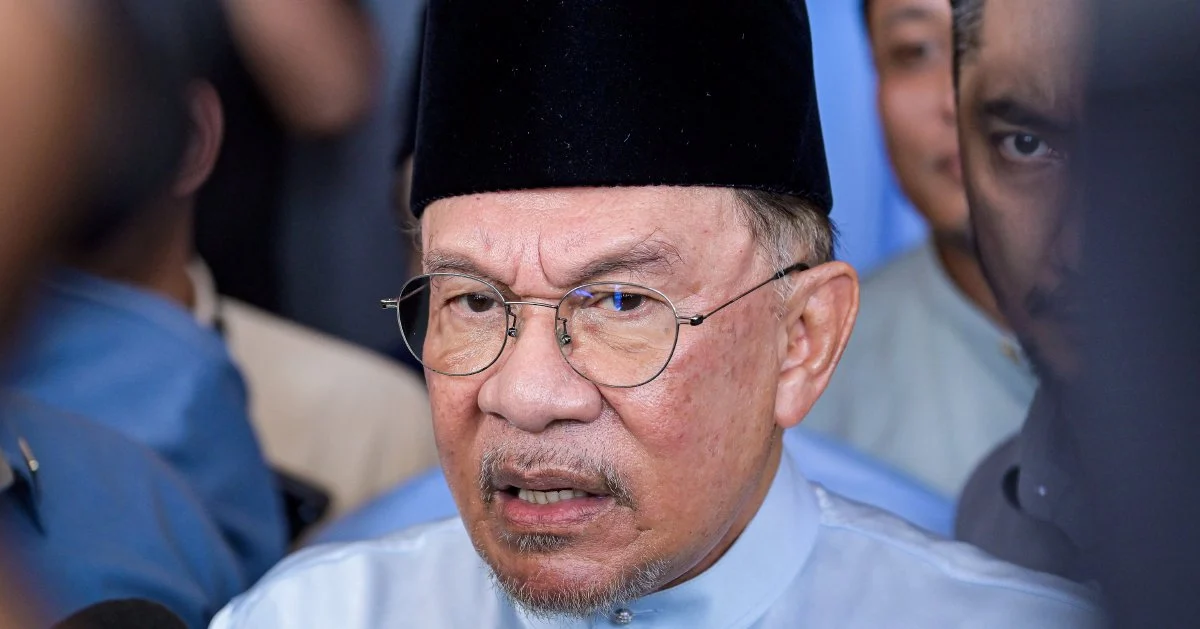
Prime Minister Datuk Seri Anwar Ibrahim dismissed reports on Thursday that caretaker Johor Menteri Besar Datuk Onn Hafiz Ghazi had been prohibited from attending an event at Felda settlements, describing the allegations as unfounded and contradicting the collaborative spirit that ought to define Malaysian politics at this critical juncture.
Anwar's denial came amid mounting speculation within political circles regarding potential friction between federal and state-level leadership, particularly given the approaching general election cycle and heightened scrutiny of inter-party dynamics. The Prime Minister's categorical rejection of the claims underscores the administration's desire to project unity, especially as the nation braces for electoral competition where divisions could undermine broader coalitions.
The alleged incident at Felda settlements—agricultural communities that have historically wielded significant political influence in Malaysia—touched on sensitivities around access and representation. Felda schemes, encompassing hundreds of thousands of beneficiaries, represent a vital electoral constituency that no serious political player can afford to alienate. Control over messaging and visibility within these communities has traditionally been fiercely contested, making any suggestion of interference particularly noteworthy.
Onn Hafiz's position as caretaker Menteri Besar carries particular weight in Johor's political landscape. The state remains a bellwether for national sentiment and a crucial battleground for competing political coalitions. Johor's political complexion has shifted markedly over successive election cycles, and maintaining coherence within governing structures becomes essential for projecting confidence to voters ahead of balloting.
The timing of such allegations, whether substantiated or not, reflects deeper anxieties within Malaysian politics about coordination between different tiers of administration. Federal-state relations have occasionally proven contentious when different parties control respective levels, creating complications for policy implementation and public messaging. Anwar's swift rebuttal suggests awareness that allowing such claims to circulate unchecked could amplify perceptions of disharmony.
The Felda context deserves particular attention for Malaysian and regional observers. Felda schemes represent a unique Malaysian development model spanning decades, with deep historical roots in land settlement and rural development. These communities possess distinct political preferences and voting patterns, often influenced by economic conditions, perceived government support, and local leadership accessibility. Events at Felda locations carry symbolic weight beyond their immediate scope.
Anwar's denial appears calibrated to address not just the specific allegation but broader concerns about how federal leadership operates in relation to state administrations. The Prime Minister's emphasis on the absence of any such instruction signals that coordination mechanisms remain intact and that decisions affecting public access to government programmes flow through established channels rather than ad-hoc directives.
For Southeast Asian observers monitoring Malaysian governance, the incident illustrates persistent tensions between centralised federal authority and state-level prerogatives. Malaysia's constitutional framework allocates considerable power to state governments in land-related matters, agricultural development, and local administration. When federal officials become involved in matters traditionally managed at state level, questions about jurisdictional boundaries inevitably arise.
The allegation, regardless of its accuracy, touches on voter sentiment regarding fair access to government functions and even-handed treatment of elected representatives across party lines. In a democratic system where electoral competition remains robust, perceptions of exclusion or preferential treatment can shape how communities view incumbent administrations. Anwar's response reflects appreciation for such perceptual dynamics.
Looking forward, managing relations between federal and state leadership will remain crucial as Malaysia approaches its electoral calendar. Voters increasingly expect coherent governance messaging and transparent operations. Allegations of barriers to participation, even if denied, can undermine public confidence if not addressed comprehensively. Anwar's intervention suggests the federal administration intends to forestall such narrative development.
The broader implications extend to how Malaysia's political system accommodates multiple power centres operating simultaneously. Federal governments must maintain effective relationships with state administrations, particularly those controlled by coalition partners or political rivals. Mechanisms for cooperation, clear communication protocols, and demonstrated commitment to inclusive governance become essential tools for managing these relationships successfully.
For Johor specifically, such clarifications matter enormously given the state's electoral significance and economic importance to the federation. Onn Hafiz's administration, despite its caretaker status, continues making decisions affecting hundreds of thousands of residents. Ensuring unfettered access to public platforms and government events enables state leadership to account to their constituents, reinforcing democratic principles that underpin Malaysian federalism.

