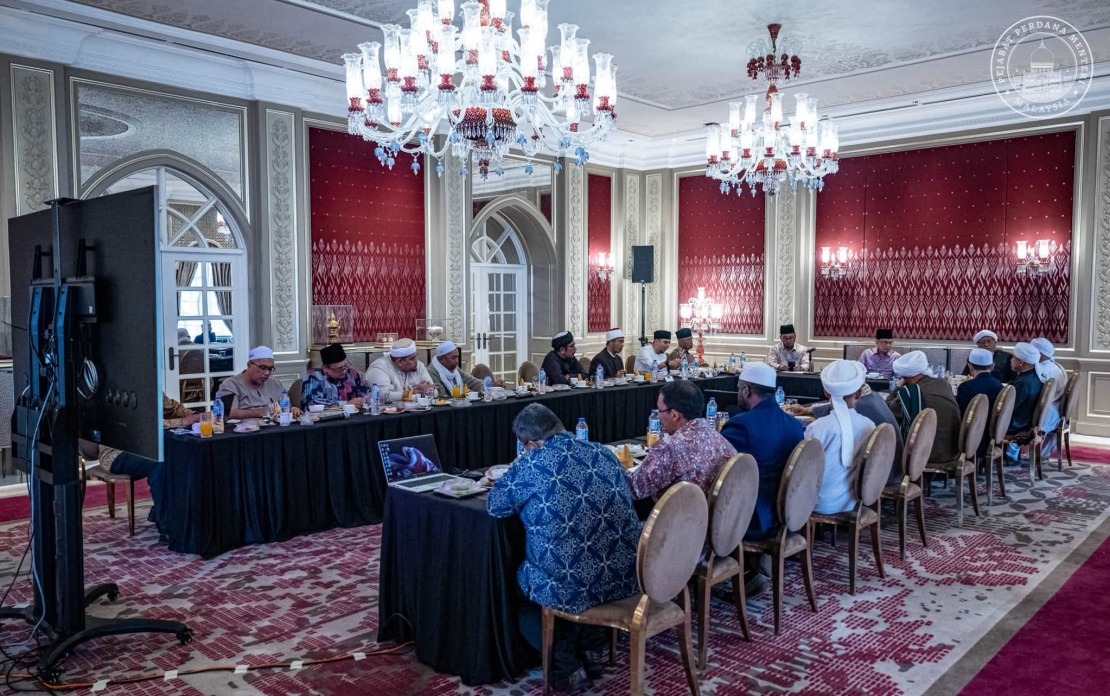
Prime Minister Datuk Seri Anwar Ibrahim has characterised his ongoing engagement with religious scholars as far more than ceremonial meetings, framing them instead as crucial deliberative platforms that anchor government policymaking in Islamic principle and scholarly wisdom. Speaking after a series of formal discussions held on August 27 in the spirit of Maulidur Rasul celebrations, Anwar stressed that such dialogues serve to examine and refine governmental initiatives through the lens of contemporary Muslim community needs while remaining faithful to Islamic tradition.
The Prime Minister's remarks reflect a deliberate approach to governance that positions religious intellectuals as essential advisors rather than peripheral stakeholders. Anwar articulated a three-stage process through which these consultations operate: government efforts are first guided by knowledge accumulated through scholarly traditions, then corrected and improved through the counsel of Islamic experts, and finally adjusted to address the evolving circumstances and requirements of Malaysia's Muslim population. This formulation suggests a model of governance where religious consultation is integrated into the policy cycle rather than sought retrospectively.
Among those engaged in the recent muzakarah sessions was Sheikh Dr Muhyiddin Awwamah, who represents Darul Hadis al-Awwamiyyah, an institution historically significant in Islamic scholarly circles. The selection of such distinguished religious figures indicates the calibre of expertise being drawn into these consultations. Sheikh Dr Muhyiddin carries considerable scholarly credentials, being the son of the late Al-'Allamah Sheikh Muhammad bin Awwamah, a towering figure in Islamic scholarship renowned particularly for his contributions to hadith studies and Islamic jurisprudence.
Anwar's public acknowledgement of Sheikh Muhammad bin Awwamah's intellectual contributions reveals the deeper dimension of these engagements. By expressing appreciation for the senior scholar's published works, the Prime Minister presented these not merely as technical religious texts but as embodiments of an intellectual legacy that bridges generations and perpetuates the continuous chain of Islamic scholarly transmission. This characterisation underscores a particular vision of Islam in contemporary Malaysia—one where historical scholarship remains alive and relevant to present governance challenges rather than relegated to museum status.
The timing of these dialogues, coinciding with Maulidur Rasul observances, carries symbolic significance within Malaysia's Islamic calendar and cultural landscape. By conducting these consultations during this period of heightened religious reflection, the government signals that religious commemoration and policy engagement are interconnected activities. This integration reflects broader patterns in Malaysian governance where religious festivals often serve as occasions for political and administrative reflection on the relationship between Islam and the state.
The Prime Minister's framing of knowledge as a "guiding light" for the Muslim community touches on a longstanding debate within Islamic governance about the proper role of scholars. Rather than positioning religious expertise as merely advisory or consultative, Anwar's language suggests that authentic Islamic governance requires continuous illumination from scholarly sources. This aligns with classical Islamic political thought, which emphasised the mutual dependence between holders of political authority and bearers of religious knowledge, though such traditional models face modern pressures and contestations.
For Malaysian readers and policymakers, Anwar's statements carry implications for how the federal government intends to navigate complex issues at the intersection of Islam, governance, and public policy. Rather than treating religious consultation as a box-ticking exercise, these dialogues appear designed to address substantive questions about Islam's development and future in a plural, evolving society. This approach attempts to balance respect for Islamic tradition with responsiveness to changing social, economic, and technological realities confronting Malaysia's diverse Muslim population.
The explicit mention of seeking perspectives on "the development and future of Islam in Malaysia" suggests that these consultations extend beyond ceremonial piety into substantive discussions about institutional development, educational initiatives, and the role of Islamic institutions in addressing contemporary challenges. Such conversations would naturally encompass questions about Islamic finance, family law modernisation, interfaith relations, and the integration of Islamic values into economic and social development strategies.
For Southeast Asia more broadly, Malaysia's approach to institutionalising religious consultation in governance structures warrants attention. As other Muslim-majority nations in the region navigate similar tensions between tradition and modernity, between religious authority and democratic governance, Malaysia's model of formal scholarly engagement offers both potential lessons and points of caution. The effectiveness of such frameworks depends substantially on whether they represent genuine deliberation or merely lend Islamic legitimacy to predetermined policies.
The sustainability of these consultation mechanisms also depends on maintaining the distinction Anwar articulated between meetings that serve genuine reflection and those that function primarily as political theatre. Religious scholars in Malaysia have demonstrated capacity and willingness to offer substantive critique when government policies diverge from Islamic principles, and maintaining their credibility requires that their counsel demonstrably influences policy outcomes and that their criticisms receive serious consideration rather than dismissal.
Looking forward, the success of Anwar's vision for scholar-guided governance will likely be measured not by the frequency of consultations or the prominence of participants, but by tangible policy outcomes that demonstrably reflect scholarly input. This requires establishing transparent mechanisms through which consultative recommendations flow into decision-making processes, a challenge that transcends both religious and secular governance contexts. As Malaysia continues developing its institutional frameworks for balancing Islamic principle with democratic governance, these dialogues with religious scholars represent a significant, if still-evolving, experiment in collaborative policymaking.

