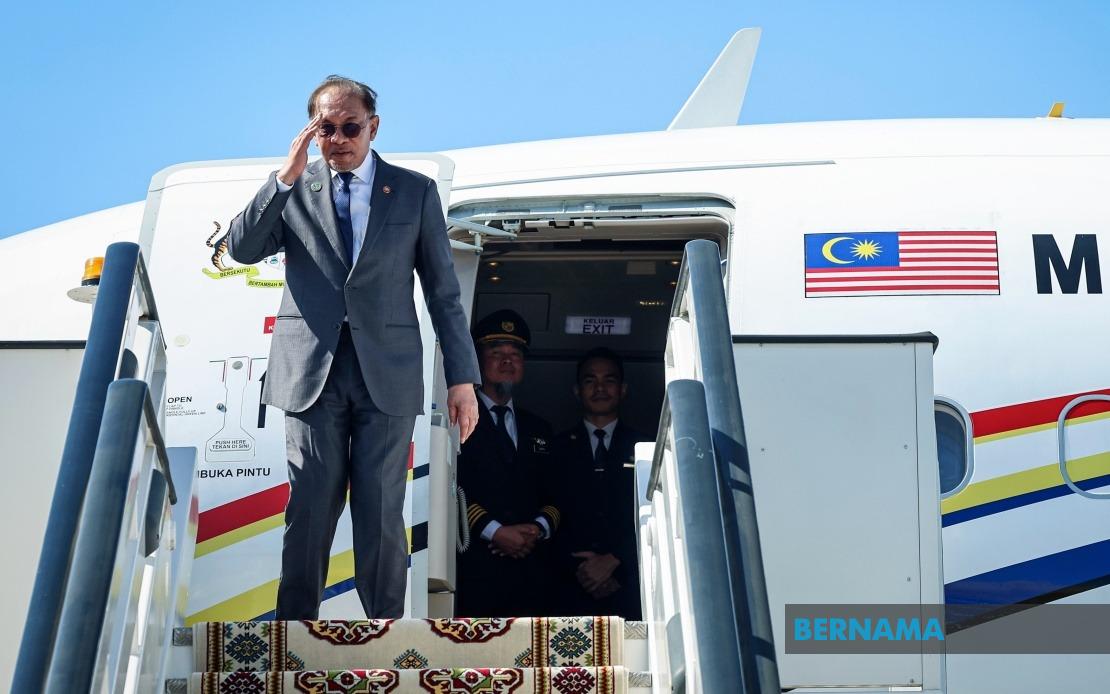
Prime Minister Datuk Seri Anwar Ibrahim touched down in Penang today after completing an official trip to Turkmenistan, launching into a packed schedule of economic and ceremonial engagements that underscore the government's focus on industrial development and media professionalism across the nation. The one-day visit represents a brisk transition from his two-day bilateral mission to Ashgabat, which marked his first journey to the Central Asian nation since taking office as Malaysia's 10th Prime Minister in November 2022. Having departed Ashgabat International Airport at 4.45 pm local time, Anwar arrived in Malaysia ready to officiate key infrastructure projects and recognise the contributions of the country's journalism community.
Anwar's first engagement in Penang was the official opening of MKS Instruments Malaysia Sdn Bhd at Bandar Cassia Technology Park in Batu Kawan at 11 am. The facility represents an investment in the state's growing technology sector, aligning with the broader Northern Corridor development strategy that Malaysia has prioritised to distribute economic growth beyond the Klang Valley. The semiconductor and precision instruments industry has become increasingly strategic for Southeast Asian economies seeking to reduce dependence on finished-good imports and strengthen regional manufacturing networks.
The Prime Minister subsequently travelled to Bandar Setia Fontaines for a groundbreaking ceremony at 1 pm for the Setia Fontaines Industrial Park at the Setia Experience Centre in Kepala Batas. This development initiative reflects Setia's commitment to expanding Penang's industrial base while capitalising on the state's established reputation as a manufacturing hub. The industrial park is positioned as a long-term investment in the region's economic diversification, a critical goal as Malaysia seeks to maintain competitiveness amid global shifts in supply chains and manufacturing priorities. During the ceremony, Setia will unveil two additional strategic partnerships within the broader Setia Fontaines township, suggesting coordinated efforts to create integrated business ecosystems that attract multinational firms and local enterprises alike.
At 3 pm, Anwar pivoted to Penang's cultural and professional sphere by attending the HAWANA 2026 Grand Finale at PICCA Convention Centre @ Butterworth Arena. The event brought together approximately 1,000 media practitioners from Malaysia and international delegations, reflecting the significance of the media industry to Malaysia's information landscape and regional standing. HAWANA, which stands for the National Journalists' Day, is organised annually by the Communications Ministry with Bernama (Malaysian National News Agency) as the implementing body, serving as the premier platform for recognising excellence and dedication within the journalism profession.
At the HAWANA ceremony, the Prime Minister presented both the HAWANA Award and Special HAWANA Award to individuals who have demonstrated exceptional contributions to journalism and the advancement of public discourse in Malaysia. These accolades carry particular weight in a region where media independence and professional standards remain subject to ongoing scrutiny and debate. By personally presenting awards and addressing media practitioners, Anwar signalled the government's investment in maintaining a robust media ecosystem capable of supporting informed public participation in democratic processes.
Beyond ceremonial recognition, Anwar also distributed contributions from Tabung Kasih@HAWANA to media professionals experiencing financial hardship. This welfare component of the annual event underscores an often-overlooked reality within the journalism sector: numerous practitioners, particularly those working in regional outlets and freelance capacities, face economic precarity despite their vital roles in information dissemination. The assistance programme demonstrates a structural acknowledgment that media sustainability requires both professional recognition and tangible economic support.
Anwar's itinerary reflects a carefully calibrated approach to regional governance that combines economic development with cultural and professional engagement. Before arriving in Penang, the Prime Minister had participated in the 35th ASEAN-Russia Commemorative Summit in Kazan, travelling alongside Investment, Trade and Industry Minister Datuk Seri Johari Abdul Ghani and Economy Minister Akmal Nasrullah Mohd Nasir. This preceding engagement in Russia underscores Malaysia's ongoing diplomatic balancing act between regional partnerships and broader geopolitical alignments, a complex dance that has characterised Southeast Asian foreign policy throughout the post-Cold War era.
The Turkmenistan visit, while brief, represented a significant diplomatic milestone as Anwar's first visit to the Central Asian nation since assuming the premiership. President Serdar Berdimuhamedov's invitation suggests efforts to deepen bilateral ties and explore potential economic partnerships, particularly in energy sectors where Turkmenistan maintains substantial reserves. For Malaysia, such engagements reflect a diversification strategy aimed at reducing over-reliance on traditional regional partners and exploring opportunities across Asia's broader continental landscape.
Following his Penang engagements, Anwar was scheduled to conclude his working day by attending the Himpunan Pertubuhan Lima Generasi (PLG) Malaysia dinner in Negeri Sembilan that evening, further extending his grip on regional stakeholder engagement. The cumulative effect of such compressed travel schedules is a high-visibility political presence that aims to demonstrate executive energy and commitment to multiple constituencies simultaneously, though such intensity also raises questions about substantive engagement depth versus symbolic gesturing.
The convergence of industrial investment ceremonies, media recognition events, and international diplomatic missions within a single day underscores the multifaceted demands placed on contemporary Malaysian leadership. Economic development requires visible government commitment to infrastructure and manufacturing initiatives, while media engagement signals democratic credentials and professional respect. These events collectively construct a narrative of progressive governance that values both commercial innovation and institutional professionalism, messaging that carries significance not only domestically but also within the broader regional context where Malaysia competes for investment and diplomatic influence.

