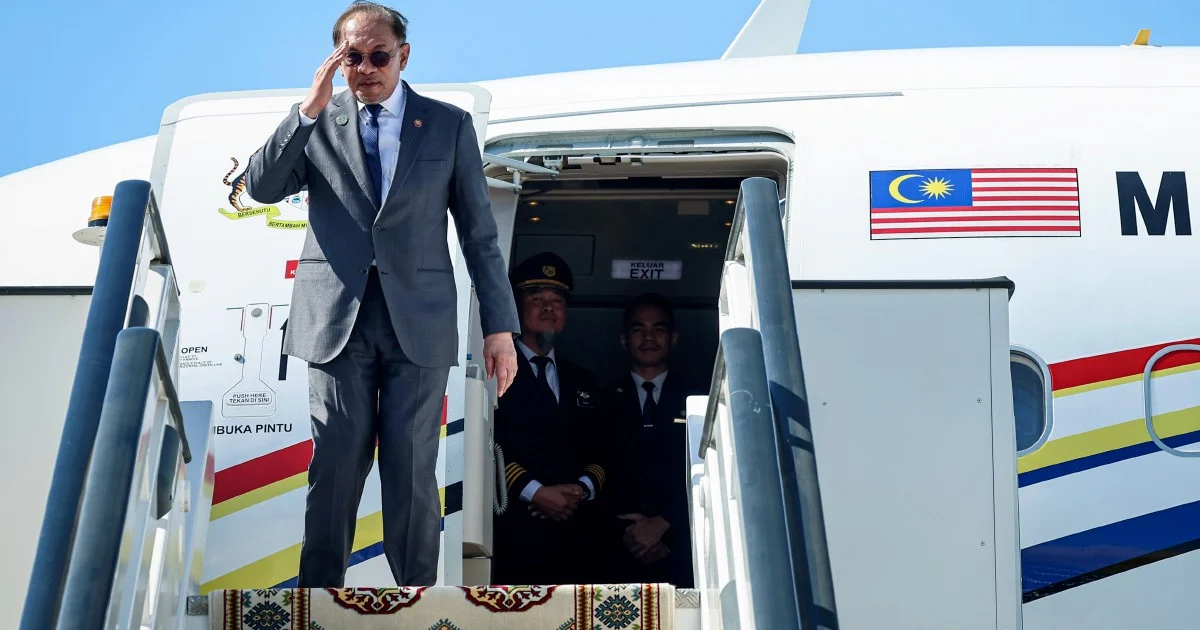
Prime Minister Datuk Seri Anwar Ibrahim has concluded his diplomatic mission to Turkmenistan and made his way to Penang, where he is expected to oversee a series of high-profile activities designed to strengthen bilateral investment ties and recognise the country's media sector. His arrival in the northern state marks a deliberate pivot from the international stage to domestic engagement, signalling the administration's continued commitment to regional economic development and institutional recognition.
The timing of Anwar's return underscores Malaysia's dual-track diplomatic strategy, whereby senior officials balance international engagement with domestic priorities. His visit to Turkmenistan—a Central Asian energy-rich nation—reflects ongoing efforts to deepen commercial partnerships beyond Southeast Asia and establish new avenues for trade and infrastructure collaboration. The transition from Ashgabat to Penang demonstrates the breadth of the Prime Minister's portfolio, encompassing both foreign relations and the domestic investment landscape that underpins economic growth.
Among the scheduled engagements in Penang is the National Journalists' Day (Hawana) 2026 grand finale, an event that carries symbolic significance for Malaysia's media landscape. Hawana, the branding for Malaysia's annual celebration of journalism, provides a platform for recognising the role of reporters, editors, and news organisations in democratic governance and public discourse. The Prime Minister's participation elevates the occasion and signals government acknowledgement of the press's institutional importance, a gesture that carries particular relevance in Southeast Asia's complex media environment.
The investment-focused portion of Anwar's Penang itinerary addresses the state's position as a regional economic hub. Penang has long served as a catalyst for foreign direct investment in Malaysia, particularly in the semiconductor, electronics, and advanced manufacturing sectors. By convening investment events during his visit, the Prime Minister aims to showcase ongoing opportunities and reinforce investor confidence in Malaysia's business climate. This approach aligns with the government's broader economic transformation agenda, which prioritises high-value manufacturing and technology-driven industries over traditional resource extraction.
Penang's strategic geography and established industrial ecosystem make it a natural venue for such engagements. The state hosts numerous multinational corporations and has developed a sophisticated supply chain infrastructure that attracts continued capital inflows. When senior government figures such as the Prime Minister visit the state to champion investment, it often catalyses renewed interest from potential partners evaluating Malaysia as a manufacturing or regional headquarters destination. The visibility of such high-level engagement reassures both established investors and prospective entrants that the central government remains committed to Penang's economic trajectory.
The condensed timeline of Anwar's transition from Turkmenistan to Penang reflects the intensity of the Prime Minister's operational schedule. International diplomacy demands sustained engagement with trading partners and regional blocs, yet the domestic economic agenda requires equally vigorous attention. Malaysia's position as the world's 23rd largest economy necessitates this balancing act, where the head of government must simultaneously cultivate external relationships and ensure that opportunities translate into tangible growth within the country.
Turkmenistan, as an energy exporter with growing infrastructure ambitions, presents potential collaboration opportunities for Malaysian firms in energy security, petrochemical processing, and construction services. The country has been actively pursuing economic diversification through its Turkmenistan–Afghanistan–Pakistan–India (TAPI) pipeline project and other regional infrastructure initiatives. Anwar's visit likely involved discussions around these frameworks and potential Malaysian participation in Central Asian development projects, areas where Malaysian expertise in financial services and engineering could prove valuable.
The Hawana 2026 event itself reflects broader conversations within Southeast Asia regarding press freedom, media sustainability, and the role of journalism in rapidly digitalising societies. By hosting the grand finale in Penang, Malaysia positions the state as a cultural and intellectual centre for regional discourse on media matters. For journalists themselves, the occasion provides recognition and professional development opportunities, while for government, it demonstrates engagement with the fourth estate at a moment when media trust faces global headwinds.
Investment announcements or agreements typically accompany such high-profile visits, with corporate announcements scheduled around the Prime Minister's presence. Multinational companies and Malaysian conglomerates often use opportunities when senior officials are present to unveil expansion plans, facility upgrades, or new facility announcements. The aggregation of multiple events during Anwar's Penang visit maximises media coverage and public awareness of Malaysia's investment proposition, effectively turning a state visit into an extended platform for economic messaging.
The sequencing of activities—international diplomacy followed immediately by domestic economic and institutional engagement—exemplifies contemporary governance, where the Prime Minister functions as both statesman and chief economic officer. Anwar's rapid transition from Turkmenistan to Penang demonstrates the expectation that leaders must maintain continuous momentum across multiple governance domains, adapting messaging and priorities to suit different audiences while maintaining strategic coherence in underlying policy objectives. For Malaysian stakeholders, these events represent both the symbolic commitment of top political leadership and the practical mechanisms through which government attempts to channel investment and growth toward priority regions.

