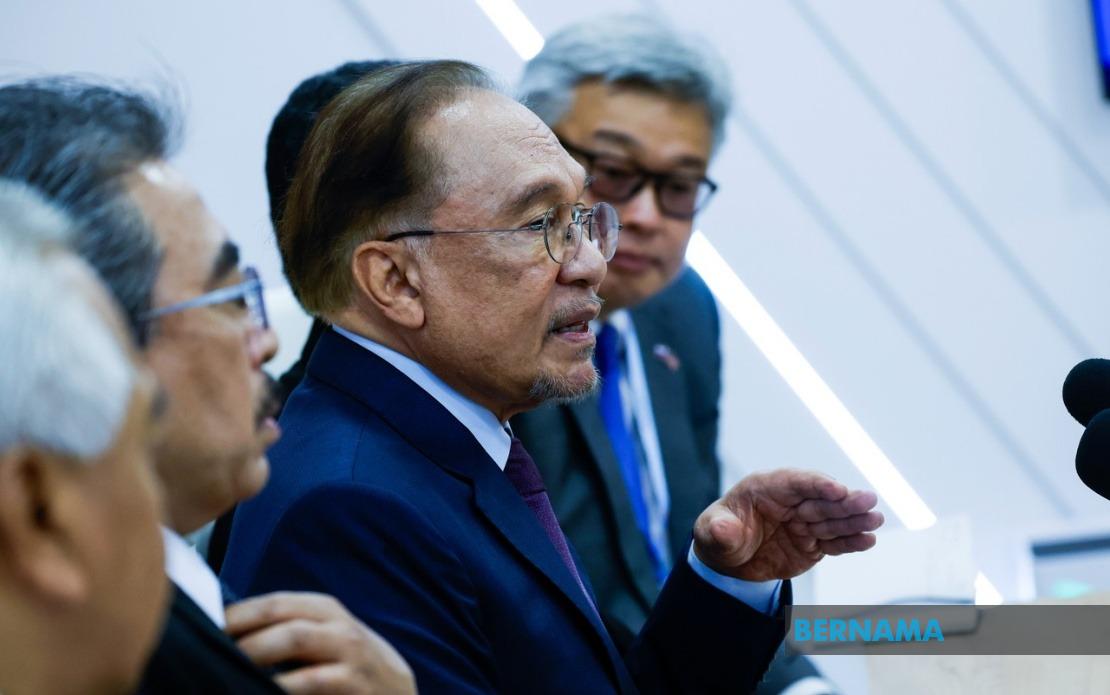
Prime Minister Datuk Seri Anwar Ibrahim's two-day mission to Kazan has yielded a landmark commitment from Russia to guarantee Malaysia's energy needs through multi-year supply agreements, a development that represents a fundamental shift away from the ad-hoc purchasing arrangements that have long characterised the nation's energy imports. At the closing of the ASEAN-Russia Commemorative Summit, Anwar announced that both nations would establish a long-term framework ensuring stable access to petrol, oil, and gas, addressing one of Malaysia's most pressing strategic vulnerabilities in an increasingly volatile global energy marketplace.
The significance of this accord extends beyond mere commercial transaction. Rather than relying on annual renewals or seasonal adjustments—a practice that exposes Malaysia to sudden price shocks and supply interruptions—the framework promises structural stability in one of the nation's most critical inputs. Anwar emphasised that the formal machinery for implementation is already in motion, with company delegations having visited Kazan and draft agreements substantially finalised. The remaining steps involve procedural finalisation and signature by both parties, which Malaysian officials intend to expedite upon their return to Kuala Lumpur.
This strategic repositioning reflects a broader recalibration in Malaysia's international economic engagement, one that Anwar articulated with notable candour. The Prime Minister argued that Malaysia can no longer afford to approach global economic partnerships with excessive caution or hesitation, contending that emerging economies like Russia offer untapped opportunities for trade, investment, and mutual development. This represents a notable departure from previous Malaysian foreign policy rhetoric, which often emphasised balanced non-alignment and careful hedging between major powers. Anwar's language instead invokes a more assertive pragmatism, suggesting willingness to deepen relationships with unconventional partners regardless of geopolitical sensitivities that might concern traditional Western allies.
The energy security dimension carries particular weight for Malaysia's economic planning. The nation remains heavily dependent on imported oil and gas to fuel its industrial base and power generation infrastructure. Global energy markets have grown increasingly unstable, buffeted by geopolitical tensions, supply chain vulnerabilities, and speculative price movements. Russia's position as a major hydrocarbon producer and its demonstrated interest in long-term Asian market relationships make it an attractive counterweight to traditional Middle Eastern suppliers and spot market volatility. For Malaysia, diversifying its energy procurement sources—particularly through guaranteed multi-year contracts—reduces exposure to sudden market disruptions that could cripple manufacturing competitiveness.
Beyond the flagship energy agreement, the Kazan visit mapped an expansive cooperative agenda addressing trade, investment, tourism, technology, and the halal economy. Russia ranks as Malaysia's ninth-largest trading partner among European nations, with bilateral commerce valued at RM8.72 billion in 2025. Malaysian electrical and electronic products, machinery, and processed foods move steadily into Russian markets, while Malaysian importers depend heavily on Russian petroleum, minerals, and chemicals. The relationship remains asymmetrical in energy terms, but Anwar's vision contemplates expanding into higher-value activities including downstream oil processing, petrochemical production, and technology sectors where Malaysian expertise could find receptive counterparts.
The bilateral dimension acquired particular prominence through Anwar's meetings with Rustam Minnikhanov, the leader of Tatarstan, one of Russia's principal oil-producing regions. This engagement reflects a deliberate strategy to cultivate sub-national relationships alongside federal agreements, recognising that Russian energy production concentrates in specific regional jurisdictions. Tatarstan's significance as a hydrocarbon hub makes it an essential partner for negotiating reliable supply chains and exploring joint ventures in refining and petrochemical downstream activities. Such regional engagement also opens possibilities for investment flows, educational exchanges, and technology transfer arrangements that extend beyond traditional inter-governmental channels.
Anwar's advocacy for visa-free travel and direct flight connections between Malaysia and Russia addresses the infrastructure impediments that constrain people-to-people engagement and tourism development. Currently, travellers between the two nations navigate visa bureaucracies and indirect routing through transit hubs, limiting both leisure tourism and business travel. Direct air links would facilitate both visitor flows and professional networks essential for implementing cooperative frameworks. The Prime Minister's emphasis on these practical facilitation measures suggests recognition that high-level diplomatic agreements require supporting mechanisms at the grassroots level to achieve meaningful social and economic integration.
The ASEAN-Russia Strategic Programme on Trade and Investment Cooperation 2026-2035, finalised during the summit, provides a broader institutional framework within which Malaysian-Russian bilateral cooperation proceeds. ASEAN-Russia trade reached US$18.1 billion in 2024, while Russian foreign direct investment in the Southeast Asian bloc totalled RM367.90 million, indicating substantial but underutilised potential. A decade-long cooperative programme signals that both Moscow and the regional bloc perceive enduring value in deepening economic entanglement, providing a supportive architecture for bilateral initiatives like Malaysia's energy agreements to flourish.
Anwar's articulation of future cooperation priorities reveals an ambitious conception of Malaysian-Russian partnership scope. Beyond energy, the Prime Minister identified cybersecurity, agriculture, digital technology, scientific research, and higher education as domains warranting expanded collaboration. These sectors align with Malaysia's broader development objectives, particularly the need to upgrade technological sophistication, enhance agricultural productivity, and build human capital through international knowledge transfer. Russian capabilities in mathematics, computer science, and engineering research offer complementary resources to Malaysian institutional development aspirations, suggesting possibilities for academic exchanges and research partnerships that could elevate Malaysian innovation capacity.
The Kazan visit constitutes the opening phase of a wider Central Asian pivot, with Anwar subsequently proceeding to Turkmenistan for additional energy negotiations. This territorial scope reveals a systematic strategy to diversify hydrocarbon sourcing across multiple Eurasian suppliers, rather than concentrating procurement in any single region. Turkmenistan, another major natural gas producer, offers additional opportunities for long-term supply agreements and potentially joint ventures in extraction and processing. This sequential engagement pattern suggests Malaysian policymakers view Central Asia as a coherent energy procurement zone where coordinated diplomatic activity can yield cumulative strategic advantage.
The timing of this energy diplomacy reflects acute awareness that global hydrocarbon markets face sustained volatility. Geopolitical tensions in the Middle East, sanctions regimes affecting major producers, and the energy transition's uncertainty create a premium for stable, contractually guaranteed supplies. Malaysia's manufacturing sector and power infrastructure cannot easily substitute alternative energy inputs, making long-term procurement certainty a crucial competitive asset. By negotiating multi-year agreements with Russia and potentially Turkmenistan simultaneously, Malaysia positions itself to weather supply shocks that might constrain rival manufacturing economies dependent on more precarious sourcing arrangements.
Anwar's characterisation of the Kazan visit as productive and his optimistic framing of the Turkmenistan segment ahead indicate confidence that this Central Asian engagement strategy will yield concrete outcomes substantially improving Malaysia's energy security posture. The Prime Minister's willingness to champion this reorientation publicly—despite potential criticism from traditional Western alignments—demonstrates conviction that Malaysia's economic interests mandate pragmatic partnership with capable suppliers regardless of geopolitical considerations that occupy major powers. This repositioning reflects broader shifts within Southeast Asian foreign policy, where economic pragmatism increasingly supersedes ideological or historical alignment preferences.

