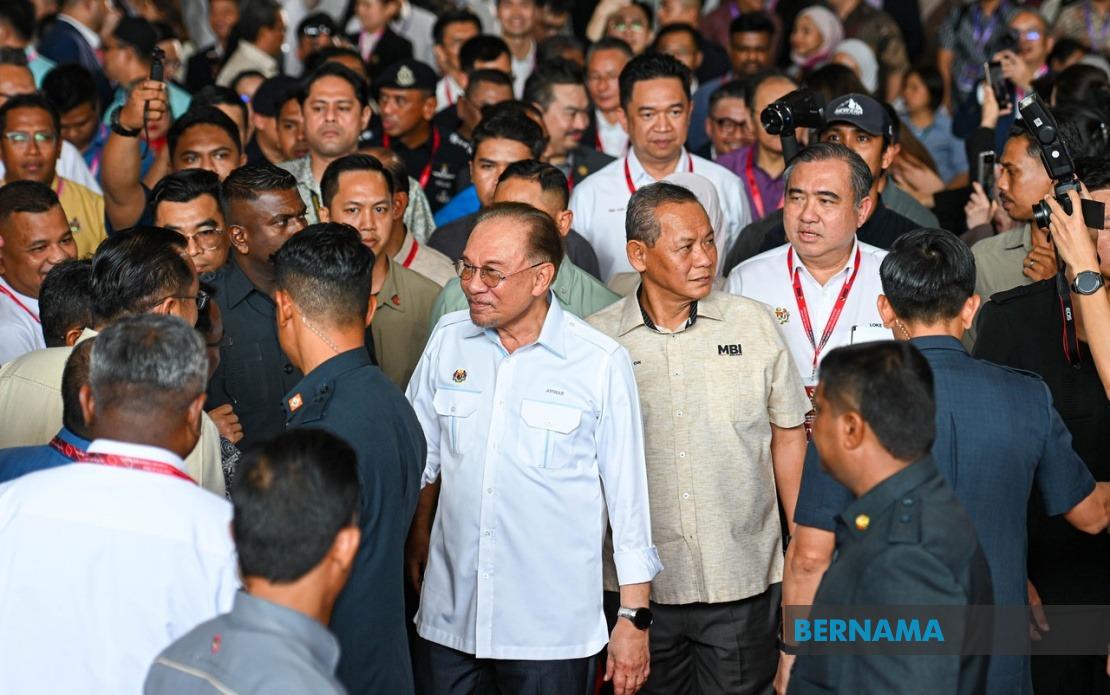
Prime Minister Datuk Seri Anwar Ibrahim has made a direct appeal to Melaka DAP to hold off on its decision to exit the state government, arguing that the coalition must prioritize continuity in governance and economic progress. Speaking at the Port Dickson AI-powered Midport Smart Container Terminal project launch, Anwar framed the request as essential to ensuring stability during the crucial period leading up to state elections. He emphasized that withdrawing from the administration would compromise the state's ability to deliver essential services and maintain momentum on development initiatives that benefit residents.
The appeal comes as Melaka DAP announced its immediate exit from the state government following the Melaka State Legislative Assembly's passage of constitutional amendments permitting the appointment of nominated assemblymen. Melaka DAP chairman Khoo Poay Tiong had justified the party's action by stating it was incompatible with democratic principles and electoral integrity, positioning the withdrawal as a principled stand against what the party views as an unconstitutional measure. This decision represents a significant fracture within the Pakatan Harapan coalition's Melaka administration, which has governed the state since 2018.
As both Pakatan Harapan chairman and Prime Minister, Anwar indicated he had personally engaged with key stakeholders to resolve the impasse. He disclosed conversations with DAP secretary-general Anthony Loke and Melaka Chief Minister Datuk Seri Ab Rauf Yusoh, signalling that negotiations remain ongoing behind the scenes. The fact that Malaysia's top political leader felt compelled to intervene directly underscores the severity of the crisis and the broader implications for the ruling coalition's stability, particularly in a state administration where DAP has held considerable influence.
Anwar's comments reflect a pragmatic approach to managing coalition tensions that have become increasingly common in Malaysian politics. He acknowledged that disagreements among component parties are inevitable within any governing alliance, but cautioned against allowing policy differences to obstruct governance or neglect public interests. This framing appears designed to de-escalate the rhetoric and create space for compromise, rather than cementing positions that might prove irreversible. By characterizing the dispute as manageable and resolvable through dialogue, Anwar attempted to prevent the situation from hardening into a broader coalition crisis.
The constitutional amendments at the heart of the dispute are particularly contentious because they touch on fundamental questions about representation and electoral legitimacy in Malaysia. The power to appoint nominated assemblymen—legislators selected rather than elected—has long been controversial among democratic reform advocates. DAP's opposition is consistent with its positioning as a party emphasizing electoral accountability and transparent governance. However, from the perspective of other coalition partners, such amendments may have been intended to strengthen stability or address specific demographic representation concerns in the state assembly.
The timing of this crisis presents additional complications for Anwar's administration. Malaysia faces multiple electoral cycles ahead, and state-level instability inevitably reverberates at the federal level where Pakatan Harapan governs with a narrow parliamentary majority. A collapse of the coalition in Melaka, one of Malaysia's smaller but strategically important states, could embolden opposition parties and create pressure for similar confrontations elsewhere. The precedent set by how this dispute is resolved will likely influence how other component parties manage their own grievances within the coalition.
From a development perspective, Anwar's emphasis on continuity holds legitimate weight. States undergoing leadership transitions or governance disputes often experience delays in project implementation, budget allocation inefficiencies, and reduced investor confidence. The Smart Port Terminal project launch at Port Dickson was clearly chosen as a backdrop to emphasize the administration's developmental achievements and economic focus, subtly reinforcing his argument that political disputes should not derail such initiatives.
For Malaysian and Southeast Asian observers, this episode illustrates the ongoing challenges of managing multi-ethnic, multi-party coalition governments in the region. Unlike single-party dominant systems, coalitions require constant negotiation and compromise to maintain cohesion. The dispute also highlights tensions between democratic principles and pragmatic governance—DAP's emphasis on electoral purity versus the coalition's focus on delivery and stability. Both positions have merit, which explains why the disagreement proves so difficult to resolve quickly.
Anwar's appeal for postponement rather than outright compromise suggests he is attempting to buy time for a more comprehensive political settlement. By asking DAP to delay rather than immediately reverse its decision, he preserves the party's dignity while creating space for continued negotiations. This approach recognizes that neither side can afford a decisive victory that humiliates the other, as such outcomes typically breed resentment and future conflict within coalition structures.
The outcome of these behind-the-scenes negotiations will reveal much about the current health of Pakatan Harapan and Anwar's authority within it. A successful resolution would demonstrate his capacity to broker peace between contentious partners and manage coalition dynamics effectively. Conversely, if Melaka DAP proceeds with its exit, it would signal that component parties increasingly feel empowered to defy the federal leadership and pursue independent courses of action. Such fragmentation could have ripple effects across other states where similar tensions simmer beneath the surface.
Regional observers in Singapore, Indonesia, and Thailand will be watching to see whether Malaysia's coalition government can navigate this test. Stable governance is crucial for investor confidence and economic development across Southeast Asia, and political crises in any major economy affect regional prosperity. Anwar's intervention in the Melaka dispute should therefore be understood not merely as an internal party matter, but as an effort to preserve institutional credibility and investor confidence that extends beyond Malaysia's borders.
The longer-term implications depend partly on whether Anwar can deliver concessions to DAP that address its concerns about democratic principles while maintaining sufficient unity within the broader coalition. Whether such middle ground exists remains uncertain, but his public appeal suggests he believes negotiation remains possible and worthwhile before the situation becomes irretrievable.

