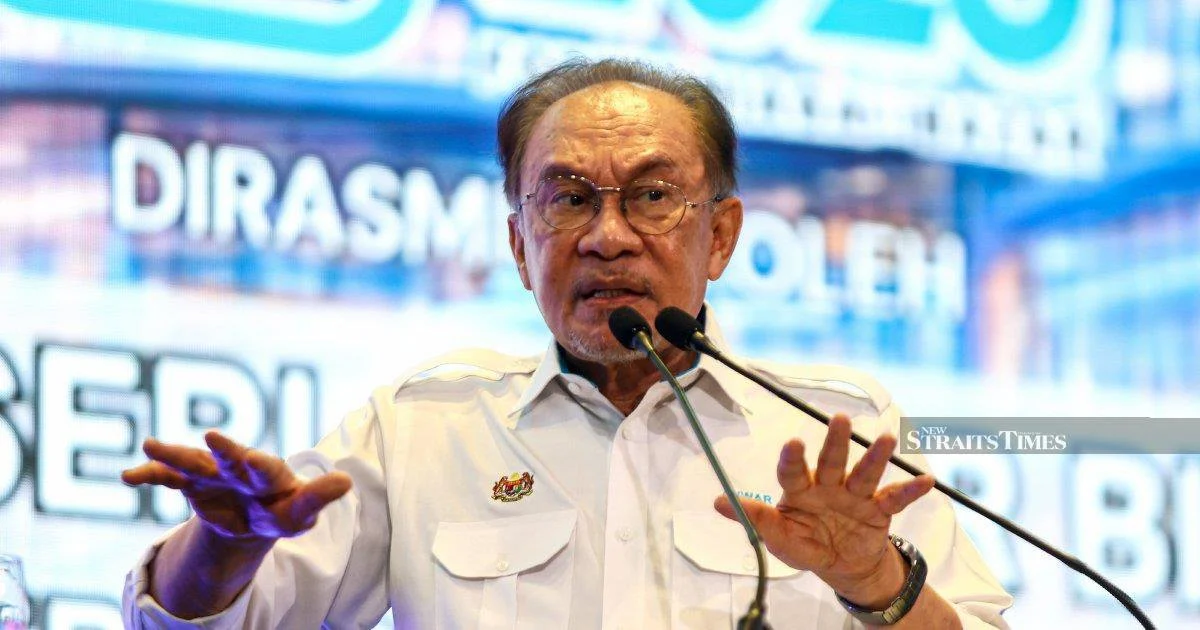
Prime Minister Datuk Seri Anwar Ibrahim has made a direct appeal to the Melaka Democratic Action Party (DAP) to reconsider the timing of its proposed withdrawal from the state government, advocating for postponement so that developmental initiatives and public interests can remain at the forefront of the administration's agenda. Speaking from Port Dickson, Anwar framed the request as a matter of prioritising governance continuity and the welfare of Melaka's residents during a period when multiple infrastructure and economic programmes are underway.
The Prime Minister's intervention reflects growing concerns within the federal government about the stability of the Melaka state administration at a critical juncture. The state has been a focal point for Pakatan Harapan's efforts to maintain coalition coherence, and any significant political reconfiguration could affect both the rollout of state-level projects and the broader narrative of governmental stability across Malaysia's thirteen states.
Anwar's plea signals a tactical shift in how the federal leadership approaches coalition management. Rather than dismissing the DAP's concerns or attempting to impose a solution, the Prime Minister opted for a softer diplomatic approach, one that emphasises shared responsibilities and mutual interest in preserving state-level performance. This approach may reflect lessons learned from previous coalition tensions where heavy-handed interventions sometimes exacerbated disputes rather than resolving them.
The DAP's consideration of an exit from Melaka's government coalition implies underlying tensions within the partnership that has governed the state. These frictions typically centre on matters of ministerial representation, policy direction, or disagreements over resource allocation. By urging a moratorium on the withdrawal decision, Anwar is implicitly suggesting that time and dialogue might address whatever grievances prompted the party to contemplate leaving.
For Malaysian observers and political analysts, Anwar's intervention underscores the delicate balancing act required to manage a multi-party coalition government. The Pakatan Harapan alliance, which brought Anwar to the Prime Minister's office, has itself faced internal strains as different constituent parties navigate conflicting priorities and compete for influence. Melaka, as a state where the coalition holds power, serves as a microcosm of these broader national dynamics.
The emphasis on development and welfare in Anwar's statement is strategically significant. By framing the request around tangible benefits to citizens—road networks, healthcare facilities, education infrastructure, economic initiatives—the Prime Minister appeals to a higher purpose than factional politics. This rhetorical choice positions any withdrawal as potentially harmful to ordinary Melakans, thereby increasing the reputational cost for the DAP if it proceeds despite his plea.
Melaka's political landscape has historically been volatile, with the state experiencing rapid shifts in governance structures and coalition compositions over the past five years. A DAP departure would represent yet another recalibration that could destabilise ongoing projects or create uncertainty for investors and developers who rely on consistent policy frameworks. The state government's ability to deliver on promises regarding tourism development, manufacturing expansion, and urban regeneration depends on coalitional stability and executive focus.
The timing of Anwar's appeal may also reflect calculations about managing broader coalition unity ahead of potential electoral cycles. Allowing one coalition partner to exit a state government without attempting reconciliation could embolden other parties to threaten similar moves, creating a cascading effect that weakens the Pakatan Harapan structure at federal and state levels. Anwar's intervention thus serves a preventive function, signalling that the national leadership will actively engage to preserve coalition arrangements.
For the DAP itself, Anwar's request creates a complex situation. The party cannot simply ignore a direct appeal from the Prime Minister, as doing so might strain its relationship with federal leadership and affect its influence at the national level. Simultaneously, if the DAP has decided to withdraw based on substantive concerns about its role in the state government, merely postponing the decision without addressing underlying issues may simply delay inevitable conflict.
The concept of development continuity that Anwar emphasises carries particular weight in Malaysian political discourse. Voters and residents frequently judge state governments on their capacity to deliver visible improvements—new roads, better schools, healthcare facilities, business-friendly regulations. Any political instability that disrupts these services becomes a liability for all parties involved, making Anwar's argument pragmatically appealing beyond mere coalition loyalty.
Other coalition partners and opposition groups will be watching closely to see whether the DAP accedes to Anwar's request and, if so, under what conditions. The resolution of this situation will offer important signals about the relative power of different actors within the Pakatan Harapan alliance and the mechanisms through which disputes are managed. A successful reconciliation might be framed as evidence of mature coalition governance, while continued tension could be weaponised by opposition parties seeking to portray the ruling alliance as fractious and unstable.
Looking ahead, Anwar's plea for postponement buys time for behind-the-scenes negotiations to resolve whatever triggered the DAP's withdrawal threat. These talks will likely involve federal and state leaders from multiple parties, and their outcome will shape not only Melaka's political trajectory but also the broader sustainability of coalition government in Malaysia. Whether the DAP ultimately remains in the state government or proceeds with exit will depend on whether substantive concessions and commitments emerge from the extended dialogue period that Anwar's intervention has created.

