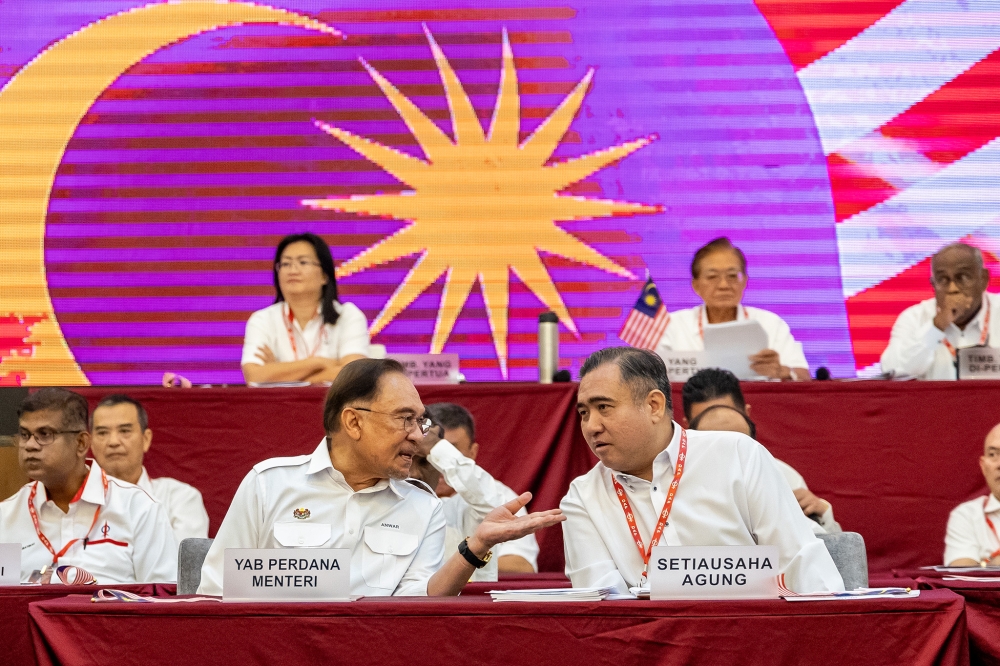
Prime Minister Datuk Seri Anwar Ibrahim has made a direct appeal to the Democratic Action Party's Melaka chapter to reconsider its intention to leave the state administration, arguing that the coalition government functions best when all partners remain engaged until the conclusion of their electoral mandate. Speaking in Port Dickson on July 14, Anwar expressed concern that an premature withdrawal could undermine the government's capacity to serve constituents effectively and suggested that the DAP should weigh the implications of such a decision carefully before proceeding.
The appeal represents an effort to shore up the fragile coalition that governs Melaka, where the DAP's participation has been a component of the ruling bloc. Anwar's intervention signals that the federal government views the stability of this state administration as consequential not merely for local governance but for the broader coalition's credibility across Malaysia. His request carries implicit acknowledgment that maintaining unity among diverse political partners remains challenging even as the government pursues its policy agenda nationally.
The DAP's contemplation of departure from the Melaka government reflects underlying tensions within the coalition regarding power-sharing arrangements, resource allocation, and representation of party interests at the state level. Such frustrations are common in multi-party coalitions where component parties must balance their own organizational goals with collective responsibilities. The party's leadership likely faces pressure from grassroots members who question whether their sacrifices in government have translated into tangible benefits for the party or its supporters.
Anwar's perspective emphasizes continuity and the importance of completing unfinished business before electoral cycles conclude. This argument carries weight in governance contexts where policy implementation requires sustained commitment; sudden departures can interrupt development projects, administrative functions, and the delivery of public services that citizens have come to expect. The Prime Minister appears to be advocating for a pragmatic approach that prioritizes the citizen experience over intra-party disputes.
The situation in Melaka exemplifies broader challenges confronting Malaysia's coalition-based political system. The country has transitioned toward multiparty governing arrangements where no single party commands sufficient parliamentary or state assembly seats to govern independently. This structural reality demands constant negotiation, compromise, and management of competing interests among alliance members. Success depends on maintaining sufficient cohesion to pass legislation and implement policies whilst accommodating diverse ideological perspectives and territorial interests.
For the DAP specifically, the decision carries strategic implications beyond Melaka's borders. The party's performance in state government influences its standing within the federal coalition and its electoral prospects in other constituencies where it contests. A disruptive exit might alienate coalition partners and alienate voters who value stable governance. Conversely, remaining may impose opportunity costs if party activists view continued participation as compromising ideological positions or accepting unfair power arrangements.
Anwar's intervention reflects the Prime Minister's role as coalition manager-in-chief, responsible for maintaining the political structures that underpin his government's parliamentary majority. Without the diverse party alignment that currently sustains the federal government, his administration would face fundamental legitimacy questions. This calculus explains why senior federal leadership engages directly in what might otherwise be considered purely state-level matters.
The timing of this appeal, with Melaka state elections presumably approaching, suggests that Anwar hopes to preserve coalition unity before the electoral campaign begins. Conducting an election campaign whilst managing an intra-coalition crisis would compound difficulties for all parties involved and might advantage opposition coalitions seeking to capitalise on perceived discord within the government.
From a Malaysian public perspective, these developments underscore the complexities of democratic governance in a diverse, federally-structured nation. Citizens depend on stable state governments to manage education, healthcare, local development, and public services. Coalition tensions, whilst politically significant, ultimately affect the quality of governance that ordinary Malaysians experience in their daily lives. The question of whether the DAP remains in the Melaka cabinet thus transcends party politics to touch upon basic governmental functionality.
Anwar's plea also reflects awareness that political decisions made at state level influence national narratives and perceptions of government competence. A harmonious resolution to this dispute would demonstrate that the coalition can manage internal differences maturely. Conversely, acrimonious departures generate headlines that suggest governmental dysfunction and undermine public confidence in institutional stability. The Prime Minister's personal involvement signals recognition that this matter, though technically a state concern, warrants attention from the highest levels of federal authority.

