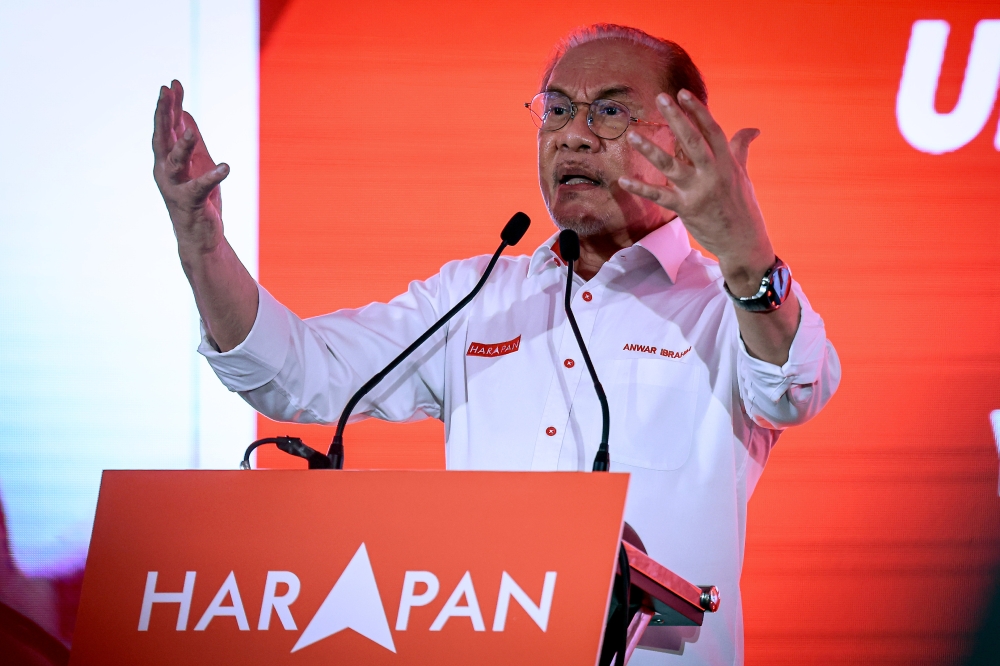
Prime Minister Datuk Seri Anwar Ibrahim is taking his campaign directly to Negeri Sembilan, marking a significant moment for Pakatan Harapan's electoral preparations. The timing and location of this grassroots initiative underscores the coalition's determination to consolidate voter support across states that have traditionally tilted towards opposition politics.
Negeri Sembilan carries particular strategic weight in Malaysian electoral calculus. As a swing state with a mixed urban-rural composition, it has historically demonstrated receptiveness to reform messaging while maintaining pockets of traditional support for competing coalitions. Anwar's personal engagement in the state signals that Pakatan leadership views this ground-level work as essential rather than optional, particularly as speculation intensifies about the timing of the next general election.
The Prime Minister's campaign foray reflects broader coalition strategy to move beyond Kuala Lumpur's political bubble and connect directly with voters in their home constituencies. This retail politics approach has become increasingly important in Malaysian political campaigns, where traditional media influence faces competition from localised grassroots networks and digital communication channels. By appearing alongside local leaders and addressing community concerns in person, Anwar seeks to reinforce Pakatan's narrative of accessibility and responsiveness.
For Pakatan Harapan, maintaining momentum requires sustained organisational effort across multiple states simultaneously. Negeri Sembilan's ten parliamentary seats represent meaningful gains if consolidated, though they also remain contested terrain where opposition support cannot be taken for granted. The state's relatively smaller population compared to Selangor or Johor means that targeted, intensive campaigning can yield proportionally larger effects on voter perception and turnout.
Anwar's presence in the state also carries symbolic importance beyond electoral mathematics. His involvement demonstrates that Pakatan's top leadership remains actively engaged in the machinery of politics rather than distanced from it. This contrasts with previous patterns where prime ministers of ruling coalitions sometimes maintained distance from electoral campaigning during periods of governance. The direct engagement approach may resonate particularly with younger voters who value transparency and leadership visibility.
The campaign also provides opportunity for Pakatan to address local grievances and policy priorities that resonate in Negeri Sembilan specifically. Economic development in secondary towns, infrastructure connectivity to the Klang Valley, and agricultural support for rural areas form part of the state's distinct policy agenda. By bringing senior leadership into these conversations, Pakatan can position itself as responsive to regional concerns rather than imposing a one-size-fits-all national agenda.
Negeri Sembilan's political dynamics have shifted considerably over recent election cycles. The 2022 general election saw Pakatan strengthening its position in several constituencies, though the coalition's grip remains less secure than in states like Selangor or Penang. This fragility explains why intensive campaigning efforts commence well in advance of any formal election announcement. Building voter familiarity with candidates and reinforcing coalition messaging requires months of sustained activity rather than last-minute rushes.
From a regional Southeast Asian perspective, Malaysia's electoral politics increasingly reflects patterns seen elsewhere in the region—rising importance of personality-driven politics, localised coalition arrangements, and the interplay between national messaging and state-level concerns. Anwar's campaign approach mirrors strategies employed by regional leaders seeking to maintain political momentum while governing. For observers across Southeast Asia, Malaysia's evolution serves as a case study in how multiethnic democracies balance national unity frameworks with local political identities.
The campaign also occurs amid broader questions about governance continuity and electoral timelines. While no election date has been formally announced, speculation persists about when the government might seek fresh electoral validation. Earlier campaigns allow coalitions to test messaging, identify emerging issues, and build organisational capacity without the time pressures of an imminent vote. For Pakatan, this measured approach reflects lessons learned from previous electoral cycles where preparation depth correlated with electoral performance.
Anwar's personal engagement in Negeri Sembilan sends a message to party members and coalition partners about priorities going forward. It signals that state-level politics remain central to national strategy rather than secondary concerns handled entirely by state leaders. This top-down commitment can strengthen morale among grassroots activists who feel their efforts matter to national leadership, translating into more vigorous campaign implementation.
The initiative also reflects practical awareness that electoral politics in Malaysia continues to centre significantly on direct candidate visibility and community engagement. Despite digital platforms' growing importance, voters across Negeri Sembilan's diverse constituencies still prioritise face-to-face interaction with political leaders. Anwar's presence provides that personal connection while generating media attention that amplifies campaign messaging across traditional and digital channels simultaneously.
As Pakatan Harapan works to sustain the political momentum it built during recent electoral cycles, campaigns like Anwar's Negeri Sembilan initiative represent investments in long-term political positioning. Rather than waiting passively for an election announcement, the coalition is actively building the organisational and messaging foundations necessary for effective electoral competition. For Malaysian voters, this early-stage activity indicates that political parties view the current period as a critical window for shaping public opinion and consolidating electoral support across contested states.

