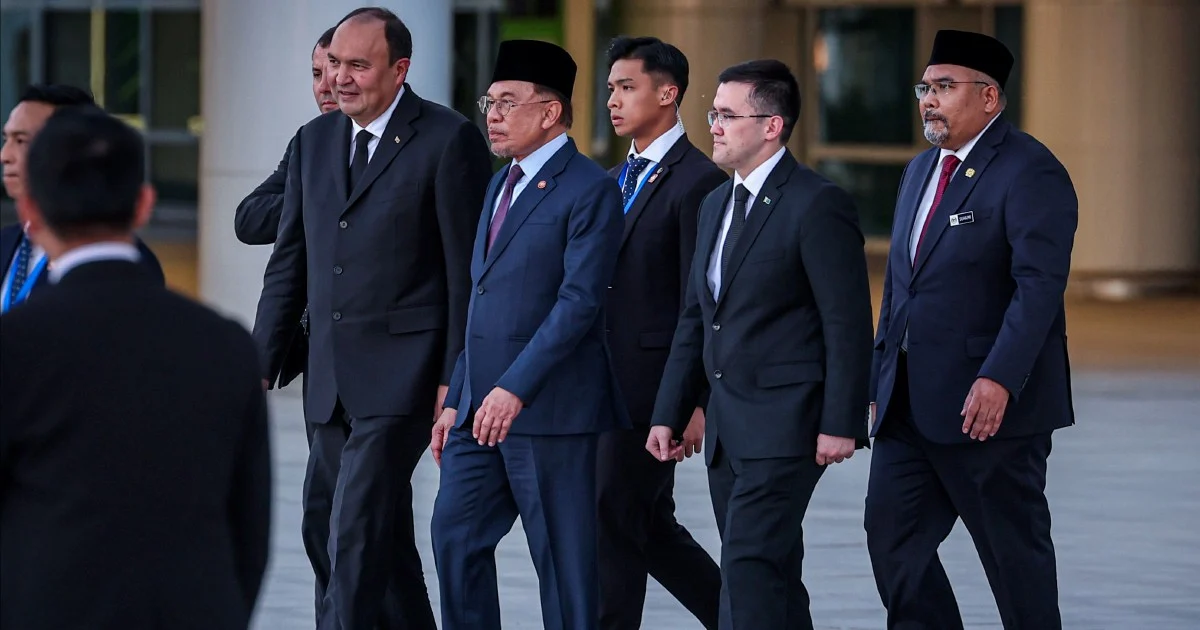
Prime Minister Datuk Seri Anwar Ibrahim is wrapping up his official visit to Turkmenistan with an intensive schedule of ministerial-level discussions designed to advance Malaysia's economic interests in Central Asia. The concluding day of his trip to the strategic Caspian Sea nation will feature multiple engagements with senior government officials, reflecting both countries' commitment to strengthening bilateral relations across trade, investment, and regional cooperation frameworks.
Turkmenistan's geographic position as a gateway between Europe and Asia, coupled with its substantial energy resources and growing economy, positions it as an increasingly important player in Malaysia's broader diversification strategy away from traditional trading partners. The Central Asian republic, nestled along the eastern shore of the Caspian Sea, offers Malaysian companies significant opportunities in sectors ranging from energy and infrastructure to technology and manufacturing.
Anwar's visit represents a timely effort to elevate Malaysia-Turkmenistan relations beyond diplomatic courtesy into tangible commercial partnerships. The timing aligns with Malaysia's regional positioning under Anwar's administration, which has emphasised developing relationships with emerging economies and untapped markets. Turkmenistan, though less prominent in Southeast Asian consciousness than countries like China or India, represents a frontier market for Malaysian investors seeking first-mover advantages in Central Asia.
The focus on high-level engagements during the visit's final day underscores the significance both governments place on moving quickly from political intent to concrete outcomes. Such summit-level interactions typically pave the way for subsequent technical discussions between trade officials, business delegations, and sectoral specialists who would negotiate specific agreements and frameworks.
Malaysia's outreach to Turkmenistan reflects a broader regional strategy within Southeast Asia to cultivate relationships with Central Asian nations. These countries, traditionally aligned with Russian or Chinese spheres of influence, are increasingly receptive to engagement from other major economies seeking to build alternative trading networks. For Malaysia, such connections help diversify export markets and secure access to raw materials and energy resources critical to sustaining economic growth.
Turkmenistan's substantial natural gas reserves and ongoing infrastructure development projects present particular opportunities for Malaysian expertise in project management, financial services, and technology transfer. Additionally, the nation's status as a strategic hub along the Belt and Road Initiative corridors means that Malaysian companies could position themselves as intermediaries or service providers in broader Asian economic integration processes.
The bilateral discussions will likely address mechanisms for enhancing trade volume, which remains modest compared to Malaysia's commerce with other nations. Creating joint business councils, facilitating investment forums, and establishing preferential trade arrangements could all feature in negotiation agendas. Such institutional frameworks reduce barriers to entry for companies from both nations and provide structured channels for resolving commercial disputes.
Anwar's personal involvement in these discussions sends an important signal about Malaysia's seriousness in pursuing Central Asian engagement. Prime ministerial-level visits carry symbolic weight in diplomacy, signalling to both governments and private sectors that bilateral relations merit highest-priority attention. This momentum can catalyse private sector interest and create psychological permission for risk-taking among Malaysian investors considering Turkmenistan opportunities.
From an investment perspective, Malaysian firms operating across sectors like construction, hospitality, telecommunications, and financial services could find receptive ground in Turkmenistan's developing economy. The nation's ongoing modernisation efforts and infrastructure expansion programmes align with Malaysian companies' demonstrated capabilities in delivering large-scale projects across Southeast Asia and beyond.
Regional geopolitical considerations also underpin this diplomatic engagement. As Middle Eastern and Central Asian influence spheres occasionally overlap, Malaysia's long-standing relationships across Islamic-majority nations provide it with unique credibility and trust-building advantages in Turkmenistan, where Islam shapes national identity and cultural values.
The timing of this visit also reflects Malaysia's efforts to position itself as a bridge-builder between Asian regions, leveraging its multicultural character and established diplomatic networks. Rather than viewing Central Asia through the lens of traditional great-power competition, Malaysia presents itself as a pragmatic, development-focused partner interested in mutual prosperity rather than zero-sum strategic calculations.
Practical outcomes from this visit may include establishing working groups on specific sectors, arranging high-level business missions to both countries, and potentially negotiating technical cooperation agreements in areas like education, tourism, and small-business development. Such initiatives, while appearing incremental, gradually build momentum toward larger commercial relationships.
For Malaysian policymakers and business leaders, Turkmenistan represents both an immediate opportunity to develop new markets and a strategic positioning move within broader Asian economic architecture. As regional integration deepens and supply chains reorganise, nations establishing early footholds in emerging markets often gain competitive advantages over later entrants. Anwar's visit thus carries significance extending well beyond bilateral relations, potentially influencing Malaysia's role within Asia's evolving economic landscape.

