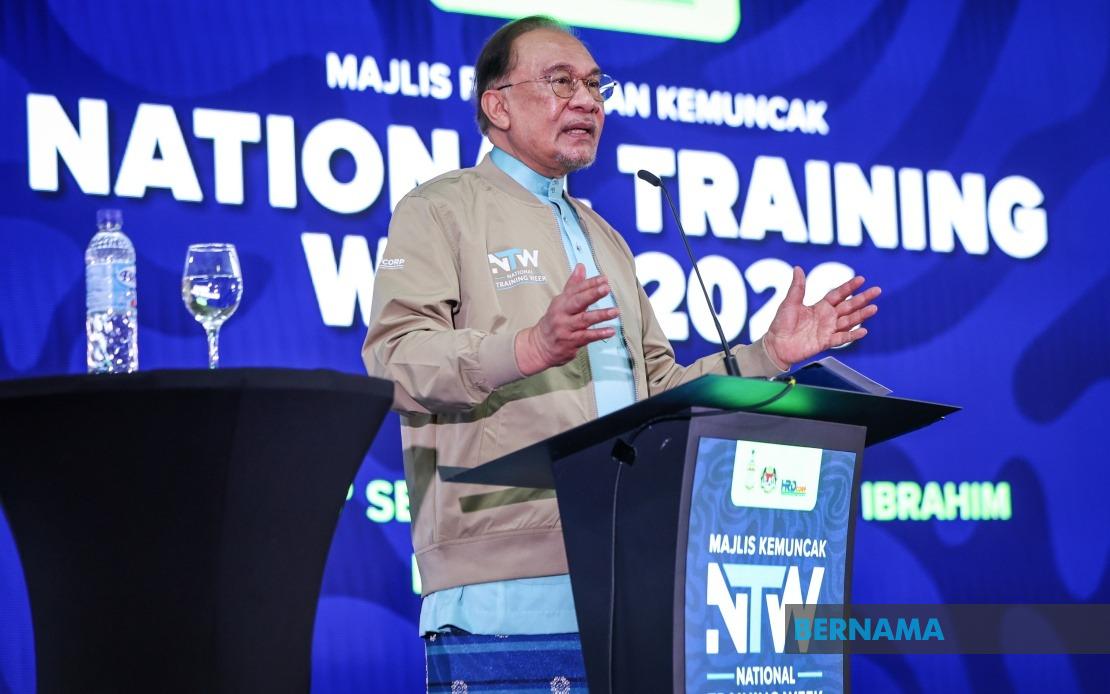
Prime Minister Datuk Seri Anwar Ibrahim signalled on Thursday that the long-awaited Royal Commission of Inquiry report into the governance failures of Lembaga Tabung Haji is poised to become public, once the Cabinet formally considers the matter at its scheduled session this week. Speaking at the opening of the National Training Week 2026 finale at Universiti Teknologi MARA Permatang Pauh in Penang, Anwar made clear his personal support for transparency regarding the findings, while emphasising that institutional protocols must be observed before any official disclosure.
The journey towards releasing the TH RCI findings has stretched considerably longer than many stakeholders anticipated, reflecting the delicate institutional and political sensitivities surrounding the Islamic pilgrim savings fund. The investigation itself was commissioned to examine serious governance, investment, and administrative lapses that had eroded public confidence in an institution entrusted with the retirement and haj savings of millions of Malaysian Muslims. Delays in publication have fuelled speculation about the nature and severity of the report's conclusions, as well as concerns about political will to confront institutional failures transparently.
Anwar's statement directly addressed persistent public questioning about why the completed RCI findings remained unpublished despite completion. He acknowledged the legitimate frustration underlying these questions while defending the previous decision to withhold release. According to the Prime Minister, Tabung Haji management had requested additional time following the inquiry's completion, citing the need to implement corrective measures and strengthen internal capacity before facing public scrutiny. This deferential approach reflected sensitivity to the institution's stated desire to demonstrate reform progress concurrently with report disclosure.
The intervening period has indeed witnessed significant leadership and structural changes within Tabung Haji. A reconstituted management team has undertaken initiatives designed to restore operational credibility and investor confidence in the fund. These reforms encompass governance improvements, investment strategy adjustments, and enhanced accountability mechanisms. Anwar's framing suggests the Cabinet's eventual approval would represent the convergence of two conditions: sufficient time having elapsed for meaningful institutional reform, and the new leadership team being positioned to respond constructively to the RCI's critical findings.
The constitutional and political importance of this moment extends beyond the immediate disclosure of a single investigative report. It touches on fundamental questions of institutional accountability, public transparency, and the relationship between government entities and public scrutiny. For Malaysians with savings in Tabung Haji—a population running into the millions—public access to the RCI findings represents essential information necessary for informed decision-making about their retirement and religious obligations. The protracted delay has understandably amplified anxieties within this constituency about what the report might reveal and why its release has been restricted.
From a Southeast Asian governance perspective, Malaysia's handling of the TH inquiry reflects broader regional tensions between institutional accountability and state discretion. Democratic systems require public access to investigative findings affecting state-linked enterprises, yet governance structures in the region frequently privilege executive discretion in managing potentially sensitive institutional information. Anwar's apparent commitment to following proper Cabinet procedures, while ultimately favouring disclosure, suggests an attempt to navigate this tension by emphasising both transparency and institutional respect.
The announcement also carries implications for public confidence in Malaysia's reform trajectory. The current administration has positioned itself as committed to greater accountability and reduced corruption compared to its predecessors. Releasing the TH RCI report would constitute concrete demonstration of this commitment, particularly regarding institutions previously affected by governance scandals. Conversely, any cabinet decision to maintain confidentiality would invite fresh criticism about whether reform rhetoric translates into substantive institutional change.
Penang Chief Minister Chow Kon Yeow and Human Resources Minister Datuk Seri R. Ramanan attended the event where Anwar made these remarks, reflecting the multi-level governmental engagement with this issue. State leaders and relevant ministers have stakes in how the report's release is managed, given implications for public sector accountability and trust in state institutions more broadly. The gathering of multiple senior officials at the announcement underscored the matter's significance within the current administration's governance agenda.
The Cabinet meeting scheduled for the following day represented the formal institutional moment where deliberation would occur and decisions crystallise. Anwar's confidence that approval would be forthcoming suggested either preliminary consultation indicating probable support, or alternatively, his assessment that the political environment and institutional circumstances had shifted sufficiently to make denial of disclosure increasingly untenable. Either interpretation indicated that the protracted period of withholding the report was drawing toward closure.
For Malaysian public discourse, the forthcoming release of the TH RCI report would enable informed discussion about what accountability measures should be implemented, whether current management reforms adequately address identified problems, and what systemic safeguards should be strengthened to prevent recurrence of governance failures. The document would also serve as crucial reference material for affected parties seeking to understand how their savings were managed and what decisions led to any losses or institutional difficulties. The transition from restricted to public information status thus carries genuine consequences for democratic engagement with state institutions.
The timing of Anwar's announcement, coupled with the apparent readiness of reconstituted Tabung Haji management to engage with critical findings, suggested that multiple institutional stakeholders had reached convergence on the appropriateness of disclosure. The Prime Minister's unambiguous personal support for release, combined with his confidence in Cabinet approval, indicated that remaining procedural steps would likely culminate in public access to the investigation within days rather than months.

