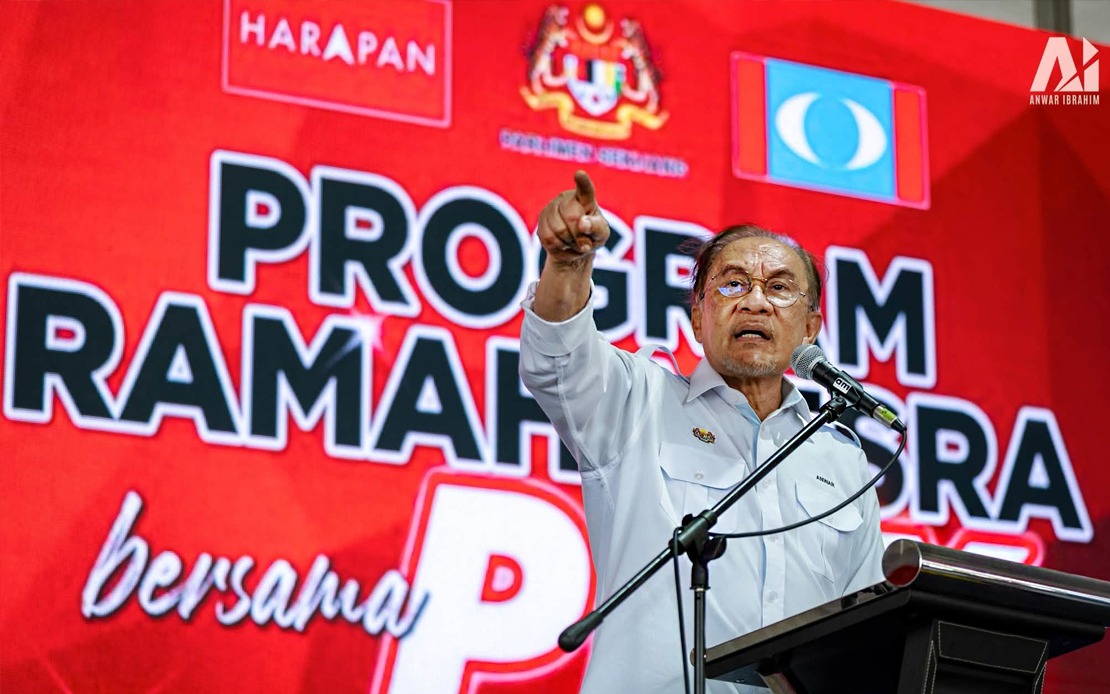
Prime Minister Datuk Seri Anwar Ibrahim has responded to mounting distress among Malaysian durian producers by committing to elevate the commodity crisis during bilateral talks with Chinese Premier Li Qiang in the coming month. The intervention marks a recognition that the synchronized peak harvest season across Peninsular Malaysia has triggered an oversupply situation, driving prices downward and squeezing farmer revenues. Speaking at a constituent engagement session in Tangkak, Anwar framed the durian challenge as a trade diplomacy opportunity, pledging to leverage Malaysia's longstanding relationship with Beijing to negotiate improved market conditions for local growers.
The durian sector has emerged as an unexpectedly critical political pressure point for the government. The fruit, which commands premium pricing in Chinese markets and represents a significant foreign exchange earner for rural communities, has become vulnerable to seasonal shocks that concentrate supply across multiple states simultaneously. Anwar's public acknowledgement of the problem signals that the administration recognizes the economic vulnerability of farming communities and their susceptibility to commodity price volatility. By positioning the issue as a matter requiring executive attention, the Prime Minister demonstrated sensitivity to rural constituencies where agricultural livelihoods remain economically and politically significant.
Anwar characterized China's standards regime as demanding but not impenetrable, suggesting that Malaysia possesses competitive advantages that warrant negotiating better trade terms with Beijing. His reference to Premier Li Qiang as a personal ally indicates an intent to pursue the matter through high-level diplomatic channels rather than routine commercial negotiations. This approach underscores the Malaysian government's view that durian market access transcends conventional trade discussions and touches on bilateral political relations. The diplomatic offensive aims to expand the aperture for Malaysian durian exports, thereby increasing demand and anchoring prices at more sustainable levels for domestic producers.
The initiative gains additional weight from Malaysia's broader economic relationship with China, which remains the nation's largest trading partner and crucial market for primary commodities. Durian exports, while specialized, have become increasingly significant to Malaysia's agricultural export portfolio and rural incomes. The concentration of oversupply during simultaneous peak seasons reflects structural challenges in Malaysian durian production—the clustering of trees with identical or similar maturation cycles creates periodic gluts that overwhelm domestic demand and strain export logistics. By securing preferential or expanded access in China, where middle-class consumption of premium tropical fruits has expanded substantially, Malaysia could absorb surplus production and stabilize farmer revenues.
An ensemble of senior political figures accompanied Anwar at the Tangkak session, including Pakatan Harapan Johor Election director Datuk Seri Amirudin Shari and Deputy Natural Resources and Environmental Sustainability Minister Syed Ibrahim Syed Noh, signalling that the durian matter commands attention across multiple governmental levels. This coordination demonstrates that the administration views agricultural commodity challenges not as sectoral issues but as political matters requiring coordinated advocacy. For Malaysian growers, such high-level engagement offers symbolic reassurance that their plight has registered with national leadership, even though tangible relief remains contingent on successful negotiations with Beijing.
Beyond the agricultural challenge, Anwar deployed the Tangkak appearance to reinforce the government's positioning on fuel pricing, another matter directly affecting household purchasing power and rural livelihoods. He reiterated Malaysia's status as maintaining exceptionally low fuel prices relative to global benchmarks, attributing this achievement to deliberate government intervention shielding consumers from international oil market volatility. The geopolitical turbulence in the Middle East, he explained, has exerted upward pressure on crude oil values through supply disruption mechanisms, yet Malaysia has resisted corresponding retail price increases. This framing positions the administration as a guardian of consumer welfare operating against global economic headwinds.
The current retail pricing structure reveals the magnitude of government intervention. Unsubsidized pump prices stand at RM3.37 per litre for RON95 petrol and RM3.97 per litre for diesel as of July 1 through July 8, yet consumers benefit from subsidized rates of RM1.99 per litre and RM2.10 per litre respectively under the BUDI MADANI initiative. This differential—representing roughly 41 percent discounting for RON95 and 47 percent for diesel—illustrates the fiscal commitment required to maintain affordable energy access. Anwar's emphasis on this policy implies that the administration views fuel subsidies as both economically justified and politically essential during periods of international price escalation.
The juxtaposition of durian market access and fuel pricing in a single constituency appearance reflects the multifaceted economic pressures confronting Malaysian rural populations. Farmers managing durian orchards face revenue volatility from seasonal supply shocks, while all consumers, particularly those in low-income brackets, depend on fuel subsidies for transportation and livelihood operations. By addressing both concerns within the same public forum, Anwar sought to construct a narrative of responsive governance attentive to diverse rural economic anxieties. The symbolic importance of this approach extends beyond immediate policy announcements—it communicates that the administration recognizes interconnected economic challenges affecting agricultural communities.
For Southeast Asian context, Malaysia's durian market struggles and diplomatic response illuminate broader regional challenges in agricultural commodity management. Thailand, Vietnam, and Indonesia face similar seasonal supply concentration issues with various fruit and vegetable exports, yet solutions typically remain confined to domestic market intervention or conventional bilateral trade channels. Anwar's elevation of durian to a matter of executive-level diplomatic engagement suggests an emerging Malaysian approach that frames agricultural trade challenges as requiring integration into broader foreign policy discussions. This model could establish precedents for how regional governments address commodity price volatility in the era of concentrated production cycles and integrated Southeast Asian markets.
The credibility of Anwar's commitment depends significantly on visible progress during his China visit next month. Should negotiations with Premier Li Qiang yield expanded market access or preferential tariff arrangements for Malaysian durian, the Prime Minister's Tangkak pledge will gain substantive validation. Conversely, if the discussions produce only diplomatic courtesies without concrete trade improvements, the initial political goodwill generated by the public commitment may dissipate. For durian farmers watching prices decline, the practical outcome of high-level negotiations matters considerably more than rhetorical acknowledgement of their difficulties. The coming weeks will determine whether executive attention translates into market relief or remains primarily symbolic.

