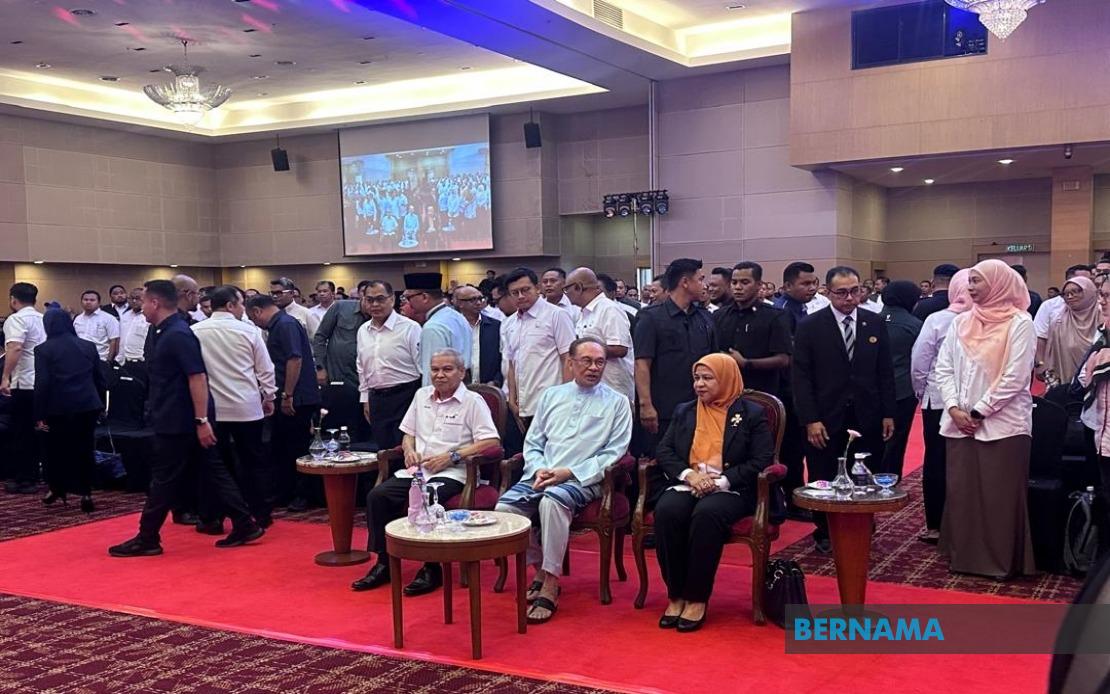
Prime Minister Datuk Seri Anwar Ibrahim has indicated that he will hold off from making any official statements regarding the Federal Land Development Authority (FELDA) until the ongoing Special Task Force investigation delivers its complete findings. Speaking after presiding over a management session at Tenera Hotel in Bangi, Anwar confirmed that the investigative body has already commenced its work and that preliminary results are anticipated within the coming months. The announcement underscores the government's methodical approach to addressing longstanding concerns about institutional governance within FELDA, one of Malaysia's most significant rural development agencies.
The Prime Minister outlined the broad scope of the investigation, emphasising that the task force would examine all dimensions of FELDA's operational oversight and administrative structures. Beyond merely cataloguing historical shortcomings, Anwar stressed that the inquiry would focus heavily on the current state of management and plotting a credible path forward for the organisation. This dual emphasis reflects an understanding that while institutional accountability for past errors remains important, stakeholders and the public are ultimately more interested in tangible reforms that will prevent future mismanagement and restore confidence in FELDA's stewardship of settler welfare and land resources.
At the gathering, FELDA chairman Tan Sri Ahmad Badri Mohd Zahir and director-general Datuk Dr Suzana Idayu Wati Osman were present, signalling a collaborative relationship between the Prime Minister's office and FELDA leadership as the investigation progresses. This visible alignment is strategically important, as it suggests that senior management has been brought into dialogue regarding the reform process rather than being positioned defensively against the probe. Such transparency is crucial for an agency that serves tens of thousands of settler families across the country and whose reputation has been tarnished by years of financial and administrative controversies.
The investigation itself represents a continuation of the government's broader commitment to institutional accountability, a theme that has marked Anwar's tenure. The establishment of the Special Task Force signals recognition that FELDA's challenges are substantial enough to warrant dedicated, focused scrutiny rather than ad hoc oversight. Previous inquiries and audits have raised questions about financial management, land titling discrepancies, and the equitable distribution of benefits to settler communities, making the current investigation a potentially watershed moment for the organisation's future direction.
Anwar has committed to releasing the investigative report to the general public once the work is finalised, drawing a direct parallel to the Royal Commission of Inquiry report on Tabung Haji. This commitment to public disclosure is significant because it signals that the government intends to treat FELDA governance with the same level of transparency afforded to other high-profile institutional reviews. The parallel with the Tabung Haji RCI is instructive, as that inquiry uncovered substantial governance failures and its public release facilitated broader debate about institutional reform across the government sector. By adopting a similar transparency model, the Anwar administration appears intent on using the FELDA findings as a catalyst for systemic change rather than as a confidential executive document.
The timeline for completion remains somewhat fluid, with media reports suggesting the task force work would conclude within a few months before any public release. This measured pace, while potentially frustrating for those eager for swift remedial action, allows for thorough investigation without artificial time pressures that might compromise the quality of findings. Given the complexity of FELDA's operations—spanning land management, settler financing, agricultural production, and social services across multiple states—a comprehensive inquiry necessarily requires sustained engagement with vast documentation and multiple stakeholder interviews.
For Malaysian stakeholders, particularly FELDA settlers whose livelihoods depend directly on the authority's institutional health, the investigation carries considerable weight. Many settlers have experienced prolonged uncertainty regarding land titles, harvesting rights, and financial distributions, making the probe's findings potentially transformative for their circumstances. The investigation thus functions not merely as a technical governance exercise but as a mechanism through which rural communities can seek redress and secure commitments to operational improvement.
The investigation also carries implications for regional development policy across Southeast Asia, where land development authorities and similar institutions face comparable governance pressures. Malaysia's experience with FELDA will likely inform best-practice discussions within ASEAN circles about agricultural land settlement schemes and institutional accountability in rural development. Should the task force uncover systemic vulnerabilities, those lessons could prove valuable for neighbouring countries managing analogous agencies and land schemes.
Anwar's deliberate decision to withhold public announcements until the investigation concludes reflects a shift toward evidence-based policymaking, where institutional decisions are anchored in comprehensive factual analysis rather than political expediency. This approach stands in contrast to patterns of previous administrations, which sometimes announced policy directions before supporting evidence had been adequately gathered. By publicly committing to await the task force report, the Prime Minister has effectively constrained his own room for premature or inconsistent statements, effectively binding future action to the investigative process itself.
The government's transparency pledge regarding eventual public release also addresses a historical pattern where institutional inquiries in Malaysia have sometimes remained confidential or had their findings selectively disclosed. By committing upfront to full public availability, the Anwar administration has preemptively foreclosed opportunities for findings to be suppressed or spun, thereby enhancing the credibility of whatever reforms ultimately flow from the investigation. This approach requires considerable institutional confidence and political courage, as unfavourable findings cannot subsequently be concealed or minimised.
Looking forward, the investigation's conclusions will likely shape not only FELDA's operational restructuring but also broader conversations about governance standards across Malaysia's statutory authorities and government-linked companies. Should the task force identify systemic weaknesses, those findings may trigger expanded scrutiny of similar agencies, potentially catalysing a more comprehensive institutional audit across the public sector. The FELDA investigation thus functions as both a specific institutional remedy and a potential blueprint for how government approaches institutional accountability in the post-2023 political landscape.

