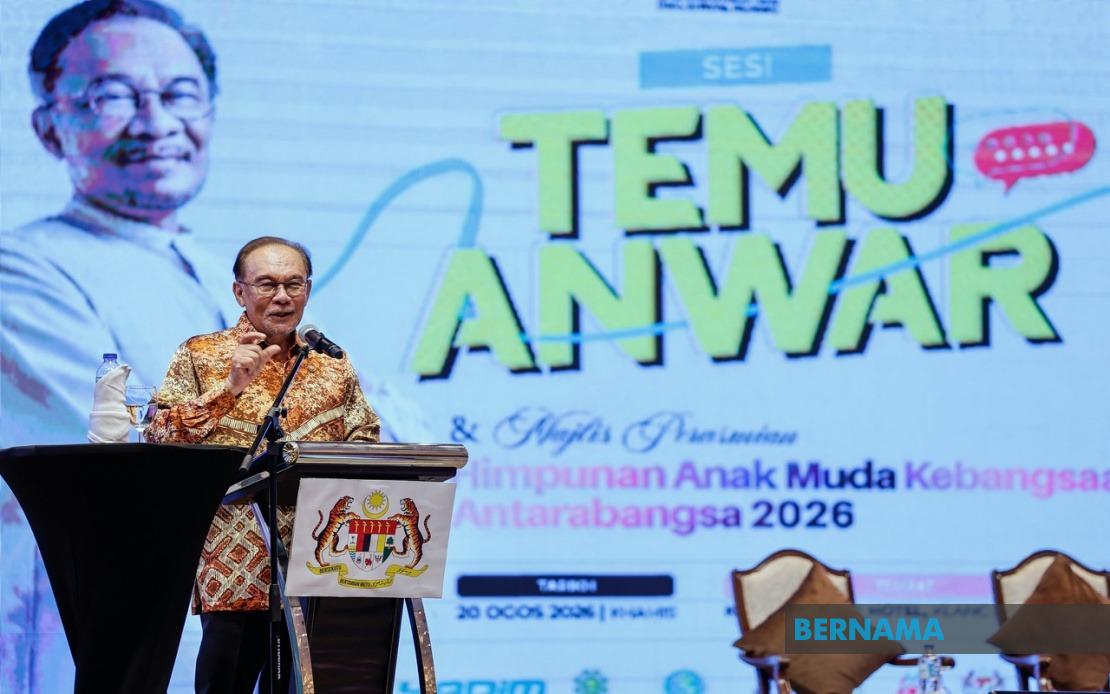
Prime Minister Datuk Seri Anwar Ibrahim has signalled that important policy announcements are forthcoming, with several key dates marked on the government's calendar. Speaking at a youth engagement session in Klang on August 20, Anwar confirmed he would deliver a major announcement on the eve of National Day on August 30, followed by another during Malaysia Day celebrations on September 16, and a third during the October budget tabling. The Prime Minister declined to elaborate on the substance of these announcements, maintaining a measure of suspense that suggests the proposals carry significant weight.
Anwar's disclosure came during an interactive forum at the opening of Himpunan Anak Muda Antarabangsa (HAMKA) 2026, an international youth gathering. The timing of these announcements—clustered around Malaysia's most patriotic dates—suggests the government is deliberately framing its policy initiatives within a nationalist context. This approach aligns with Anwar's broader strategy of anchoring economic and social reforms to moments of national reflection and celebration, potentially enhancing their symbolic resonance and public reception.
The announcements appear to address growing concerns about the precarious situation facing Malaysia's youth workforce, particularly those engaged in the gig economy. A student at the forum raised questions about government safeguards for young workers in non-traditional employment arrangements, reflecting anxieties prevalent among the millennial and Generation Z cohorts who have increasingly turned to freelance and platform-based work. This intergenerational dialogue set the stage for Anwar to articulate the government's evolving stance on youth economic security.
Currently, the administration is pursuing multiple channels to strengthen protections for gig economy workers. The establishment of the Malaysian Gig Economy Commission (SEGiM) represents a structural response to the fragmented landscape of informal labour, while proposed legislation targeting small businesses signals intent to create a more cohesive regulatory framework. Anwar acknowledged that critiques regarding the adequacy of existing assistance programmes carry merit, yet pledged continued commitment to enhancing welfare provisions for this vulnerable segment of the workforce.
Access to capital remains a critical bottleneck for young entrepreneurs emerging from tertiary education. The government has positioned the National Entrepreneurial Group Economic Fund (TEKUN) as a vehicle for facilitating business entry, yet structural barriers persist. Current eligibility criteria mandate that applicants demonstrate prior business experience before securing financing—a catch-22 scenario that effectively locks out first-time entrepreneurs lacking a commercial track record. Anwar indicated openness to revisiting these requirements, recognising that rigid standards may be poorly calibrated to contemporary employment realities where traditional career pathways have fractured.
The Prime Minister's willingness to examine financing prerequisites reflects a pragmatic acknowledgment that Malaysia's labour market has undergone profound transformation. Youth unemployment and underemployment remain stubbornly elevated relative to historical baselines, while the proliferation of gig and platform-based work has blurred distinctions between formal and informal employment. Policy frameworks designed for earlier economic epochs increasingly struggle to accommodate these structural shifts, necessitating continuous recalibration.
Anwar's emphasis on listening to diverse stakeholder perspectives suggests a consultative approach to policymaking. By soliciting input from youth themselves—rather than merely imposing top-down solutions—the government potentially gains greater legitimacy and responsiveness. This participatory dimension may prove particularly important given persistent perceptions among younger cohorts that their economic grievances receive insufficient political prioritisation. The forum setting allowed Anwar to demonstrate direct engagement with generational concerns in real time.
The commitment to support youth entrepreneurship must be contextualised within Malaysia's broader developmental challenges. As the economy experiences slower growth relative to previous decades and structural employment creation slows, alternative pathways to prosperity become increasingly vital. Self-employment and entrepreneurship represent potential solutions, yet they require enabling conditions—access to capital, technical support, market information, and regulatory clarity. The announced initiatives suggest movement toward establishing these preconditions, though implementation quality will ultimately determine impact.
Regional context amplifies these considerations. Across Southeast Asia, youth unemployment and economic precarity drive both demographic concerns and political instability. Countries wrestling with inadequate job creation have witnessed the emergence of populist movements capitalising on intergenerational frustration. Malaysia's investments in youth economic security thus carry implications extending beyond domestic policy considerations, potentially influencing regional stability and regional competitiveness for talent.
The budgetary dimension of these announcements warrants close monitoring. While Anwar expressed openness to expanding support mechanisms and revising eligibility criteria, fiscal constraints may limit ambition. Malaysia's debt levels and spending commitments necessitate careful prioritisation. The October budget tabling will reveal whether the government possesses genuine fiscal space to translate announced commitments into funded programmes, or whether announcements represent largely symbolic gestures without corresponding resource allocation.
Looking ahead, the specifics of these announcements will substantially influence the government's credibility among Malaysia's youth population. If the proposed measures prove transformative—genuinely expanding access to capital, securing gig workers, and creating viable pathways to entrepreneurship—Anwar may consolidate support among demographics that have historically fragmented politically. Conversely, if announcements prove incremental or insufficiently funded, they risk reinforcing cynicism regarding political responsiveness to youth concerns.
The clustering of announcements around National Day and Malaysia Day carries cultural resonance beyond mere scheduling convenience. These occasions invite reflection on national identity, cohesion, and shared purpose. By tethering economic and social policy announcements to these moments, the government implicitly frames youth welfare as integral to national destiny rather than peripheral administrative concern. Whether this framing translates into substantive policy outcomes remains to be determined when the announcements finally materialise.

