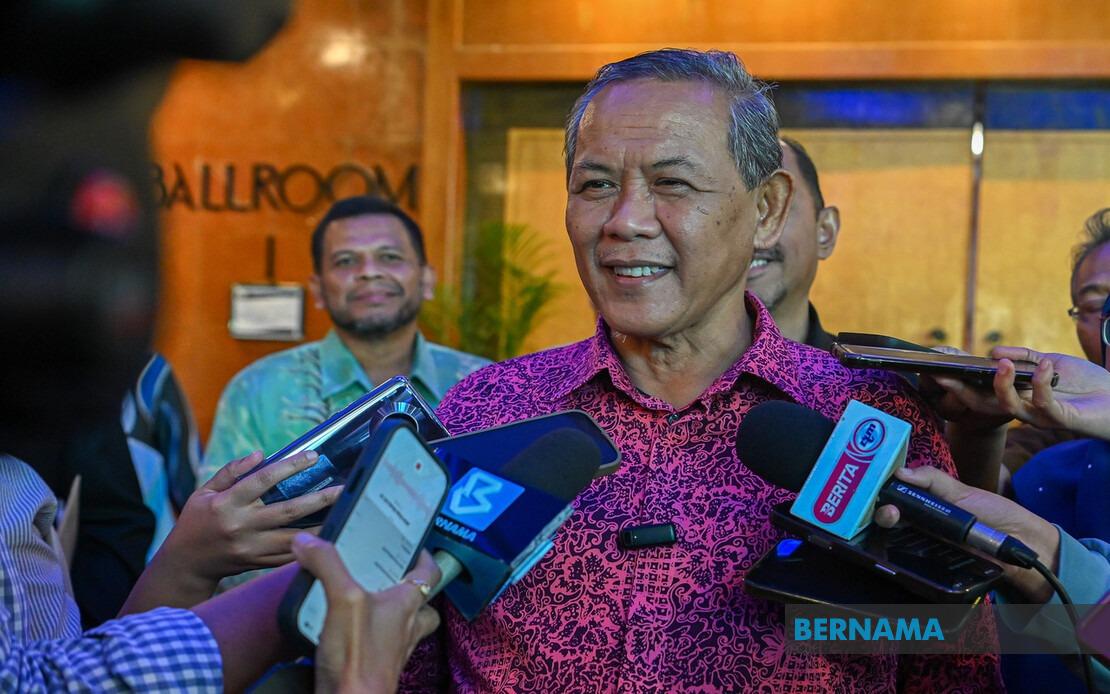
Prime Minister Datuk Seri Anwar Ibrahim will make a public declaration of Pakatan Harapan's full roster of candidates for the Negeri Sembilan state election on Tuesday, July 14, at Dataran Melang in Kuala Pilah. The announcement comes as the coalition fine-tunes its strategy for what is shaping up to be a closely watched contest in the heartland state, with the Election Commission scheduling polling for August 1. Negeri Sembilan PKR chairman Datuk Seri Aminuddin Harun confirmed that the candidate list has been locked in and formally submitted to party leadership, signalling that weeks of internal deliberations and negotiations across PH's constituent parties have reached their conclusion.
The timing of the announcement reflects the compressed schedule governing state elections in Malaysia. With nomination day arriving on July 18—just four days after the candidate reveal—and early voting pencilled in for July 28, the political calendar leaves little room for manoeuvre. Once Anwar presents the slate publicly, candidates will have mere days to prepare their nomination papers and begin formal campaigning. For voters and party machinery alike, the July 14 event will serve as the official trigger for the election season to shift into high gear across all 36 state constituencies.
The allocation of seats among PH's three main components reflects the coalition's internal power balance in the state. PKR will field candidates in 16 of the 36 seats, cementing its position as the dominant partner in Negeri Sembilan. The Democratic Action Party (DAP) will contest 11 seats, maintaining its foothold in urban and mixed constituencies where it has traditionally performed strongly. Amanah completes the picture with nine candidates, allowing the smaller Islamist party to preserve its presence without stretching resources too thinly. This distribution, finalised in mid-June, has allowed each party adequate time to vet contenders and prepare campaign machinery.
One of the most closely watched questions surrounding the announcement concerns whether Aminuddin himself will contest the Linggi state seat. The Sikamat assemblyman and Negeri Sembilan Menteri Besar has become the subject of speculation in local political circles, yet he has chosen to offer no clarification ahead of July 14. His refusal to comment, coupled with an exhortation for patience and focus on securing victory, suggests that the party leadership is maintaining strict message discipline in the final days before the formal announcement. Whether Aminuddin stands for re-election will carry significant symbolic weight, as his personal political trajectory remains intertwined with broader narratives about PH's performance and leadership continuity in the state.
Aminuddin's dual role as Menteri Besar and PKR state chairman positions him as the public face of the coalition's Negeri Sembilan campaign. His recent activities underscore the breadth of his portfolio: just days before the candidate announcement, he presided over a distribution of Special Grants totalling RM342,000 to 342 Rukun Tetangga units across the state. This deployment of development funds and visible state government action reflects a strategy of combining grassroots engagement with institutional advantage, a pattern familiar to ruling coalitions seeking re-election. The grants programme illustrates how state elections in Malaysia frequently become vehicles for distributing public resources and reinforcing ties between government machinery and community organisations.
The broader political context of the Negeri Sembilan election cannot be divorced from the national landscape. Anwar's position as Prime Minister lends particular weight to his personal participation in the announcement ceremony. His decision to travel to Kuala Pilah to unveil candidates signals that the federal leadership views the state election as more than a local contest; it carries implications for PH's standing nationally and Anwar's political capital within the coalition. A strong performance in Negeri Sembilan would vindicate the federal government's governance, while a weaker showing might embolden critics within and outside PH.
For Negeri Sembilan voters, the July 14 announcement will provide the first comprehensive picture of who their local representatives will be if PH returns to power. The state has a history of competitive elections and shifting coalitions, and the choice of candidates can significantly influence voter behaviour. Some constituencies may see incumbent candidates returning, while others will feature fresh faces or candidates moving between seats. The composition of the candidate list will reveal the degree to which the coalition has responded to grassroots feedback and party internal pressures regarding representation and diversity.
The election timeline itself warrants closer examination when considering campaign dynamics. With nomination day on July 18, candidates will have a solid two weeks to campaign before early voting on July 28, followed by another four days of campaigning before the August 1 poll. This compressed schedule demands that campaigns hit the ground running immediately after the candidate announcement. There is no time for extended deliberation or secondary candidate discussions; the machinery must mobilise instantly. For established parties like PKR, DAP, and Amanah, this means field operations must be pre-positioned and ready for rapid deployment.
The Election Commission's scheduling reflects the Malaysian political calendar's complexity, where state elections are staggered to avoid clustering too many contests simultaneously. Negeri Sembilan's election comes at a moment when the Anwar administration has been governing for roughly nine months, a period sufficient for early policy impacts to become visible but not long enough for fundamental assessments of governance capacity. Voters will be evaluating whether PH has delivered on its promises since the federal election in November 2022, and whether the coalition merits another five-year term at the state level.
Aminuddin's repeated emphasis that candidates should focus on ensuring coalition victory, rather than on individual advancement, points to an underlying anxiety within PH about internal cohesion. Such reminders are typically issued when party leadership detects signs of disunity or excessive competition among aspirants. By framing the coming campaign around collective success rather than personal profiles, senior leadership seeks to minimise the damage that factional rivalries might inflict on the coalition's electoral fortunes. This rhetorical strategy acknowledges an institutional weakness: the tendency of Malaysian political coalitions to fracture during election periods when ambitious individuals compete fiercely for nomination and ultimate victory.
The announcement on July 14 will thus represent far more than a procedural milestone. It will crystallise months of internal party negotiations, settle long-standing questions about candidate selection, and provide the formal launching point for campaigns that will determine which coalition governs Negeri Sembilan for the next five years. For observers across Malaysia and Southeast Asia, the result in August will offer insights into the health of Anwar's federal administration and the trajectory of post-2022 Malaysian politics more broadly.

